

Reported by: Ijeoma G | Edited by: Oravbiere Osayomore Promise.
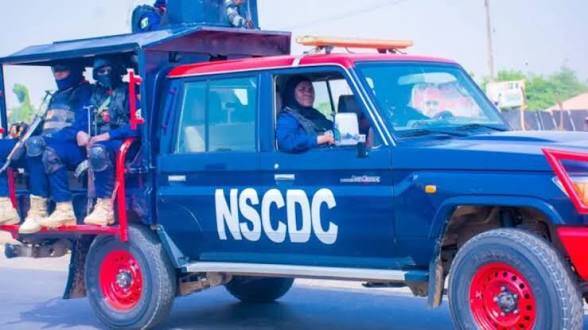
A 28‑year‑old nurse from the Central African Republic walked into a police station in Badagry, Lagos, on Thursday, May 7, 2026, and unlocked a transnational criminal enterprise. His name was Atokar Allah Iderim, and his story of deception, detention, and exploitation was the first thread in a web that would lead operatives of the Nigeria Security and Civil Defence Corps (NSCDC) to a clandestine camp in Torikoh, Badagry, where 17 foreign nationals were being held against their will.
Iderim told investigators that he had been contacted on Facebook by a Togolese acquaintance named Lansu Alex, who promised him a better job in Nigeria. Trusting the offer, he travelled from Togo across the border, only to find himself delivered to a camp where his phone and power bank were confiscated, his SIM cards were destroyed, and he was handed a paltry N10,000 for feeding. He was then pressured to register for an internet‑based network marketing scheme identified as “QNET”. When he failed to raise the required funds, he was detained and told he could not leave until he paid his way into the business.
Acting on Iderim’s complaint, the Lagos State Command of the NSCDC mobilised a tactical team led by the Divisional Officer of Badagry, Chief Superintendent of Corps (CSC) Ekunola Gbenga. Intelligence gathered by the corps suggested that the Torikoh camp was not an isolated operation but one of several nodes in a syndicate that ran multiple facilities across Badagry communities, including Aradagun, Mowo, Badagry Town and Limca. The operation was conducted under the supervision of the Lagos State Commandant, Mr Adedotun Keshinro, and followed the strategic intelligence‑led reforms championed by the Commandant General of the Corps, Professor Ahmed Abubakar Audi.
On the same day the complaint was filed, NSCDC operatives raided the Torikoh camp in a combat‑ready but tactically coordinated operation. Inside the facility, they found 17 victims – 12 males and five females, aged between 25 and 35 – who had been brought in from different West African countries under false pretences. Four suspects were arrested: three Togolese nationals and one Beninese national. As the arrests were being made, the suspects allegedly offered the team 130,000 CFA as a bribe in exchange for their freedom. CSC Ekunola Gbenga rejected the offer on the spot, and the money was documented as part of the exhibits recovered from the camp.
The search of the facility yielded an HP laptop, mobile phones, files, QNET‑branded documents, leather bags, and pharmaceutical products that investigators suspect were used to administer or control victims within the camp. Preliminary investigations revealed that intending members of the fraudulent scheme were allegedly required to pay up to 650,000 CFA as a registration fee before they could participate in the business. Recruits were then promised products supposedly shipped from Malaysia, which would be sold through an uplines‑downlines pyramid structure. New recruits, still en route from various African countries, were reportedly headed to Nigeria at the time of the raid, believing they were on their way to a profitable venture.
The victims were not merely held; they were systematically extorted and forced to operate within a coercive environment where compliance was enforced through detention and intimidation. Investigators found that the syndicate had been actively using the QNET brand as a cover for its criminal activities, recruiting across West and Central Africa with promises of prosperity that never materialised.
Following the operation, Lagos State Commandant Adedotun Keshinro warned individuals involved in human trafficking, internet fraud, unlawful detention and economic sabotage to desist or face prosecution. He reaffirmed the Command’s commitment to strengthening inter‑agency collaboration and dismantling criminal networks threatening Nigeria’s security and economic stability. The suspects and rescued victims were subsequently transferred to the Nigeria Immigration Service (NIS) Lagos State Command for further investigation and legal action.
The rescue came just weeks after the same Badagry Division, under CSC Ekunola Gbenga, dismantled a suspected baby factory in Okuju Ilado, Badagry, where 18 pregnant women, two adult females, 10 children and an infant were rescued, and one suspect was arrested. Security analysts have described the Torikoh operation as a major breakthrough in the fight against transnational organised crime and illegal migration networks operating along West Africa’s border communities. The NSCDC has reiterated that it will not relent in its mandate to protect national security and uphold the dignity of every person within Nigeria’s borders, regardless of their country of origin.
📩 Stone Reporters News | 🌍 stonereportersnews.com
✉️ info@stonereportersnews.com | 📘 Facebook: Stone Reporters News | 🐦 X (Twitter): @StoneReportNew | 📸 Instagram: @stonereportersnews
Add comment
Comments