

Reported by: Oahimire Omone Precious | Edited by: Oravbiere Osayomore Promise.
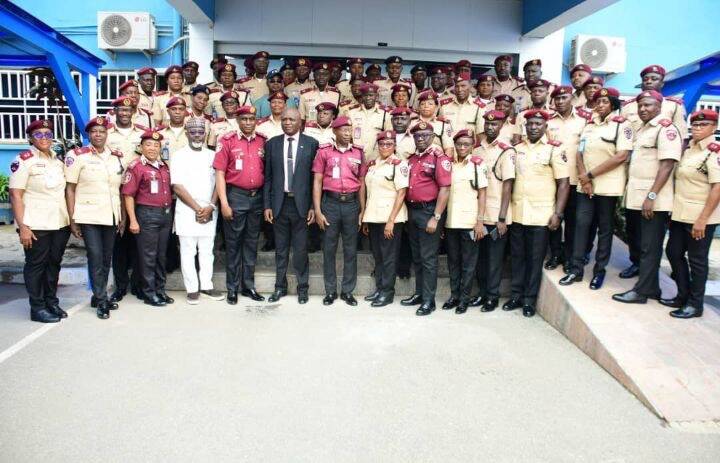
The Corps Marshal of the Federal Road Safety Corps (FRSC), Shehu Mohammed, has initiated a national capacity building programme for senior officers as part of a sweeping reform agenda aimed at sharpening operational leadership, enhancing professionalism, and improving service delivery across the organisation. The training, which targets senior officers occupying strategic leadership positions, was announced on Monday, May 11, 2026, in a statement signed by the Corps Public Education Officer, Osondu Ohaeri. According to the statement, the Corps Marshal declared that the FRSC can no longer rely solely on conventional enforcement methods in addressing emerging road safety challenges.
Shehu Mohammed stressed that officers in leadership roles must evolve with the realities of contemporary traffic management and public expectations. He described the programme as a critical component of the Corps’ broader institutional transformation agenda, noting that the modern road safety environment demands adaptive leadership, emotional intelligence, sound operational judgment, and enhanced public engagement skills. “We cannot continue to manage 21st‑century roads with 20th‑century mindsets,” the Corps Marshal was quoted as saying. The training is expected to cover a range of topics including conflict resolution, data‑driven patrol strategies, community relations, and the use of technology in crash prevention and response.
The announcement of the training programme comes amid rising public concern over road traffic accidents in Nigeria, which have claimed thousands of lives annually despite decades of FRSC intervention. Data from the National Bureau of Statistics and the FRSC itself have shown that human error, including speeding, reckless driving, and fatigue, accounts for the vast majority of crashes. By investing in leadership training, the Corps Marshal appears to be acknowledging that frontline enforcement, while necessary, is insufficient without competent officers at the command level who can design and implement effective traffic management strategies.
The programme will be rolled out across all zonal commands, with senior officers expected to undergo intensive sessions facilitated by experts in traffic engineering, behavioural psychology, and public administration. The FRSC has also indicated that the training will be sustained and periodically updated to reflect changes in traffic patterns, vehicle technology, and driver behaviour. The Corps Marshal expressed optimism that the initiative would produce a more responsive, citizen‑friendly, and results‑driven leadership cadre capable of restoring public confidence in the organisation.
Reactions from road safety advocates have been cautiously positive. The Executive Director of the Centre for Transportation Research and Development, Mrs. Nkechi Obi, described the move as a step in the right direction. “Leadership is the missing link in Nigeria’s road safety architecture. If senior officers are properly trained to think strategically and engage communities, we could see a significant drop in crashes,” she said. However, she also called for parallel investments in road infrastructure and vehicle inspection to complement the FRSC’s efforts.
The FRSC has faced criticism in recent years over allegations of corruption, harassment of motorists, and inefficiency in crash response. The new training programme is widely seen as an attempt by the Corps Marshal to rebrand the organisation and weed out bad practices. While training alone cannot solve systemic problems, it signals a willingness to address the human factor from within. As the first batch of senior officers prepares to undergo the programme, motorists across Nigeria will be watching to see whether the FRSC’s talk translates into tangible improvements on the roads.
“We must lead by example,” Shehu Mohammed said. “The officer who cannot manage his or her team cannot manage the highway.” The training is scheduled to commence immediately across all twelve zonal commands, with regional facilitators already deployed. The Corps Public Education Officer stated that further details, including the duration and curriculum of the programme, would be released in due course. The FRSC also assured the public that the training would not disrupt routine patrol and rescue operations, as officers would be trained in batches.
As Nigeria continues to grapple with a high rate of road traffic fatalities, estimated at over 10,000 deaths annually according to World Health Organization figures, the FRSC’s leadership training initiative represents a recognition that enforcement alone is not enough. The Corps Marshal’s emphasis on emotional intelligence and public engagement suggests a shift toward a more collaborative approach to road safety, one that treats drivers as partners rather than adversaries. Whether this shift will yield results depends on the quality of the training and, more importantly, on whether the lessons learned at the training centres make it onto the tarred roads of Lagos, Kano, Port Harcourt, and Abuja.
📩 Stone Reporters News | 🌍 stonereportersnews.com
✉️ info@stonereportersnews.com | 📘 Facebook: Stone Reporters News | 🐦 X (Twitter): @StoneReportNew | 📸 Instagram: @stonereportersnews
Add comment
Comments