

Reported by: Oahimire Omone Precious | Edited by: Oravbiere Osayomore Promise.
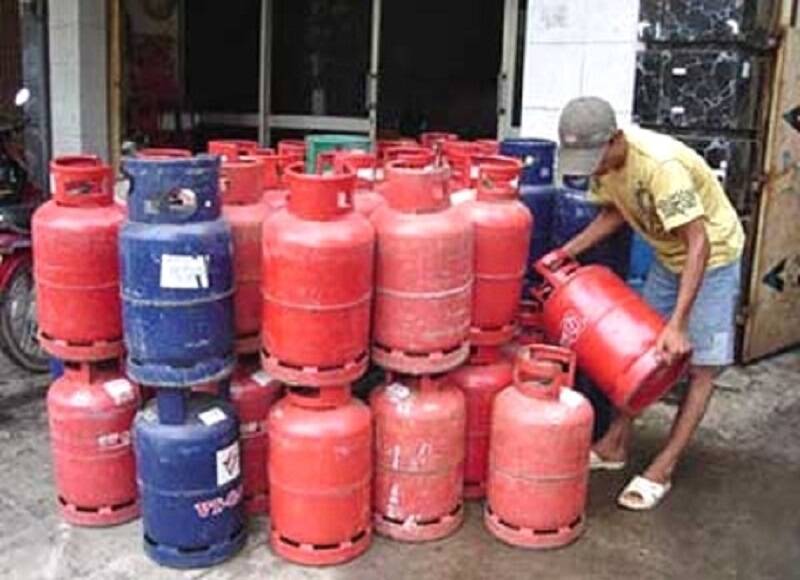
Nigerian households face yet another cost‑of‑living shock as fresh indications emerge that the retail price of Liquefied Petroleum Gas (LPG), commonly known as cooking gas, may soon surge to N1,500 per kilogramme. Checks by energy correspondents show that depot stocks have dwindled critically, with only three major players – Dangote Petroleum Refinery, Ardova Plc and Navgas – holding commercial volumes of LPG for the domestic market, a development that has triggered fresh warnings of sharp price increases nationwide.
The tightening supply is attributed to a surge in domestic demand, driven by more households and small businesses abandoning kerosene and firewood in favour of cooking gas. Market sources told Vanguard that Lagos and other major consumption centres have seen a steady uptick in LPG uptake, straining available stock at depots. Depot prices monitored on Wednesday showed Dangote Refinery selling LPG at N1,060 per kilogramme, while Ardova Plc and Navgas sold at N1,065/kg and N1,085/kg respectively, already above the price levels that have pushed retail rates to an average of N1,300/kg in many locations.
Operators warn that if the supply situation persists, the retail price could climb to N1,500/kg within days. The Chief Executive Officer of Petroleumprice.ng, Olatide Jeremiah, confirmed that current supply pressure could trigger further price hikes. “There is the likelihood that the price of cooking gas will rise in the coming days because of high demand. Many homes and other users have shifted to cooking gas,” he told Vanguard.
The latest price spike comes barely a month after retail prices had already risen by 40 per cent in just two months, jumping from N1,000 per kg in early March to an average of N1,400 per kg by May, according to a survey by the Nigerian Tribune. A 12kg cylinder that cost N13,200 to refill last month now attracts as much as N16,800 in several locations, representing a 27 per cent increase. A 6kg cylinder refill now costs N8,400, while the National Bureau of Statistics (NBS) reported that the average price for a 5kg cylinder rose to N7,655.73 in March 2026, a 12.6 per cent month‑on‑month increase.
For consumers already grappling with soaring petrol and diesel prices, the latest increase in cooking gas costs has escalated the burden on household budgets. A resident of Ketu, Lagos, Mrs Susan Adedayo, told the Nigerian Tribune that she was shocked to be quoted N16,800 to refill her 12kg cylinder, compared with N13,200 she paid the previous month – a difference of N3,600. “This means I am to pay N1,400 per kilogramme of gas. This is too much for me. I bought it at N1,100 per kg last month. Remember that we are still going to buy petrol and diesel to run our car and generator. We still need to pay children’s school fees, security fee, electricity bill and rents. How much is our income? This hardship is too much for us,” she said.
Another resident in Ojodu, Lagos, who gave her name simply as Ms Adetutu, told the newspaper that she bought cooking gas at N1,250 per kg from a neighbourhood gas station, while other outlets were charging N1,400 per kg. “I bought this gas at N900 per kilogramme in early March and N700 per kg in January, just two and three months ago. Who knows what will be the price next month? Our government must do something to keep the price of cooking gas low irrespective of any crisis in the Middle East,” she said.
Industry stakeholders have attributed the persistent price hikes to a combination of local supply constraints and external shocks. The ex‑depot price of LPG climbed by 16.7 per cent on a month‑on‑month basis to N21 million per 20 metric tonnes, up from N18 million recorded last month, according to the National President of the Nigerian Association of Liquefied Petroleum Gas Marketers, Mr Inyang Edu. Speaking with Vanguard in early April, Edu noted that the Middle East crisis has disrupted global oil markets, driving up prices across petroleum products, including LPG. He also pointed to limited supply from the Dangote Refinery, which receives only five out of the 13 crude oil cargoes it requires, forcing it to import crude and thereby raising production costs.
Data from the Nigerian Upstream Petroleum Regulatory Commission showed that domestic gas sales rose to 55,903.72 million standard cubic feet in March 2026, from 52,300.45 million standard cubic feet recorded in February 2026. The increase came amid higher national gas production, as the Federal Government seeks to deepen local consumption of natural gas for power generation, industries and other commercial uses. However, the same data indicates that the surge in domestic utilisation has coincided with tighter LPG availability for household use, as more gas is channelled to gas‑fired power plants and industrial consumers.
The current supply crunch has not yet triggered a full‑scale price explosion, but operators warn that Lagos’ role as a national distribution hub means any prolonged shortage in the city could ripple across the country. Several major loading points in Lagos are reportedly facing severe supply constraints, making it difficult for marketers to access products for onward distribution. Independent retailers say the scarcity is raising their operational costs, which are eventually passed on to consumers. Small businesses such as food vendors, bakeries and restaurants, which rely heavily on cooking gas, are also feeling the heat, as higher LPG prices directly impact their operating expenses and profit margins.
For many Nigerian families, cooking gas has become a preferred alternative to kerosene and firewood due to its convenience and cleaner burning properties. But the rapid price increases are making the transition unsustainable for low‑ and middle‑income households, with some now reverting to charcoal or firewood. A rise in advertisements for so‑called “smokeless charcoal stoves” has been observed, with vendors promoting the alternative as a cost‑saving measure for gas users. “Charcoal stove is fast‑cooking like gas, smokeless, does not black your pot, and can be used inside the kitchen, while saving 50 per cent of your money,” one vendor told the Nigerian Tribune.
As the price of cooking gas creeps toward the N1,500/kg threshold, the Federal Government has not announced any immediate intervention. The Nigerian Midstream and Downstream Petroleum Regulatory Authority (NMDPRA) had earlier raised the domestic base price of natural gas to $2.18 per MMBtu, effective April 2026, citing market realities and provisions under the Petroleum Industry Act. With global crude prices remaining volatile and domestic supply under pressure, consumers may have little relief in sight.
📩 Stone Reporters News | 🌍 stonereportersnews.com
✉️ info@stonereportersnews.com | 📘 Facebook: Stone Reporters News | 🐦 X (Twitter): @StoneReportNew | 📸 Instagram: @stonereportersnews
Add comment
Comments