

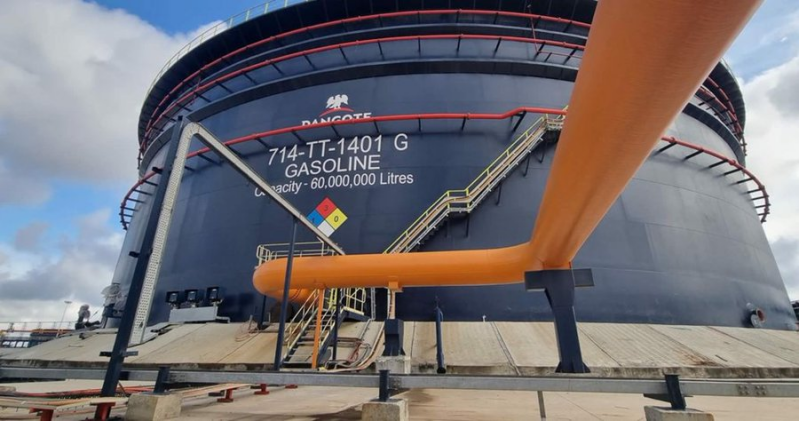
Dangote Petroleum Refinery has filed a new lawsuit at the Federal High Court in Lagos challenging the continued issuance of petrol import licences in Nigeria, in a renewed legal dispute with the Federal Government and petroleum regulators over the country’s downstream fuel market.
Court filings show that the refinery is seeking an order to set aside or nullify import permits issued or renewed by the Nigerian Midstream and Downstream Petroleum Regulatory Authority (NMDPRA) in favour of fuel marketers and the Nigerian National Petroleum Company Limited (NNPC).
The company’s legal argument is that the licences were issued in violation of a prior court directive requiring parties to maintain the status quo while earlier disputes over fuel importation remain unresolved. It also argues that the Petroleum Industry Act allows petrol imports only when domestic refining output is insufficient to meet national demand.
Dangote Refinery, a 650,000-barrels-per-day facility located in Lagos, maintains that Nigeria’s rising domestic refining capacity reduces the justification for continued importation of petrol by marketers and state-linked entities.
The suit names key regulatory and commercial stakeholders involved in fuel importation, including the Attorney General of the Federation, NMDPRA, NNPC Limited, and several petroleum marketers that hold import licences.
This legal action extends a long-running dispute between the refinery and government regulators over how Nigeria should balance local refining with fuel imports. Earlier cases filed by Dangote challenged similar import licences issued to marketers and the national oil company, arguing they undermined domestic refining investment.
In previous proceedings, some of those earlier lawsuits were withdrawn or dismissed, but the underlying policy disagreement has persisted as regulators maintain that imports are still required to ensure supply stability and prevent fuel shortages.
Regulatory authorities have previously stated that import licensing policy is guided by supply and demand conditions, noting that imports may continue when domestic production is not sufficient to meet national consumption levels.
Recent official data indicate that Nigeria’s fuel supply structure remains mixed, with domestic refineries contributing significantly but imports still forming part of national supply to bridge demand gaps.
The NMDPRA has not issued a detailed public response to the latest filing at the time of reporting.
The case is now before the Federal High Court in Lagos, where it is expected to be assigned for hearing in the coming weeks. No ruling has been made.
The dispute reflects broader structural tensions in Nigeria’s petroleum sector as the country transitions from heavy reliance on imported fuel toward increased domestic refining capacity, a shift largely shaped by the operational expansion of the Dangote Refinery and ongoing regulatory adjustments.
Stone Reporters note that the outcome of the case could influence future fuel import policy, licensing authority, and competition dynamics within Nigeria’s downstream petroleum market.
📩 Stone Reporters News | 🌍 stonereportersnews.com
✉️ info@stonereportersnews.com | 📘 Facebook: Stone Reporters News | 🐦 X (Twitter): @StoneReportNew | 📸 Instagram: @stonereportersnews
Add comment
Comments