

Reported by: Ijeoma G | Edited by: Oravbiere Osayomore Promise.
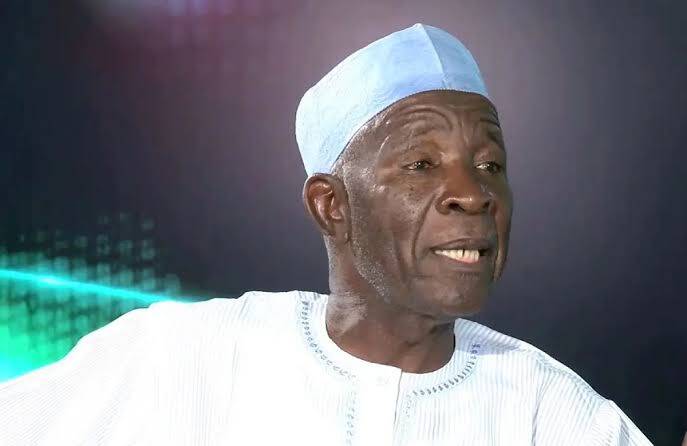
A chieftain of the Nigeria Democratic Congress (NDC), Buba Galadima, has launched a scathing attack on the 2026 Electoral Act, alleging that key provisions of the law were deliberately crafted by the ruling All Progressives Congress (APC) to weaken and frustrate opposition parties ahead of the 2027 general elections. Speaking on Saturday at the NDC aspirants’ summit in Abuja, the veteran politician and former ally of President Bola Tinubu warned that the ruling party had weaponized the electoral framework, using it to systematically cripple political rivals and create an unfair advantage for itself. He also accused the Tinubu-led administration of “destroying democracy” in Nigeria, claiming that the government had set up a committee long before the electoral bill was presented to the National Assembly to draft a legislation that would favour the APC.
At the heart of Galadima’s grievance is the provision in the Electoral Act that narrows the options for political parties to generate candidates to just two methods: consensus or direct primaries. Galadima argued that this restriction is a trap set by the APC, which correctly calculated that the opposition would struggle with both options. “In the opinion of the APC and its government, they thought that the opposition will not be in a position to sit down and do consensus. And if they can’t do consensus, the only option open to them is to go and do direct primaries,” he told the gathering of NDC aspirants. He then made a stark admission, one that inadvertently revealed the deep operational weaknesses within the opposition coalition: “I want to say, without fear of being contradicted, that no political party in the opposition can do direct primaries and come out completely clean.” He argued that if the opposition embraces direct primaries, the ruling party would simply “send people to disrupt everything” and leave them without a valid candidate. His solution was for the NDC to abandon the electoral law’s requirements entirely and rely on “the decision of the elders” to choose candidates.
Galadima’s revelations have inadvertently exposed a profound crisis of competence within Nigeria’s opposition parties. For years, they had fought for the removal of the delegate system, which they claimed was corrupt and gave undue influence to moneybags. They won that battle: the 2026 Electoral Act scrapped indirect primaries in favor of direct primaries and consensus. The opposition argued that direct primaries, where every party member votes, would be the most democratic method. Yet Galadima, one of their most senior strategists, has now publicly declared that the opposition is incapable of conducting such a simple exercise.
His warning that the APC would “send people to disrupt” the primaries also betrayed a fatal weakness: the lack of robust internal structures. If a political party cannot verify its own membership list, secure its collation centers, and conduct a credible headcount of its own supporters without infiltration, it has no business aspiring to govern a nation of over 200 million people. The direct primary system was designed precisely to strengthen grassroots participation and reduce the influence of godfathers. If the opposition cannot control its own primary process, it is a confession of organizational failure, not a reflection of a biased law.
The 2026 Electoral Act, which President Bola Tinubu signed on 18 February 2026, was the culmination of two years of deliberations involving the National Assembly, the Independent National Electoral Commission (INEC), civil society groups, and international partners. It introduced several progressive reforms, including the mandatory electronic transmission of polling unit results to the INEC Result Viewing Portal (IReV), the criminalization of dual party membership with a fine of N10 million and a two-year jail term, and the establishment of a dedicated funding stream for INEC to guarantee its financial independence. The Act also makes the Bimodal Voter Accreditation System (BVAS) compulsory for accreditation and imposes severe penalties on electoral officers who attempt to manipulate results. Critics like Atiku Abubakar have raised concerns about Section 63, which allows a returning officer discretion to count a ballot without an official mark if satisfied it is genuine. However, this provision is a safeguard against voter disenfranchisement, not a loophole.
The opposition’s rejection of the Act in February 2026 was led by a coalition of heavyweights, including Atiku Abubakar, Peter Obi, Rotimi Amaechi, and Rabiu Kwankwaso. They described the law as “desperate, dictatorial, and obnoxious” and demanded a fresh amendment. The APC’s National Publicity Secretary, Felix Morka, dismissed their complaints, stating that they were angry because the Act removed their “game plan” to use the pretext of failed real-time transmission to challenge the 2027 election results. The Senate has also rejected calls for a fresh amendment, urging opposition leaders to channel their grievances through the legislative process.
Galadima’s speech at the NDC aspirants’ summit laid bare a fundamental political reality. The opposition’s panic is not about electoral reform; it is about the death of their ability to manipulate and steal electoral processes. By outlawing the corrupted delegate system, the 2026 Electoral Act has forced political parties to actually organize. The opposition’s strategy, once reliant on “consensus” of a few powerful godfathers, has been shattered. Their failure to embrace direct primaries is an admission that they cannot win a fair fight. The law has merely exposed that the emperor has no clothes, leaving the opposition to blame their own incompetence on the referee.
📩 Stone Reporters News | 🌍 stonereportersnews.com
✉️ info@stonereportersnews.com | 📘 Facebook: Stone Reporters News | 🐦 X (Twitter): @StoneReportNew | 📸 Instagram: @stonereportersnews
Add comment
Comments