

Reported by: Ijeoma G | Edited by: Oravbiere Osayomore Promise.
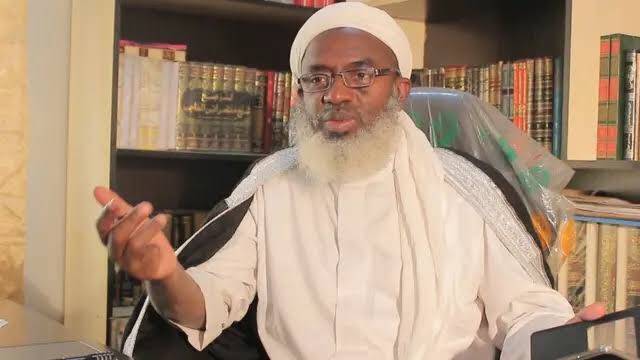
Islamic cleric Sheikh Ahmad Gumi has said that eliminating terrorists is a religious duty, but he condemned the involvement of the United States in the operation that killed the global second‑in‑command of the Islamic State (ISIS). In a Facebook post on 16 May, Gumi wrote, “It’s a religious obligation to annihilate terrorists, but not with Beelzebub and hands stained with the blood of innocent men, women, and children.” Although he did not name specific countries, his remarks were widely interpreted as a reference to the United States, which had partnered with Nigerian forces to kill Abu‑Bilal al‑Minuki in the Lake Chad Basin the previous day.
Gumi’s reaction came just hours after President Donald Trump announced that “brave American forces and the armed forces of Nigeria flawlessly executed a meticulously planned and very complex mission” to take out al‑Minuki. Trump described the target as “the most active terrorist in the world” and thanked the Nigerian government for its partnership. Nigerian President Bola Tinubu also hailed the operation as a heavy blow to ISIS.
The cleric’s post quickly drew fierce backlash on social media. Many Nigerians accused Gumi of indirectly defending terrorists. One user wrote, “Omar Tandama, you are among the terrorists,” while another commented, “At this point, even if it is Satan that will come and save us from this menace, we’re going to appreciate him.” Others mocked Gumi, with one posting, “This one pain am… lol,” and another suggesting, “Depression want kill this man.” A few defended his point, arguing that “lawful, transparent operations that don’t erode public trust” are essential.
Gumi argued that counter‑terrorism loses legitimacy when innocent civilians become collateral damage, insisting that “protecting civilians isn’t weakness — it’s the line between counter‑terrorism and crime.” He did not claim that the US‑Nigeria mission had harmed non‑combatants, but his reference to “blood‑stained hands” tapped into widespread criticism of past US drone strikes that have killed civilians in Afghanistan, Pakistan, Somalia and elsewhere. Data from Airwars shows that at least 8,168 civilians have been killed by the US‑led coalition during the campaign against ISIS, though the coalition has accepted responsibility for only 1,417 of those deaths. The US Africa Command has not released a detailed civilian casualty assessment for the May operation at the time of this report.
Nigeria’s Defence Headquarters clarified that al‑Minuki, a Nigerian‑born extremist, was positively identified through human intelligence and technical surveillance. Trump called the killing “a great victory” that would “greatly diminish ISIS’s global operation.” Yet Gumi’s intervention reopened a long‑standing debate in Nigeria: should the country accept Western military help against jihadists, even when that help comes from a power that some view as having its own record of civilian harm? The question is especially sensitive in the north, where anti‑American sentiment runs deep and where Gumi himself has acted as a controversial intermediary between the government and armed bandits.
By invoking “Beelzebub” — a name for the devil — Guti framed the US as a morally tainted partner. His critics saw this as a distraction from the indisputable fact that al‑Minuki was a senior leader of a group that has beheaded captives, enslaved women and children, and carried out mass killings across several continents. “Only a stained hand can take out a stained hand. Na family business,” one commenter wrote.
For the Nigerian government, the public row with Gumi underscores the difficulty of maintaining a coherent counter‑terrorism narrative. Celebrated internationally for a successful joint operation, the administration nonetheless faces domestic constituencies that remain sceptical of Western military involvement and suspicious of the motives behind it. Gumi, whatever his critics say, speaks for a segment of northern opinion that believes Nigeria must confront insecurity without being seen as a proxy for foreign powers. As the country prepares for the 2027 elections, that fault line is unlikely to disappear.
📩 Stone Reporters News | 🌍 stonereportersnews.com
✉️ info@stonereportersnews.com | 📘 Facebook: Stone Reporters News | 🐦 X (Twitter): @StoneReportNew | 📸 Instagram: @stonereportersnews
Add comment
Comments