

Reported by: Ijeoma G | Edited by: Oravbiere Osayomore Promise.
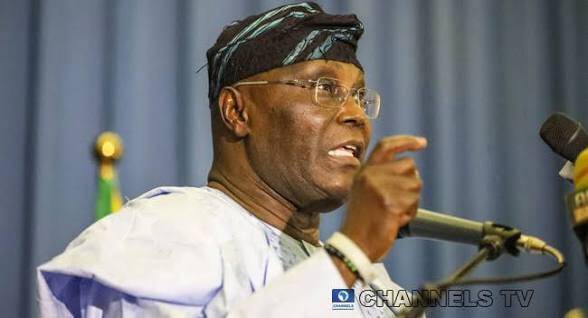
Former Vice President Atiku Abubakar has strongly criticised President Bola Tinubu’s administration over reports that the Federal Government is in discussions with the World Bank for another $1.25 billion loan facility, warning that Nigeria is sinking deeper into unsustainable debt without any visible improvement in the lives of its citizens.
In a statement issued on Sunday, 17 May 2026, through his media aide, Olusola Sanni, the 2023 presidential candidate of the Peoples Democratic Party (PDP) described the planned borrowing as evidence of what he called the Tinubu administration’s “reckless, opaque and dangerously habitual” dependence on foreign loans. Atiku said it was both troubling and unconscionable that an administration elected on promises of economic renewal had instead become synonymous with “industrial-scale borrowing” while millions of Nigerians grapple with inflation, rising energy costs, food insecurity and declining purchasing power.
“This borrowing binge is becoming reckless, opaque and dangerously habitual. The loans are coming with a burden of weight too heavy for Nigerians to bear,” Atiku said in the statement. “Nigerians were told these loans were for infrastructure, power, and economic recovery. Yet the average citizen still lives in darkness, roads remain death traps, businesses are collapsing under crushing energy costs, and hunger has become a national epidemic.”
The proposed facility, titled “Nigeria Actions for Investment and Jobs Acceleration,” is expected to go before the World Bank board for approval on 26 June 2026, according to a programme document obtained from the lender. If approved, the loan would rank among the largest fresh borrowings secured under the Tinubu administration, second only to the $1.5 billion Reforms for Economic Stabilisation to Enable Transformation (RESET) Development Policy Financing approved in June 2024.
Atiku questioned the rationale behind the government’s continued borrowing at a time when officials insist that reforms such as fuel subsidy removal, foreign exchange liberalisation and improved tax collection have significantly boosted public revenue. He pointed out that Nigeria’s growing exposure to loans from the International Development Association (IDA), the concessional lending arm of the World Bank, contradicts official claims of improved revenue generation. “The IDA loans are facilities granted to extremely poor countries and currently shares the same spot with Bangladesh and Pakistan as top countries in the world with highest loan exposure to the World Bank,” he said. “This data is diametrically opposed to claims by the Tinubu administration that the government had increased its revenue generation drive.”
The former vice president also drew a sharp contrast between the current administration’s borrowing trajectory and the landmark Paris Club debt exit achieved during the administration of former President Olusegun Obasanjo. He recalled that in 2005-2006, Nigeria successfully negotiated a historic debt relief package through fiscal discipline, diplomatic credibility and reform-driven leadership. “It is deeply ironic that the same nation which painstakingly exited the Paris Club debt trap through the fiscal discipline, diplomatic credibility, and reform-driven leadership of the Obasanjo-Atiku administration in 2005-2006 is now being dragged back into a fresh era of debt dependency,” he said. “That historic debt relief was not accidental. It was earned through tough negotiations, prudent management, and international goodwill. Today, that legacy is being squandered with alarming irresponsibility.”
Atiku was unsparing in his verdict on the administration’s economic philosophy, insisting that borrowing was not governance and that debt was not development. “This administration appears to believe that borrowing is governance. It is not. Loans are not achievements. Debt is not development. And mortgaging the future of unborn Nigerians to fund present incompetence is not economic management — it is economic vandalism,” he declared. He accused the government of answering every economic challenge with another loan request, warning that Nigeria cannot continue down that dangerous path.
The former vice president also directed sharp criticism at international financial institutions, urging the World Bank and other creditors to exercise greater caution and demand stricter transparency and accountability before extending further credit to Nigeria. “No responsible lender should ignore the warning signs. A government that keeps borrowing while citizens see no tangible improvement in electricity supply, healthcare, education, or infrastructure raises legitimate concerns about fiscal credibility and governance discipline,” he said. “At some point, creditors must ask themselves whether they are funding development or enabling dysfunction.”
Atiku called on the Federal Government to publish a full account of all loans secured since President Tinubu assumed office in May 2023, including their terms, disbursement status and the specific project outcomes tied to each facility. “We must begin to ask difficult questions, not just of the borrowers, but also of the lenders,” he said. “International financial institutions and credit agencies must exercise greater caution and insist on strict transparency, accountability, and measurable impact before continuing to extend credit facilities to an administration that has shown little evidence of efficient utilisation.”
This is not the first time the former vice president has criticised the government’s borrowing strategy. In April 2026, he fired a broadside at Tinubu over a request for Senate approval of a fresh $516 million external loan to finance portions of the Sokoto-Badagry Superhighway project, warning that Nigeria must not “borrow blindly” in the name of development. His latest intervention comes amid growing public debate over the sustainability of Nigeria’s debt trajectory. According to the Debt Management Office, Nigeria’s total public debt stood at N159.28 trillion as of December 2025. In dollar terms, the country’s debt stock was approximately $110.97 billion.
Data from the World Bank shows that between June 2023 and May 2026, the institution approved about $9.35 billion in loans and credits for Nigeria across power, healthcare, education, agriculture, social protection, renewable energy, economic reforms and financing support for micro, small and medium-scale enterprises. The proposed $1.25 billion facility would increase that total to approximately $10.6 billion. If fully approved and disbursed, the new loan would push Nigeria’s external debt stock from N74.43 trillion ($51.86 billion) as of December 2025 to about N76.13 trillion ($53.11 billion). Total public debt could rise from N159.28 trillion to roughly N160.98 trillion, while the dollar equivalent of the country’s debt stock would move from $110.97 billion to approximately $112.22 billion.
The timing of the proposed borrowing has also drawn scrutiny. The loan is scheduled for approval barely six months and 21 days before Nigeria’s next presidential election, scheduled for 16 January 2027 according to the timetable of the Independent National Electoral Commission (INEC). Some economists have expressed concern that the new financing could become politically contentious, with critics questioning whether borrowed funds will be directed toward productive investment or election-related spending.
The African Democratic Congress (ADC) has also condemned the proposed loan, describing the Tinubu administration’s economic approach as a “Ponzi scheme” where new loans are constantly taken to service old debts and cover fiscal failures. In a statement by its National Publicity Secretary, Bolaji Abdullahi, the ADC noted that President Tinubu himself has declared that Nigeria will spend about $11.6 billion (over ₦15 trillion) on debt servicing alone in 2026. “In simple terms, trillions of naira that should have gone into roads, hospitals, schools, electricity, security, agriculture, and job creation will instead go into paying creditors and servicing old loans,” the party said.
The Federal Government has yet to officially respond to Atiku’s latest remarks. However, it has consistently defended its borrowing strategy, stating that most loans are concessional and directed toward infrastructure, social protection and economic stabilisation efforts amid ongoing reforms. Officials argue that the new facility is critical for sustaining economic reforms aimed at restoring stability and attracting investment, particularly in sectors capable of driving economic diversification and job creation. Analysts note that concessional loans from the World Bank often come with low interest rates and long repayment tenors, making them cheaper than commercial borrowing from international capital markets.
Atiku, however, remained unmoved. “Governance requires vision, discipline, productivity, and trust — not endless promissory notes signed against the future of a suffering people,” he said. “The Tinubu administration must understand that a nation cannot borrow its way out of incompetence.”
📩 Stone Reporters News | 🌍 stonereportersnews.com
✉️ info@stonereportersnews.com | 📘 Facebook: Stone Reporters News | 🐦 X (Twitter): @StoneReportNew | 📸 Instagram: @stonereportersnews
Add comment
Comments