

Reported by: Ijeoma G | Edited by: Oravbiere Osayomore Promise.
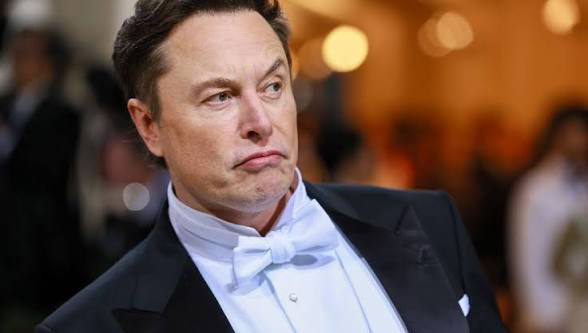
OAKLAND, California – A nine‑person federal jury handed Elon Musk a stunning legal defeat on Monday, May 18, 2026, dismissing all claims in his blockbuster lawsuit against OpenAI, Sam Altman, Greg Brockman and Microsoft on the narrowest of grounds: the world’s richest man simply waited too long to sue. The unanimous verdict, delivered after just two hours of deliberation, effectively ended a three‑week trial that had laid bare the bitter collapse of a friendship that once aimed to save humanity from rogue artificial intelligence. Instead of deciding whether OpenAI abandoned its founding mission, the jury concluded that the statute of limitations had expired – a technicality that Musk’s lawyers argued should never have been allowed to decide the case. “I think that there’s a substantial amount of evidence to support the jury’s finding, which is why I was prepared to dismiss on the spot,” said U.S. District Judge Yvonne Gonzalez Rogers, who accepted the advisory verdict as the court’s own ruling and immediately dismissed all claims.
The case had been closely watched as a potential precedent‑setter for the governance of artificial intelligence, with Musk seeking up to $150 billion in damages, the ouster of Altman and Brockman from OpenAI’s leadership, and the unwinding of the company’s for‑profit arm. Musk, who co‑founded OpenAI in 2015 and donated $38 million in its early years, had accused Altman and Brockman of “stealing a charity” – luring him into a nonprofit venture dedicated to “AI for humanity” and then secretly converting it into a profit‑driven enterprise backed by Microsoft. But the jury ruled that Musk had been aware of the alleged violations long before he finally filed suit in August 2024. The statute of limitations for breach of fiduciary duty is three years from the date the plaintiff became aware of the breach; for unjust enrichment, it is two years. Evidence presented at trial showed that OpenAI’s for‑profit subsidiary was created in 2019, and internal discussions about a for‑profit shift dated back to at least 2017. “The jury determined that Musk had already become aware of the issues before August 2021,” the court found. Musk’s side had argued that Altman’s personal reassurances delayed his decision to sue, but the jury rejected that claim after less than two hours of deliberation.
The case laid bare the raw emotions of a fractured partnership. Taking the witness stand, Musk lamented his early financial support. “I was a fool,” he told the court earlier this month. “I gave them free funding to create a startup.” Musk’s lead attorney, Steven Molo, compared Monday’s verdict to the Siege of Charleston or the Battle of Bunker Hill – “major losses for Americans, but who won the war?” – signaling an immediate intent to appeal. “There is no question to anyone following the case in detail that Altman and Brockman did in fact enrich themselves by stealing a charity,” Musk wrote on his social media platform X after the ruling. “The only question is WHEN they did it!”
OpenAI’s legal team, by contrast, celebrated the verdict as a vindication of the company’s business trajectory. “This jury verdict demonstrates that this lawsuit was a hypocritical attempt to hinder a competitor,” OpenAI said in a statement. “OpenAI has operated and will continue to operate with a non‑profit mission at its core.” Outside the courthouse, OpenAI attorney William Savitt told reporters that the lawsuit was nothing more than an “after‑the‑fact contrivance.” He said the jury had seen through Musk’s true motive: to slow down a rival AI company after Musk launched his own competing venture, xAI (now folded into SpaceXAI), in 2023. “The finding of the jury confirms that this lawsuit was a hypocritical attempt to sabotage a competitor and to overcome a long history of very bad predictions about what OpenAI has been and will become,” Savitt said.
The trial offered a rare public airing of the Silicon Valley drama that had unfolded largely in private emails, text messages and boardroom clashes. Altman testified that Musk had wanted control over OpenAI’s direction – and that when he couldn’t have it, he walked away. In one particularly revealing exchange, Altman recalled being asked: “If you have control, what happens when you die?” Musk’s reply, according to Altman: “Maybe it should pass to my children.” OpenAI’s defense team also presented evidence that Musk had understood from the beginning that partnering with a major tech company like Microsoft would be essential to raise the billions of dollars needed for computing power. The nonprofit’s own board had approved the for‑profit subsidiary in 2019, years before Musk filed suit.
The verdict arrives at a pivotal moment for both men. OpenAI is now valued at $852 billion and is moving toward one of the largest initial public offerings in history. Musk, meanwhile, is preparing his own IPO for SpaceXAI, a merger of his rocket company with his AI venture. A ruling in Musk’s favor could have forced dramatic changes to OpenAI’s business structure and thrown its public offering into chaos. Instead, the company’s path to the public markets remains clear. Microsoft, a co‑defendant in the case, issued a statement welcoming the decision and reaffirming its commitment to its partnership with OpenAI. A Microsoft spokesperson said the company “welcomes the jury’s decision to dismiss these claims as untimely.”
For Musk, the loss is a bitter pill – but not necessarily the final word. He has vowed to appeal, arguing that the judge and jury never weighed the merits of the case, only a “calendar technicality.” “The biggest focus of the trial – whether OpenAI broke its charitable mission – is now mostly alleviated as it takes a worst‑case scenario off the table,” said WedBush Securities analyst Dan Ives. But for the millions who watched the courtroom drama unfold, the ruling leaves a deeper question unanswered: Was OpenAI’s shift toward profit a betrayal of its founding ideals, or simply the only practical path to building the future of artificial intelligence? The jury never had to decide. By the time Musk filed his lawsuit, they said, it was already too late.
📩 Stone Reporters News | 🌍 stonereportersnews.com
✉️ info@stonereportersnews.com | 📘 Facebook: Stone Reporters News | 🐦 X (Twitter): @StoneReportNew | 📸 Instagram: @stonereportersnews
Add comment
Comments