

Reported by: Ijeoma G | Edited by: Oravbiere Osayomore Promise.
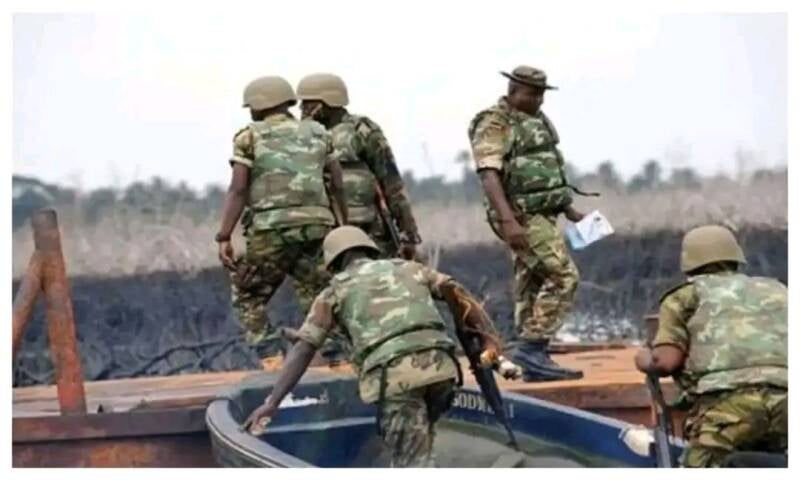
What began as a routine patrol along the creeks of the Niger Delta ended with the discovery of a concealed camp stocked with ammunition and materials intended for the fabrication of improvised explosive devices, after personnel of the Nigerian Navy Ship (NNS) SOROH tracked the suspicious movements of a high-powered speedboat ferrying six men in unverified uniforms deep into the waterways of Rivers and Bayelsa states. The operation, which unfolded around the Soku general area, has been described by naval authorities as a significant blow to criminal networks seeking to establish operational footholds within the nation's maritime environment, coming just days after the Navy dismantled illegal refining sites and recovered a concealed fuel stockpile along the same border corridor. According to a statement issued on Tuesday, May 19, 2026, by the Naval Director of Information, Commodore Abiodun Folorunsho (also identified as Navy Captain A.A. Folorunsho in some releases), the discovery was made possible by heightened surveillance and patrols that had been intensified in response to rising security concerns across the creek corridors of the Niger Delta.
The chain of events began when naval personnel on routine security operations spotted a speedboat fitted with a 200‑horsepower engine moving unusually through the waterways. The vessel was carrying six individuals dressed in attire that appeared to be uniforms, though their authenticity could not be verified on the spot. The boat was first observed travelling from Sangama Community towards Russia Community Creek, which borders the Olowaseri area of Bayelsa State. What initially seemed like normal movement quickly raised suspicion when the boat reportedly paused within the creek network and offloaded three of its occupants in a manner considered irregular before the vessel retreated deeper into the adjoining creeks. “The unusual movement pattern necessitated the deployment of a patrol team to further investigate the suspicious activity,” Commodore Folorunsho said in the statement. Acting on that intelligence, the naval team traced the movement and conducted a follow‑up sweep of the surrounding area, eventually stumbling upon a concealed structure hidden within the creek environment, described as a possible staging point for coordinated illegal operations.
Inside the site, naval personnel made a chilling discovery: 50 rounds of 7.62mm special ammunition carefully hidden inside a water container, a concealment method clearly designed to evade detection during routine patrols. But the ammunition was only part of the cache. Also recovered were old vehicle batteries, assorted electrical wires, and several containers filled with unidentified foul‑smelling substances, each adorned with red straps wrapped around them. According to preliminary assessments by naval investigators, some of these materials may have been assembled for the fabrication of improvised explosive devices (IEDs) or for acts of pipeline vandalism and economic sabotage within the region. “Preliminary evaluations suggest that some of the recovered items may be linked to efforts to create improvised explosive devices or to facilitate acts of pipeline vandalism and sabotage in the area,” the statement noted.
The significance of the find cannot be overstated. The recovery of 7.62mm ammunition, a calibre commonly used in assault rifles such as the AK‑47, points to the presence of armed elements capable of mounting lethal attacks. The vehicle batteries and electrical wires, while seemingly mundane, are essential components in the construction of IEDs, which have been used by criminal gangs and militants in the Niger Delta to target oil infrastructure, security patrols and civilian communities. The foul-smelling substances in the red‑strapped containers are undergoing forensic analysis, but their presence alongside the other items strongly suggests an intent to produce explosives or conduct sabotage operations, which would have had devastating consequences for the region's fragile security and economy.
The camp was immediately dismantled and destroyed on site to prevent any further criminal use. The recovered ammunition and selected items, however, have been taken into custody for further investigation, and security officials say the findings are already providing valuable intelligence leads. The speedboat and the six individuals who initially drew attention to the location have not been located, but naval authorities have indicated that the manhunt for the occupants and their network is ongoing. The operation was carried out under the broader framework of Operation DELTA SENTINEL, the Nigerian Navy's sustained campaign against crude oil theft, illegal refining, pipeline vandalism, and other maritime crimes in the Niger Delta. In the days leading up to this discovery, personnel of NNS SOROH had also uncovered a concealed fuel stockpile along the Rivers–Bayelsa border corridor and disrupted attempts to establish illegal refining infrastructure, underscoring the intensifying nature of the Navy's operations in the creeks.
The discovery has drawn mixed reactions from regional stakeholders. While security analysts have praised the Navy's vigilance and intelligence-driven approach, some community leaders have expressed concern about the growing militarization of the creeks and the potential for unintended consequences on local livelihoods that depend on fishing and transportation. However, the overwhelming sentiment among residents of the affected communities has been one of relief. For years, the creeks between Rivers and Bayelsa have been a sanctuary for criminal syndicates involved in kidnapping, oil theft and the production of illegal weapons. The presence of a staging camp stocked with ammunition and bomb-making materials would have emboldened such groups and intensified the violence that has plagued the region.
The Nigerian Navy, for its part, has reaffirmed its commitment to sustaining intelligence-driven patrols and coordinated maritime security operations across the Niger Delta. Commodore Folorunsho assured that the service remains determined to deny criminal and hostile elements the ability to establish operational footholds within the nation's maritime environment. "The operation reflects the Nigerian Navy’s continued commitment to intelligence-driven patrols and efforts aimed at denying criminal elements operational footholds within the nation’s maritime environment," he said.
As forensic analysis continues on the recovered materials and the hunt for the speedboat occupants intensifies, one question lingers: What were the six men in uniformed attire planning? The camp was a staging point, meaning it was intended to serve as a base for launching operations rather than a permanent settlement. The presence of ammunition and explosive-making materials suggests that the intended operations were not limited to oil theft or illegal refining; they may have involved armed attacks, sabotage of critical infrastructure, or even an escalation into more sophisticated forms of violence. For now, the Nigerian Navy's timely intervention has ensured that whatever was being planned never left the creek. But as the service itself acknowledges, the fight to secure the Niger Delta's waterways is far from over, and the creeks will continue to yield both secrets and surprises.
📩 Stone Reporters News | 🌍 stonereportersnews.com
✉️ info@stonereportersnews.com | 📘 Facebook: Stone Reporters News | 🐦 X (Twitter): @StoneReportNew | 📸 Instagram: @stonereportersnews
Add comment
Comments