

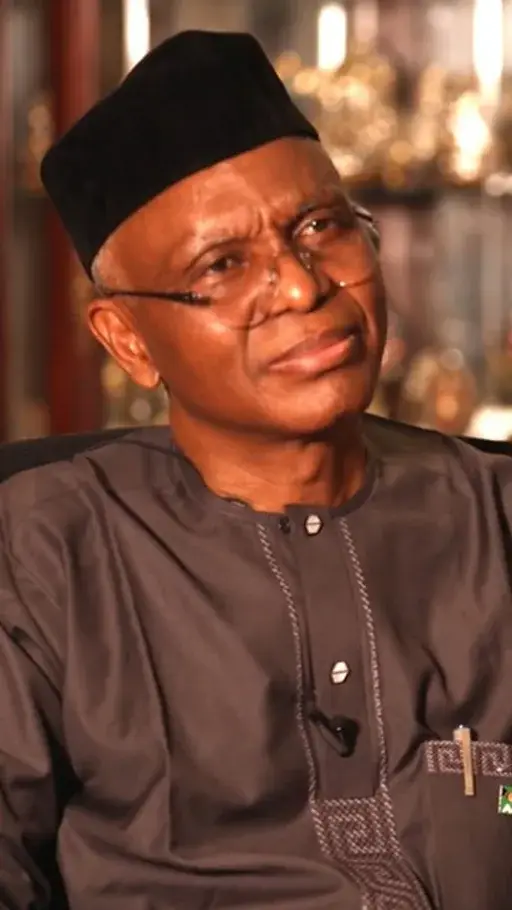
A Department of State Services (DSS) witness has told a Federal High Court in Abuja that Nigeria’s National Security Adviser, Nuhu Ribadu, confirmed a conversation cited during a controversial television interview by former Kaduna State Governor Nasir El-Rufai, a development that has intensified scrutiny in an ongoing trial over alleged unlawful interception of communications.
The case stems from allegations that El-Rufai publicly referenced a monitored exchange involving top security officials during a broadcast on Arise Television, an interview that prosecutors argue triggered a formal investigation into alleged breaches of national security protocols. According to testimony presented in court, DSS operatives began probing the matter after reviewing the broadcast and interpreting portions of El-Rufai’s comments as an admission that a private communication had been intercepted.
The witness, whose identity was protected under court orders and referred to as “APC,” told Justice Joyce Abdulmalik that investigators escalated their inquiry after El-Rufai’s appearance on the programme. He said security personnel recorded and preserved the interview, later transferring it onto a digital storage device submitted as evidence in court proceedings. The material was admitted alongside a certificate of compliance after prosecutors applied for its inclusion.
According to the testimony, the investigative process included interviews with individuals connected to the broadcast, including media personnel and legal practitioners associated with the programme. The witness stated that these individuals confirmed aspects of the discussion aired during the interview, which allegedly referenced intercepted communications involving senior government officials. The DSS further claimed that the remarks made during the broadcast amounted to what investigators described as an “open confession” regarding access to sensitive communications, prompting recommendations for prosecution.
The trial has centred on allegations that El-Rufai unlawfully interfered with or obtained access to telephone conversations involving the National Security Adviser. Prosecutors argue that statements made during the televised interview suggest prior knowledge of monitored exchanges, raising concerns about the legality and security implications of such disclosures. El-Rufai has denied wrongdoing and pleaded not guilty to the charges.
In a significant development during proceedings, the DSS witness told the court that subsequent investigative steps included engagement with the National Security Adviser himself. According to the testimony, Ribadu acknowledged that the conversation referenced in the interview had indeed taken place, though the circumstances and context of the exchange were not fully detailed in open court. The Independent Corrupt Practices and Other Related Offences Commission chairman was also reportedly consulted as part of the inquiry process, according to the witness statement presented by the prosecution.
The defence, led by senior advocate Paul Erokoro, challenged aspects of the investigation, questioning whether any forensic analysis had been conducted on communication devices or whether technical tracing such as IP analysis was performed. Under cross-examination, the DSS official reportedly conceded that investigators relied heavily on confirmations from individuals involved rather than independent digital forensic verification.
Despite these objections, the court admitted several exhibits submitted by the prosecution, including the recorded interview and a preliminary investigative report. The judge also approved protective measures for DSS witnesses, allowing them to testify under pseudonyms due to national security considerations. The defence’s request for broader disclosure of evidence was rejected, with the court ruling that the prosecution had met the minimum requirements under Nigerian criminal procedure laws.
The proceedings have drawn attention in Nigeria due to the high-profile nature of the defendant and the involvement of senior security officials. El-Rufai, a former governor and federal minister, has long been a prominent political figure, and his statements during the televised interview have been widely circulated in political and legal discussions.
In court, the DSS maintained that the investigation was initiated solely after the televised broadcast drew attention to potentially sensitive disclosures. Officials testified that they acted in response to what they believed were admissions concerning intercepted communications, which they argued could undermine operational confidentiality within Nigeria’s security architecture.
El-Rufai, meanwhile, has consistently maintained that his remarks were taken out of context and that he is being politically targeted. He has argued that his comments referred to broader practices of state surveillance rather than any unlawful activity on his part. His legal team has continued to challenge the admissibility and interpretation of prosecution evidence, insisting that no direct proof of interception has been established.
The court has granted bail to the former governor under strict conditions and ordered accelerated hearing of the case, reflecting the sensitivity and public interest surrounding the matter. Further hearings are expected to continue in the coming weeks as both sides present additional witnesses and evidence.
As the trial progresses, the central issues remain the interpretation of El-Rufai’s televised statements, the scope of lawful surveillance practices, and whether any criminal threshold was crossed in relation to the handling or disclosure of communications involving top national security officials. The court’s eventual findings are expected to have implications not only for the defendant but also for the broader legal boundaries governing intelligence activities and public disclosure in Nigeria.
📩 Stone Reporters News | 🌍 stonereportersnews.com
✉️ info@stonereportersnews.com | 📘 Facebook: Stone Reporters News | 🐦 X (Twitter): @StoneReportNew | 📸 Instagram: @stonereportersnews
Add comment
Comments