

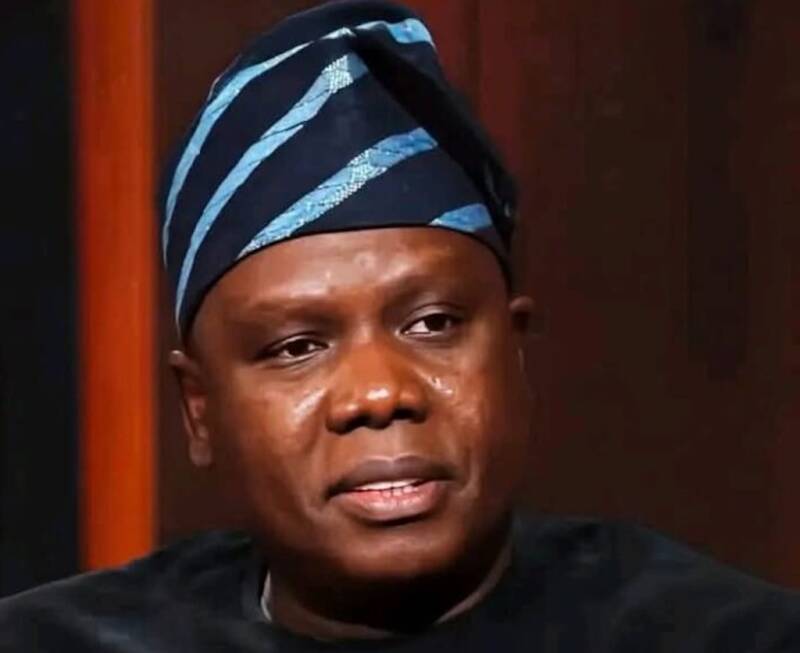
A Senior Special Assistant to President Bola Tinubu on Policy Communication, Daniel Bwala, has stated that Nigerians are constitutionally entitled to self-defence and may, under existing legal frameworks, apply for licences to bear arms where permitted by law, in comments that have reignited national debate over civilian protection and firearms regulation.
Bwala made the remarks in Abuja on Arise News May 2026 during a policy communication engagement with media and stakeholders, where he addressed questions relating to insecurity, constitutional rights, and the government’s approach to community safety. His statement has since circulated widely across political and public discourse platforms, drawing both support and criticism.
He argued that the Nigerian Constitution recognises the principle of private defence, meaning citizens have the right to protect themselves when faced with immediate threats, provided such actions remain within lawful limits. He further stated that Nigerians also have a collective responsibility to support community safety efforts, including lawful participation in security structures approved by government authorities.
According to Bwala, citizens who wish to bear arms must do so strictly through government-approved licensing processes administered by relevant security agencies, particularly the Nigeria Police Force, which retains statutory authority over firearms regulation in the country.
His comments come at a time when Nigeria continues to grapple with persistent insecurity in several regions, including banditry in the northwest, kidnappings in the north-central zone, and sporadic armed attacks in rural communities. These security challenges have intensified public debate over whether existing policing structures are sufficient to protect citizens, especially in remote areas with limited security presence.
Government data and official statements in recent months have repeatedly emphasised efforts to strengthen security architecture, including increased deployments, intelligence coordination, and discussions around possible reforms such as community policing frameworks and enhanced local security participation.
In a related policy context, President Bola Tinubu recently reiterated his administration’s commitment to addressing insecurity, describing it as a major threat to national development and urging collaboration between federal and state authorities to improve protection of vulnerable communities.
Bwala’s remarks have therefore been interpreted by analysts as part of a broader government communication effort to clarify the limits and scope of constitutional self-defence while maintaining the state’s monopoly over lawful possession of firearms.
Legal experts note that while Nigerian law recognises self-defence under constitutional interpretation and criminal law principles, possession of firearms is heavily regulated and cannot be exercised freely without licensing approval. The Nigeria Police Force remains the primary agency responsible for issuing such permits, and illegal possession of arms is a criminal offence under existing statutes.
Civil society groups and security commentators have expressed differing views on the statement. Some interpret it as an acknowledgment of citizens’ rights to personal protection in the face of insecurity, while others caution that expanding public discussion around firearms could lead to misinterpretation or misuse if not clearly regulated.
The debate over self-defence rights is not new in Nigeria. Over the years, courts and legal scholars have consistently maintained that while individuals may protect themselves against imminent harm, such actions must be proportionate and within legal boundaries. This distinction has often been cited in cases involving armed robbery, kidnapping attempts, and rural attacks.
Security analysts also highlight that Nigeria’s firearms policy remains among the most restrictive in West Africa, reflecting concerns about proliferation of small arms and the potential escalation of violence if civilian ownership is expanded without strict oversight.
Bwala’s statement has also sparked political discussion, with some commentators linking it to broader conversations within government circles about restructuring security architecture, improving response times in rural areas, and exploring community-based security models.
However, officials stress that no formal policy change has been announced regarding civilian armament, and that any legal interpretation must be grounded in existing statutory frameworks rather than political statements.
As of the time of reporting, there has been no official clarification from the Presidency beyond Bwala’s initial remarks, and security agencies have not indicated any change in firearms licensing procedures.
The statement continues to trend in public discourse, reflecting ongoing national concern over safety, governance, and the balance between state authority and individual protection rights.
Political observers suggest that Bwala’s comments may be part of a broader communication strategy aimed at addressing rising public anxiety over insecurity, rather than signaling an immediate policy shift. Some analysts believe the statement could be intended to reinforce the legal principle of self-defence while reaffirming that the state retains control over firearms regulation.
Others argue that the timing of the remarks may reflect internal policy discussions about strengthening community-level security participation, especially in rural regions where rapid response by conventional security forces is often delayed. However, there is no official confirmation of any legislative proposal to expand civilian access to arms.
There is also speculation in political commentary spaces that the statement could be interpreted differently by various stakeholders, potentially fuelling renewed debate over state policing, community defence groups, and security decentralisation. Despite this, government sources have not indicated any shift in national firearms policy.
For now, the matter remains within the realm of policy interpretation and public debate, with analysts urging caution to ensure that constitutional discussions on self-defence are not confused with authorisation for widespread civilian armament.
📩 Stone Reporters News | 🌍 stonereportersnews.com
✉️ info@stonereportersnews.com | 📘 Facebook: Stone Reporters News | 🐦 X (Twitter): @StoneReportNew | 📸 Instagram: @stonereportersnews
Add comment
Comments