

Reported by: Ijeoma G | Edited by: Oravbiere Osayomore Promise.
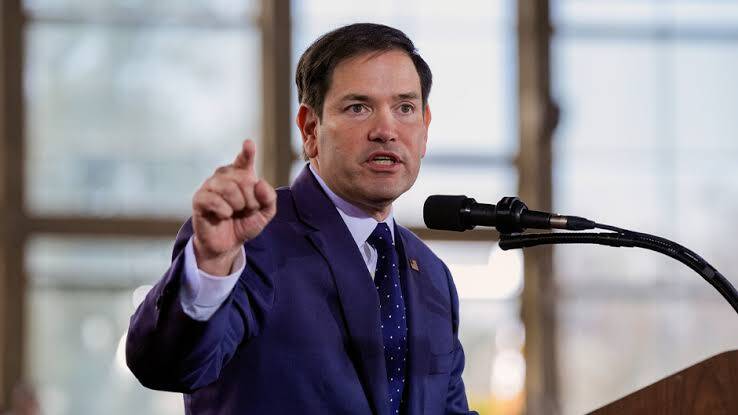
The United States is now actively engaged in direct counterterrorism cooperation with Nigeria, including joint military operations that have eliminated high‑value terrorist targets inside the country, Secretary of State Marco Rubio told the US Congress on Wednesday.
Testifying before the Senate Foreign Relations Committee during a hearing on the State Department’s Fiscal Year 2027 budget request, Rubio confirmed that American and Nigerian security forces are working side‑by‑side to dismantle extremist networks. “We are now actively in counterterrorism cooperation with the Nigerian government and Nigerian security forces, including a joint operation a couple of weeks ago that took out the number two leader of global ISIS operating from inside of the country, and that continues,” Rubio said in remarks that were posted online by the Department of State.
The operation Rubio referred to took place on 15 May 2026, when a joint US‑Nigeria mission targeted a compound in the Lake Chad Basin belonging to Abu‑Bilal al‑Minuki, the second‑in‑command of the Islamic State (ISIS) globally. Al‑Minuki, a Nigerian national who had risen through the ranks of the Islamic State West Africa Province (ISWAP), was killed in the strike along with several of his lieutenants. US Defence Secretary Pete Hegseth later described al‑Minuki as “the person most responsible for killing Christians” in Nigeria.
The operation marked a decisive shift in the bilateral security relationship. For years, US‑Nigeria counterterrorism cooperation had focused largely on training, intelligence sharing and logistical support. The May strike, however, was a direct, intelligence‑driven combat mission conducted jointly by American and Nigerian forces – a development that Nigerian military officials described as a new chapter in the partnership. Colonel Timothy Antigha (retd.), a member of the Minister of Defence’s media team, told the News Agency of Nigeria that the strike was “another dividend from a defence relationship that has shifted from training‑only to direct, intelligence‑driven action against terrorist networks”.
Rubio’s testimony comes barely three weeks after Nigeria’s National Security Adviser, Nuhu Ribadu, held a series of high‑level meetings in Washington with Vice‑President JD Vance, Secretary Rubio and Defence Secretary Hegseth. Those talks, which took place on 4‑6 May 2026, focused on deepening security cooperation, improving intelligence sharing and accelerating operational decision‑making. The White House described Nigeria as a “leading strategic partner” in Africa’s counterterrorism architecture.
The new level of cooperation has already produced additional results. Days after al‑Minuki’s elimination, US and Nigerian forces carried out multiple air strikes in Metele, Borno State, killing more than 20 ISWAP fighters. On 1 June 2026, a joint air raid targeting an ISWAP enclave in Arege, Kukawa Local Government Area, killed 21 terrorists and destroyed a command‑and‑control facility. In December 2025, US airstrikes also hit a terrorist hideout in Sokoto State.
Rubio’s statement also touched on the issue of religious violence. He noted that there is “widespread concern” in the United States about attacks on Christians in Nigeria, and that the administration of President Donald Trump remains committed to addressing the problem through security cooperation. The Trump administration designated Nigeria a “Country of Particular Concern” over alleged religious persecution in October 2025 – a move the Nigerian government initially protested but has since worked to mitigate through intensified bilateral engagement.
The Nigerian military and the Office of the National Security Adviser have welcomed the new level of US involvement, describing it as a force multiplier in the fight against insurgency and banditry. They have also confirmed that Nigeria provided the actionable intelligence that led to the successful targeting of al‑Minuki and other terrorist commanders. “The joint operations are intelligence‑driven and carefully coordinated,” a military source told The Guardian. “This is not the United States acting alone; this is a genuine partnership where both sides bring unique capabilities to the table.”
Rubio’s remarks come amid a broader shift in US counterterrorism strategy. The 2026 US counterterrorism doctrine identifies the Sahel and West Africa as critical frontline regions in the global fight against ISIS and al‑Qaeda affiliates. With the loss of access to bases in Niger following the 2024 coup, Washington has increasingly looked to Nigeria as its primary security partner in the region. The deepening ties are also reflected in the recent opening of a new US consular hub in Lagos, even as other African embassies saw their visa‑processing functions reduced.
For Nigeria, Rubio’s public confirmation that the United States is “actively engaged” in direct counterterrorism operations on its soil is both a strategic asset and a political signal. It reassures allies and investors that the country’s most pressing security threats are being addressed with world‑class support. However, it also places the government under greater scrutiny to ensure that the partnership produces tangible results in the form of reduced violence, fewer civilian casualties and the eventual restoration of stability in the North‑East and North‑West.
Rubio’s testimony concluded with a pledge of continuity. The cooperation, he said, is ongoing. “That continues on.” For the families of the 46 pupils and teachers still held captive in Oyo State, and for the millions of Nigerians living under the shadow of banditry and insurgency, those words carry both hope and a measure of expectation: that the active engagement of the world’s most powerful military will finally help turn the tide.
📩 Stone Reporters News | 🌍 stonereportersnews.com
✉️ info@stonereportersnews.com
📘 Facebook: Stone Reporters News
🐦 X (Twitter): @StoneReportNew
📸 Instagram: @stonereportersnews
Add comment
Comments