

Reported by: Oahimire Omone Precious | Edited by: Oravbiere Osayomore Promise.
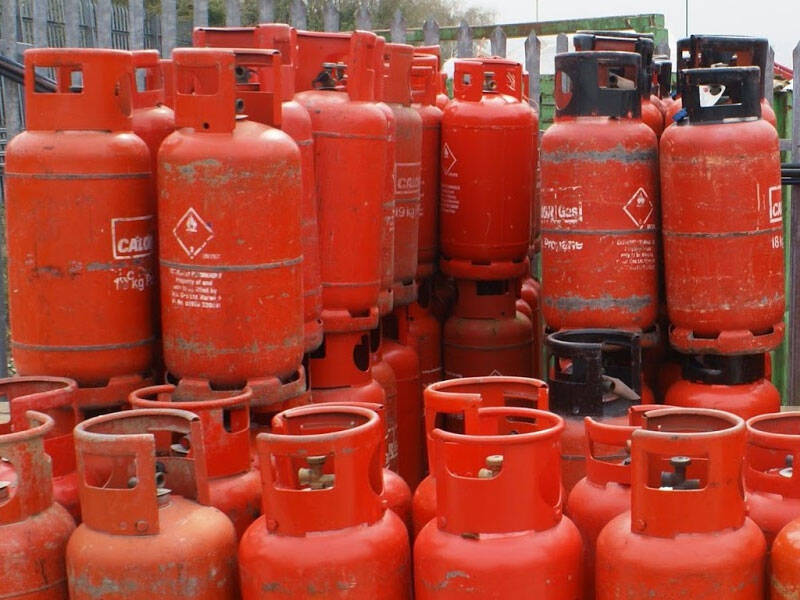
In less than six months, Nigeria’s cooking gas market has gone from record-breaking unaffordability to outright crisis. Today, millions of households have quietly abandoned their cylinders for charcoal and firewood — a health and environmental reversal that experts describe as a major setback for the country’s energy transition agenda. The price of liquefied petroleum gas (LPG) has surged from about ₦1,200 per kilogram in January 2026 to as high as ₦2,400 per kilogram in some retail outlets, representing a 100 percent increase in just a few months and a 67 percent jump since the start of the year.
What makes this crisis so puzzling — and so alarming — is that it is unfolding against the backdrop of record domestic production. Between April 2025 and April 2026, local refineries and gas processing plants accounted for the bulk of Nigeria’s LPG supply, with daily domestic output averaging between 3,300 and 4,500 tonnes. The Nigeria LNG Limited (NLNG) has dedicated 100 percent of its LPG production to the domestic market — not because output has dropped, but because demand has expanded significantly. Yet the more gas Nigeria produces, the higher the price climbs.
The explanation lies in a toxic mix of supply chain failures, foreign exchange volatility, global crude price shocks, and persistent logistics bottlenecks. Imported LPG, which helps supplement local output, fell from 1,600 tonnes per day in November 2025 to just 200 tonnes per day in March 2026. At the same time, Brent crude oil surged above $95 per barrel in early June, and briefly spiked to nearly $98, driven by escalating tensions in the Middle East and fresh attacks threatening the fragile ceasefire with Iran. This global pressure has made imports more expensive, while the naira’s continued instability has magnified every dollar cost for domestic consumers.
The retail reality is brutal. Data from the National Bureau of Statistics shows that the cost of refilling a 12.5kg cooking gas cylinder now exceeds ₦25,000. In some far‑northern states, a single kilogram sells for as much as ₦3,000. With the national minimum wage far below that threshold, cooking gas has effectively become a luxury. The Nigerian Association of Liquefied Petroleum Gas Marketers (NALPGAM) confirmed that marketers are paying between ₦25.2 million and ₦26.2 million for a 20‑metric‑tonne truck of LPG — a cost that is passed directly to consumers.
In response, households across the country are voting with their wallets. Charcoal and firewood have returned as primary cooking fuels in urban kitchens, where they were supposed to have been phased out. In the Federal Capital Territory, a bag of charcoal now sells for between ₦8,000 and ₦10,000, while five pieces of firewood go for ₦2,000 to ₦2,500. Charcoal sellers in Kubwa report that stock that used to take over a week to sell now finishes within two days. Food vendors, already squeezed by rising food costs, have been hit hardest. A vendor in Gwarimpa told reporters: “I could no longer afford it and still make reasonable profit. Right now, a 12.5kg cylinder costs about ₦25,000. Firewood and charcoal are not as convenient, but they help me keep my business running”. Another food seller in Dutse, Abuja, lamented that her profit margin has already been wiped out, and that the government should “help and bring the price back to normal”.
The health and environmental costs are already mounting. Households burning charcoal and firewood indoors are exposed to dangerous levels of carbon monoxide and other particulate matter, which experts warn can lead to chronic respiratory diseases and premature death. At the national scale, the mass return to biomass fuels threatens to reverse Nigeria’s clean‑cooking targets under the Decade of Gas policy and its 2030 energy access commitments. Between 2020 and 2025, Nigeria exported wood and charcoal worth over ₦772 billion, much of it from informal sources, while losing an estimated 1.14 million hectares of tree cover to deforestation driven largely by fuelwood production. That trend is accelerating.
The irony is that some of the key infrastructure meant to solve Nigeria’s gas distribution problems is nearly ready. The Ajaokuta-Kaduna-Kano gas pipeline is 93.4 percent complete, the OB3 River Niger Crossing is at 93.88 percent, and the ELPS Midline Compressor Project stands at 94.45 percent. But for the millions of Nigerians who have already abandoned their cylinders, these projects cannot come soon enough. As one food vendor put it: “How can a country with so much natural gas watch its citizens cook with firewood? The smoke is killing people slowly, and our forests are disappearing”.
📩 Stone Reporters News | 🌍 stonereportersnews.com ✉️ info@stonereportersnews.com | 📘 Facebook: Stone Reporters News | 🐦 X (Twitter): @StoneReportNew | 📸 Instagram: @stonereportersnews
Add comment
Comments