

Reported by: Ijeoma G | Edited by: Oravbiere Osayomore Promise.
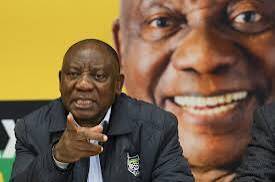
JOHANNESBURG – In a high‑stakes national address on Sunday, June 7 2026, South African President Cyril Ramaphosa unveiled a sweeping five‑pillar crackdown on illegal immigration, while firmly condemning a wave of xenophobic violence and insisting that only authorised law‑enforcement agencies may enforce immigration laws.
Speaking from the Union Buildings in Pretoria, Ramaphosa acknowledged growing public anger over undocumented migration and its impact on jobs, health care, education and crime. He said the government had “heard the concerns” of communities and would act with unprecedented force. Yet he also drew a sharp red line: “The responsibility for enforcing immigration laws rests with the state and the state alone. No other person is allowed, for example, to confront someone in the street to demand proof of nationality.”
The president’s address came as tensions across the country reached a boiling point. Anti‑migrant groups had issued a 30 June deadline demanding that all undocumented foreigners leave South Africa. Over the preceding weeks, vigilantes had gone door‑to‑door in several provinces, forcing foreign nationals to flee their homes. Two Mozambican citizens were killed in Mossel Bay, and dozens of migrants sought shelter in community halls and on beaches. Several African governments, including Nigeria, Malawi and Mozambique, began repatriating their citizens. On the same day as the address, Mozambican authorities confirmed that five of their nationals had died in the wave of violence.
Ramaphosa’s five‑pillar strategy, approved by the Cabinet, aims to radically overhaul South Africa’s porous immigration system. The pillars include: a concerted crackdown on violations of immigration and labour laws; stronger border security; the stamping‑out of corruption inside the Home Affairs department; legislative reforms to close loopholes; and closer cooperation with other African countries to address the root causes of migration.
Among the most eye‑catching measures is the establishment of dedicated immigration courts to speed up the deportation of undocumented foreigners. The president revealed that the Border Management Authority had intercepted more than 450,000 people attempting to enter the country illegally in the past year alone. Those figures, he said, underlined the need for immediate action.
To strengthen border controls, the government will deploy ground sensors, satellite monitoring and drones along South Africa’s frontiers. Refugee reception centres will be progressively relocated to border posts, starting with the Tshwane centre. The Home Affairs department will also introduce an “Intelligent Population Register” containing biometric data on every person in the country, while phasing out the easily‑abused green barcoded identity book.
On the domestic front, the president announced that the Department of Employment and Labour has begun hiring 10,000 new labour inspectors to target employers who hire undocumented workers. Those found guilty of flouting the Immigration Act will face harsher penalties, including imprisonment. The government also finalised the National Labour Migration Policy, which will establish quotas for the employment of documented foreign nationals in specific sectors. The Employment Services Amendment Bill, already before Parliament, will empower the labour minister to determine those quotas.
Ramaphosa was careful to balance enforcement with a powerful anti‑xenophobia message. “We know that South Africans are not xenophobic,” he said. “There is no space for xenophobia, racism, sexism, Afrophobia or any other form of intolerance in South Africa.” He accused some groups of exploiting legitimate public anger for “political, personal or criminal agendas” and warned that the authorities would not allow anyone to “destabilise the country by inciting lawlessness and violence.” He also took aim at social media campaigns that spread falsehoods about foreign nationals, stressing that anti‑foreigner sentiment had at times resulted in attacks against fellow South Africans.
Public reaction was immediate and divided. Within an hour of the speech, March and March founder Jacinta Ngobese‑Zuma dismissed the plan as unworkable, calling a “shutdown” in Benoni and repeating the demand that all undocumented foreigners leave by 30 June. The uMkhonto weSizwe Party backed the movement, accusing undocumented migrants of turning parts of South African towns into crime hubs. By contrast, the Congress of South African Trade Unions (COSATU) welcomed the address, praising the commitment to 10,000 labour inspectors and prison penalties for exploitative employers. COSATU also noted that the 450,000 interceptions at the border raised questions about how many others had slipped through.
The Democratic Alliance endorsed the border‑control measures but argued that South Africa’s economic problems stem from a failure to create jobs, not from foreign nationals. Federal leader Geordin Hill‑Lewis echoed the president’s warning that enforcement must be carried out by the state, not vigilantes. Ramaphosa himself acknowledged that the government had moved too slowly in the past. He emphasised that stronger economic growth, industrial expansion and large‑scale job creation remained the only long‑term solutions to the frustrations that fuel anti‑migrant hostility.
Observers noted that the resurgence of anti‑immigrant sentiment coincides with the approach of local elections scheduled for November, and some analysts have suggested that political actors are stoking the issue for electoral gain. On the diplomatic front, Ghana has petitioned the African Union over the treatment of its nationals in South Africa. Mozambique has officially complained about the deaths of its citizens. Ramaphosa announced he will send special envoys to a number of African countries to explain the new measures and to seek coordinated solutions.
As the sun set on a highly charged day, the government was left with a formidable challenge: to translate a sweeping policy blueprint into action on the ground, while containing a wave of violence that has already claimed lives and strained South Africa’s relations across the continent. The June 30 deadline set by anti‑migrant groups is now less than three weeks away. Whether Ramaphosa’s crackdown will cool tempers or pour fuel on the fire remains an open question.
📩 Stone Reporters News | 🌍 stonereportersnews.com ✉️ info@stonereportersnews.com | 📘 Facebook: Stone Reporters News | 🐦 X (Twitter): @StoneReportNew | 📸 Instagram: @stonereportersnews
Add comment
Comments