

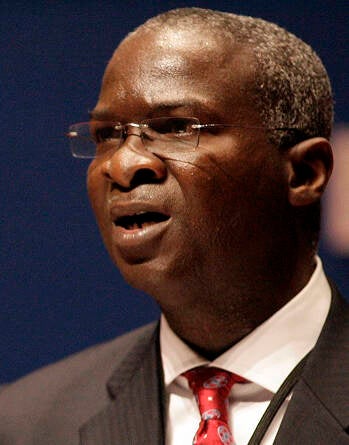
Former Minister of Works and Housing, Babatunde Fashola, has raised concerns over ongoing discussions about the creation of state police in Nigeria, questioning the feasibility of recruitment, funding, and long-term sustainability of such a system within the country’s current socio-economic realities.
Fashola made the remarks while contributing to the national conversation on security reforms, where stakeholders continue to debate whether decentralising policing powers to state governments would improve internal security or introduce new governance and accountability challenges.
In his comments, Fashola drew attention to manpower constraints that could affect the effectiveness of state-controlled police structures, asking: “How many young people want to work in the police? Whose children should go there?”
The statement has been widely interpreted as a reflection of broader concerns about recruitment challenges within Nigeria’s security sector, where agencies have for years faced issues relating to staffing levels, welfare conditions, and public perception.
The proposal for state police has remained a recurring topic in Nigeria’s constitutional and security reform debates, especially in response to persistent incidents of armed violence, kidnapping, and rural insecurity reported across several regions of the country.
Supporters of the idea argue that decentralised policing would allow state governments to respond more quickly to local security threats and improve intelligence gathering at community level, while critics warn it could lead to political abuse and uneven enforcement of law across different states.
Nigeria currently operates a centralised policing structure under the Nigeria Police Force, which is constitutionally responsible for maintaining law and order nationwide, although its capacity has been frequently questioned due to personnel shortages and logistical limitations.
Over the years, successive administrations have introduced various reforms aimed at improving policing effectiveness, including community policing initiatives and increased recruitment drives, but challenges have persisted in areas such as funding, training, and operational equipment.
Fashola, who previously served as Governor of Lagos State before holding federal ministerial positions, has often participated in governance debates, particularly on infrastructure, institutional reforms, and public administration efficiency.
His latest remarks add to the list of opinions from political leaders, security experts, and civil society organisations who continue to engage in discussions on how best to reform Nigeria’s internal security framework amid evolving threats.
Security remains a central issue in Nigeria’s national discourse, with ongoing concerns about the capacity of existing institutions to effectively respond to emerging threats across urban and rural communities.
Analysts note that any move toward establishing state police would require constitutional amendments, legislative approval, and clear frameworks to prevent overlap of responsibilities between federal and state security institutions.
Public reactions to the debate have remained divided, with some citizens calling for urgent reforms to address insecurity, while others caution that structural changes must be carefully planned to avoid unintended consequences.
The discussion reflects broader questions about governance in federal systems, where the balance between central authority and regional autonomy often shapes how security responsibilities are distributed.
Fashola’s comments are part of an ongoing national dialogue that continues to evolve as Nigeria seeks sustainable solutions to its complex security challenges.
The debate over state police in Nigeria has periodically resurfaced during constitutional review exercises, particularly at moments when security conditions worsen in multiple regions, prompting renewed calls for decentralised policing structures to complement existing federal arrangements and improve response capacity at local levels.
International comparative studies on policing structures often reference both centralised and decentralised models, noting that effectiveness depends on governance strength, accountability mechanisms, and resource availability, rather than structure alone, making reforms highly context-dependent in different national settings.
In Nigeria, discussions on policing reform have also included proposals for enhanced community policing frameworks, aimed at strengthening trust between security agencies and local populations, improving intelligence flow, and reducing response time to emerging security incidents across rural and urban areas.
However, implementation challenges have persisted, including limited funding, insufficient training facilities, and uneven distribution of personnel across states, which have affected the overall efficiency of law enforcement operations in several parts of the country.
Stakeholders advocating for reform argue that improved welfare packages for police officers could enhance morale and recruitment, addressing concerns about the attractiveness of policing careers to younger populations in Nigeria’s evolving labour market.
Others maintain that without broader institutional reforms, including judicial efficiency and anti-corruption measures, changes to policing structures alone may not significantly improve overall security outcomes across the country.
The financial implications of establishing state police are also a major consideration, as state governments would need to allocate substantial resources for recruitment, training, equipment, and operational logistics in addition to existing budgetary commitments.
Nigeria’s federal structure adds another layer of complexity to the debate, as security responsibilities are currently centralized, and any shift toward state-controlled policing would require significant constitutional amendments and intergovernmental coordination.
Civil society organisations have consistently called for careful planning and safeguards to ensure that any reform of policing does not undermine national cohesion or create disparities in law enforcement across different regions.
The role of political leadership remains central to the outcome of the state police debate, as decisions taken at federal and state levels will determine how reforms are designed, funded, and implemented over time.
Public discourse continues to evolve as citizens, experts, and policymakers weigh competing arguments, reflecting the complexity of balancing security needs with governance principles in a diverse federation.
Media analysts note that Fashola’s intervention is likely to sustain public attention on the debate, given his background in governance and infrastructure development, and his prior experience managing both state-level executive responsibilities and federal ministerial duties within Nigeria’s political system.
Observers further suggest that the ongoing discussion over state policing will continue to shape Nigeria’s broader security reform agenda, particularly as policymakers assess institutional capacity, fiscal constraints, and the need for improved coordination among existing security agencies.
The remarks also reflect wider governance conversations across Nigeria, where security reform remains a recurring policy priority linked to national development planning and long-term institutional strengthening efforts, especially amid evolving regional security challenges and demographic pressures.
Add comment
Comments