

Reported by: Ijeoma G | Edited by: John. O
ABUJA, Nigeria — June 19, 2026 — Young Nigerians have called on the Federal Government to establish stronger structures that will allow youths to participate directly in the implementation, monitoring, and evaluation of policies designed to address their needs.
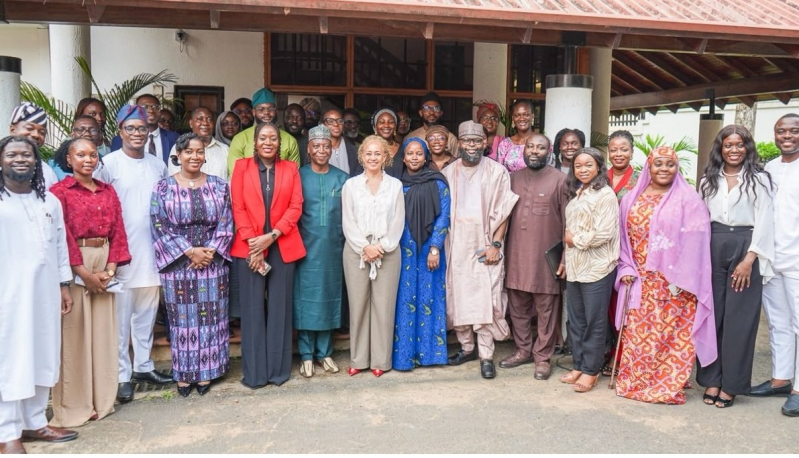
The demand was made during a high-level stakeholders’ dialogue on Nigeria’s National Youth Policy (NYP) held in Abuja on Friday, June 19, 2026.
The meeting was organised by the Network of Youth for Sustainable Initiatives (NGYouthSDGs) in partnership with the British High Commission and the Federal Ministry of Youth Development.
The dialogue brought together representatives from government agencies, lawmakers, state governments, development partners, private sector organisations, and youth-led civil society groups to review the progress and challenges surrounding youth-focused policies in Nigeria.
Participants examined findings from a nationwide youth consultation conducted between January and March 2026, which involved more than 550 young Nigerians from Bauchi, Benue, and Rivers states, as well as participants from national virtual engagement sessions.
The consultation revealed that while young people are often involved during policy discussions and design stages, many are excluded when it comes to actual implementation, monitoring, and evaluation.
Stakeholders argued that youth participation should move beyond consultation and become an established part of the policy process.
The discussions also highlighted concerns about the previous National Youth Policy 2019–2023, with participants noting that although the policy contained important objectives for youth development, it lacked a clear financing framework and publicly available evaluation mechanisms to measure its impact.
Young participants said the absence of strong implementation structures had limited the effectiveness of many youth programmes and created a gap between policy promises and actual outcomes.
Speaking at the event, Joshua Alade, Founder and Executive Director of NGYouthSDGs, said young Nigerians had consistently identified the priorities that should shape the next National Youth Policy.
“Young Nigerians have already told us, with remarkable consistency, what the next National Youth Policy needs to get right,” Alade said.
He added that the important issue was ensuring that discussions translated into measurable action.
“What happens next is what will determine whether this becomes another well-intentioned document or the policy cycle where Nigeria finally moves from ideas to accountable delivery,” he said.
Alade explained that recommendations from the dialogue would be submitted to the Federal Ministry of Youth Development and relevant committees of the National Assembly as part of efforts to develop the next youth policy framework.
The British High Commission also reaffirmed its support for evidence-based youth development initiatives.
Cynthia Rowe, Head of Development Cooperation at the British High Commission in Abuja, said young people must be recognised as active contributors to national transformation.
“Nigeria’s young people are not just its future; they are central to its present transformation,” Rowe said.
She added that the United Kingdom would continue supporting approaches focused on accountability, evidence, and policies capable of delivering meaningful results for young Nigerians.
Stakeholders at the meeting identified several key areas requiring attention, including sustainable funding, effective monitoring systems, transparency, and formal mechanisms that guarantee youth involvement throughout the entire policy cycle.
They argued that meaningful inclusion of young Nigerians would improve accountability and ensure that government programmes reflect the realities faced by the country’s youthful population.
Nigeria has one of the largest youth populations in the world, with young people representing a significant portion of the country’s population. However, unemployment, skills gaps, economic pressures, and limited opportunities remain major concerns among young citizens.
Participants said the success of the next National Youth Policy would depend not only on the quality of its goals but also on how effectively it is implemented and whether young Nigerians are given a recognised role in overseeing its progress.
The stakeholders agreed that without clear funding arrangements, measurable targets, and youth participation structures, future policies risk facing the same implementation challenges experienced in previous frameworks.
The dialogue concluded with a call for stronger collaboration between government institutions, young Nigerians, development partners, and civil society organisations to ensure that youth policies produce practical results.
📩 Stone Reporters News | 🌍 stonereportersnews.com
✉️ info@stonereportersnews.com | 📘 Facebook: Stone Reporters News | 🐦 X (Twitter): @StoneReportNew | 📸 Instagram: @stonereportersnews
Add comment
Comments