

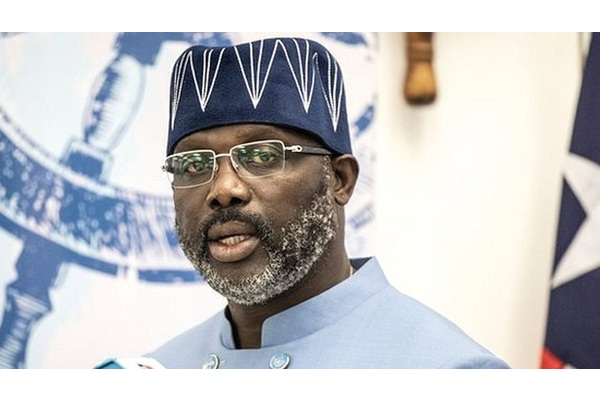
Former Liberian President and football legend George Weah has praised FIFA’s intensified campaign against racism and hate speech, describing it as one of the most important developments in the history of world football and urging players, officials, supporters and institutions to unite behind the effort.
Speaking on the FIFA Podcast during a conversation with former France and Arsenal defender Mikaël Silvestre, Weah said football’s global appeal rests on values of unity, friendship and mutual respect, making discrimination incompatible with the spirit of the sport. The former FIFA World Player of the Year argued that racism and hate speech continue to undermine football’s ability to bring people together and must be confronted through both punishment and education.
Weah currently serves as the Honorary Captain of FIFA’s 16-member Players’ Voice Panel, a body established to support the governing body’s Global Stand Against Racism initiative. The panel includes former football stars from different regions of the world and was created to advise on anti-racism strategies, contribute to educational programmes and help drive reforms aimed at reducing discrimination throughout the game.
According to FIFA, the Players’ Voice Panel represents all six continental confederations and forms part of a broader campaign launched in recent years to strengthen football’s response to racism both inside stadiums and across digital platforms. The initiative was developed following growing concerns about racist abuse directed at players, coaches and officials, particularly through social media.
Weah welcomed FIFA’s efforts to move beyond disciplinary measures by promoting education among young people. He emphasized that lasting progress would require teaching future generations the values of coexistence, respect and inclusion. He also supported firm sanctions against individuals who use racist language or engage in discriminatory behaviour, arguing that football authorities must demonstrate zero tolerance for such conduct.
The former striker’s comments come amid a broader FIFA campaign that has gained visibility during the ongoing FIFA World Cup 2026. In recent weeks, FIFA organized events focused on combating hate speech and strengthening cooperation among football authorities, technology companies, policymakers and civil society groups. One such gathering took place in Atlanta, where football figures and experts discussed practical measures to reduce online abuse and discrimination.
FIFA officials have highlighted the growing role of the organization’s Social Media Protection Service, which monitors online abuse directed at participants in FIFA competitions. According to figures released by FIFA, the system has reviewed hundreds of millions of social media posts since its launch and identified tens of millions of harmful messages. During the 2026 World Cup alone, hundreds of thousands of abusive posts have reportedly been removed, exceeding the total number removed during the entire 2022 tournament.
The governing body has also introduced a range of regulatory reforms. FIFA strengthened its disciplinary code by increasing sanctions for racist conduct and expanding procedures available to match officials when discriminatory incidents occur. Earlier this year, FIFA approved amendments to the Laws of the Game allowing red cards to be shown to players who conceal discriminatory remarks by covering their mouths while speaking. The measure is intended to reinforce accountability and deter abusive conduct on the field.
FIFA President Gianni Infantino has repeatedly stated that racism and discrimination should be treated as serious offences requiring decisive action. Under FIFA’s anti-racism framework, member associations have been encouraged to adopt stronger enforcement mechanisms while promoting education and awareness campaigns at all levels of football.
For Weah, the issue carries personal significance. During his celebrated playing career with clubs including AC Milan and Paris Saint-Germain, he experienced the challenges faced by African players competing on the global stage. He has frequently spoken about the need for football to serve as a force for peace and understanding rather than division.
In his latest remarks, Weah also reflected on Liberia’s difficult history and the role football played in helping rebuild national identity during periods of civil conflict. He recalled efforts by the national team to project a positive image of the country despite years of instability and hardship. Football, he said, provided a source of hope and unity at a time when the nation faced profound challenges.
The discussion also touched on one of the enduring disappointments of Weah’s career: Liberia’s failure to qualify for a FIFA World Cup during his playing days. Despite leading the national team through several qualification campaigns, the country came agonisingly close without securing a place at football’s biggest tournament.
That dream, however, found a different expression through his son, Timothy Weah, who has represented the United States on the international stage. Weah credited his wife’s dedication and sacrifices in supporting Timothy’s development as a young footballer, recalling the long journeys she made to training sessions and matches during his formative years.
The elder Weah said seeing his son compete at the highest level brought pride to the family and represented the fulfilment of an ambition that had escaped him as a player. The experience, he noted, demonstrated the importance of perseverance, family support and opportunity in shaping sporting careers.
As football authorities continue to grapple with racism and hate speech, Weah maintained that the sport’s influence extends far beyond the pitch. By bringing together people from different cultures, religions and nationalities, he argued, football possesses a unique ability to challenge prejudice and promote understanding.
His endorsement of FIFA’s campaign comes as the organization intensifies efforts to ensure that anti-racism measures become a permanent and visible part of the global game. With educational initiatives expanding, disciplinary rules tightening and technological tools increasingly deployed against online abuse, football’s governing body hopes to create a safer and more inclusive environment for players and supporters alike.
📩 Stone Reporters News | 🌍 stonereportersnews.com
✉️ info@stonereportersnews.com | 📘 Facebook: Stone Reporters News | 🐦 X (Twitter): @StoneReportNew | 📸 Instagram: @stonereportersnews
Add comment
Comments