

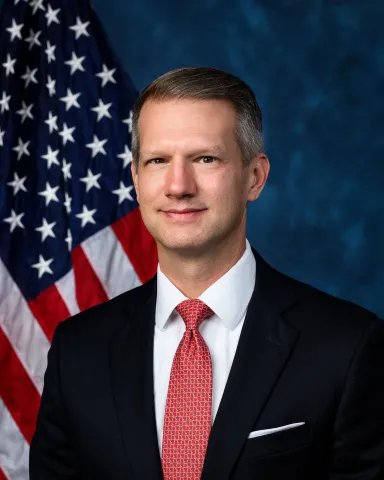
U.S. Congressman Riley Moore has renewed international attention on Nigeria’s security crisis after alleging that Christian communities in parts of the country have suffered mass killings, church destructions, and forced displacement, while accusing the former Biden administration of failing to adequately address what he described as widespread religious persecution.
Moore made the remarks on June 21, 2026, during an interview with American Catholic theologian Bishop Robert Barron, where he discussed his recent involvement in a congressional delegation that visited Nigeria to examine security concerns, humanitarian conditions, and allegations of attacks targeting religious communities. During the conversation, Moore spoke about what he described as first-hand accounts gathered from affected communities and internally displaced persons during the delegation’s visit to Nigeria, saying the experience reinforced his belief that the situation requires urgent international attention.
According to Moore, the delegation was sent after former U.S. President Donald Trump assigned him to participate in a high-level investigation into the security situation in Nigeria. He said the mission was aimed at gathering first-hand information and presenting recommendations on how the United States could support efforts to protect vulnerable communities and improve stability.
During the interview, Moore criticised the decision by the previous U.S. administration to remove Nigeria from the U.S. State Department’s list of Countries of Particular Concern, a designation used for countries accused of engaging in or tolerating severe violations of religious freedom. He argued that the removal failed to reflect what he described as the reality faced by many victims on the ground.
Moore said explanations that linked violence mainly to climate-related pressures and farmer-herder conflicts did not fully capture the scale of the crisis. He argued that the destruction of religious institutions and attacks on civilians demonstrated what he called a targeted pattern of violence against Christian communities.
“That does not explain burning down over 20,000 churches. That doesn’t explain killing men, women, and children,” Moore said during the conversation, describing the situation as a major humanitarian and religious freedom concern.
The congressman recalled visiting internally displaced persons’ camps in Benue State, one of the areas affected by recurring violence and displacement. He said conversations with survivors revealed deeply disturbing accounts of loss, trauma, and displacement, with many families struggling to recover after attacks on their communities.
Moore described meeting victims who, according to him, had witnessed the killing of family members and the destruction of their homes. He said the stories shared by displaced residents reflected the severe personal consequences of insecurity in affected regions, where many people have been forced to abandon their communities in search of safety.
He further claimed that some displacement camps remain vulnerable to attacks by armed groups, including factions linked to Boko Haram and Islamic State-affiliated organisations. He stressed that Muslims who oppose extremist groups are also victims of violence, but maintained that Christian communities have faced serious and repeated attacks that require international recognition.
The lawmaker also rejected narratives that dismiss the religious dimension of the crisis, pointing to extremist ideologies that have historically targeted religious minorities. He said groups such as ISIS have issued threats against Christians and other communities, creating fear and instability in areas where militants operate.
The congressional delegation that visited Nigeria included lawmakers from both sides of the political divide, reflecting what supporters described as a rare bipartisan effort to examine the security challenges facing the country. The group held meetings with Nigerian officials in Abuja and sought discussions on possible solutions.
Moore said the delegation’s arrival appeared to surprise some Nigerian officials and that commitments made during discussions had not produced the level of action expected by members of Congress. He said the lack of progress had increased concerns among some policymakers in Washington.
Following the visit, Moore said recommendations submitted to U.S. authorities included strengthening local security structures, improving the ability of state authorities to respond to threats, applying targeted sanctions against individuals accused of involvement in violence, and expanding cooperation between Nigeria and the United States.
He also raised concerns about international influences affecting Nigeria’s stability, accusing China of engaging in exploitative activities involving natural resources and alleged relationships with actors contributing to insecurity. These claims have not been independently verified, but Moore said he believed foreign involvement and weak governance structures had contributed to instability.
The congressman’s comments come amid ongoing debate over how Nigeria’s security challenges should be understood and addressed. Nigerian authorities have repeatedly faced pressure over attacks by armed groups, kidnappings, banditry, and communal violence across several regions of the country.
Security experts and analysts have often described Nigeria’s crisis as complex, involving multiple factors including terrorism, organised crime, ethnic tensions, competition over land resources, weak law enforcement capacity, and economic pressures. Some analysts caution against viewing the violence through a single explanation, noting that affected communities include people from different religious backgrounds.
During the interview, Moore also spoke about his personal connection to the issue of religious freedom, explaining that his faith and family background influenced his interest in defending persecuted communities worldwide. He said the issue has become an important concern among many people in his constituency.
Bishop Barron, who hosted the discussion, expressed concern about what he described as limited global awareness of the crisis in Nigeria compared with other international humanitarian emergencies. He said history has shown that ignoring early warning signs can allow serious conflicts to worsen.
The allegations raised by Congressman Moore have added pressure on governments in Nigeria and abroad to continue examining the causes of violence and the protection of civilians. As security challenges persist, calls for accountability, humanitarian support, and stronger cooperation remain central to discussions about Nigeria’s future stability.
📩 Stone Reporters News | 🌍 stonereportersnews.com
✉️ info@stonereportersnews.com | 📘 Facebook: Stone Reporters News | 🐦 X (Twitter): @StoneReportNew | 📸 Instagram: @stonereportersnews
Add comment
Comments