

Reported by: Oahimire Omone Precious | Edited by: Oravbiere Osayomore Promise.
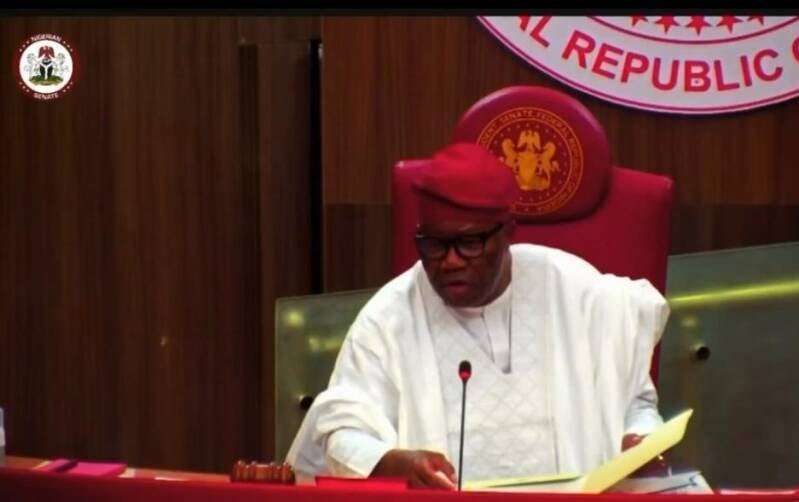
President Bola Tinubu has formally transmitted a Constitution Alteration Bill to the Senate seeking the establishment of state police across Nigeria, marking a decisive step toward what could become one of the most significant security reforms in the country’s democratic history. The proposed legislation, contained in a communication dated June 15, 2026, was read during plenary on Tuesday, June 23, by Senate President Godswill Akpabio, who immediately referred the bill to the Ad‑Hoc Committee on Constitution Alteration, chaired by Deputy Senate President Barau Jibrin, with a directive to report back on Wednesday for consideration and voting.
The bill seeks to amend relevant provisions of the 1999 Constitution to create a legal framework for a dual policing structure, allowing states to establish and operate their own police services alongside the federal police. According to the President, the proposed amendment is a critical component of ongoing efforts to reorganise the country’s policing system to enhance security and better protect citizens, with communities, municipalities, and local government areas expected to play more active roles in policing responsibilities under the new arrangement.
President Tinubu has consistently advocated constitutional changes to allow states greater responsibility in addressing security challenges. In February, he urged the National Assembly to expedite amendments that would pave the way for state policing, arguing that the current security realities require a more decentralised approach. During his Democracy Day address earlier this month, the President reiterated his administration’s resolve to tackle insecurity and warned that terrorists, bandits and their sponsors would face the full weight of the law, while acknowledging that the continued captivity of schoolchildren abducted in Oyo and Borno states remained a painful reminder of the country’s security challenges.
The state police proposal has gained momentum in recent months, with both chambers of the National Assembly advancing constitutional amendment processes aimed at decentralising policing powers to the states. The House of Representatives had already approved a similar bill on June 11, with 289 lawmakers voting in support and only one member voting against, marking a significant milestone in the decades‑long push to decentralise Nigeria’s policing architecture.
Speaking further on the proposed legislation, Senate President Akpabio explained that the implementation process would be carried out in phases through constitutional alteration and subsequent Acts of Parliament. “We will do it in two phases through alteration and an Act of Parliament. There will be a lot of safeguards; let us come and do this important task. It is extremely important that we come tomorrow,” Akpabio said, urging all senators to be available on Wednesday to perform what he described as an “epoch‑making” constitutional duty. He reminded lawmakers that the Senate would need to secure a two‑thirds majority of members to pass the bill, stressing that “state police is a non‑partisan issue, which cuts across geopolitical zones and all parts of the country.”
Akpabio also dispelled fears over state police, assuring that safeguards would be embedded in the legal framework to prevent abuses by state governors. He noted that even the governors of today would be out of office tomorrow and should remember that the security of the citizenry must be uppermost in their hearts. The Senate Leader, Senator Opeyemi Bamidele, re‑echoed the explanation, stating that the bill would require the support of two‑thirds of all senators to be passed, and that a minimum of 72 senators out of 109 would be needed to meet the constitutional requirement for alteration.
The emergency plenary session, scheduled for Wednesday, June 24, at 11:00 a.m., was convened by Akpabio to deliberate on matters considered critical to national stability and security. Lawmakers were formally notified of the sitting in a memo issued on June 15 by the Clerk of the Senate, Emmanuel Odo. The consideration of the bill would have commenced on Tuesday, but the Senate abruptly suspended plenary in honour of a member of the House of Representatives, Honourable Yahaya Tongo, who represented Kwami/Funakaye/Gombe Federal Constituency of Gombe State and died on June 12.
Senate Leader Bamidele also appealed to lawmakers to attend the next sitting, underpinning the significance of the state police proposal. “We need a minimum of two‑thirds of members to vote on constitutional alterations. The issue of state police is non‑partisan and cuts across geopolitical zones and interests,” he said. The Senate President also informed senators that plenary proceedings would not entertain other major discussions due to the death of the House member.
If passed by the National Assembly, the bill will be transmitted to the State Houses of Assembly, where at least two‑thirds of states (24 out of 36) must approve it before it can be presented to President Tinubu for assent. Sources familiar with the process noted that, considering that state governors control the legislature in their respective states, the extensive discussions on framework and structure, especially on state police, are aimed at securing their full backing.
The state police proposal has been a subject of intense national debate, with supporters arguing that decentralising policing powers would improve intelligence gathering, strengthen community‑based security, and help state governments respond faster to local threats. Critics, however, have raised concerns that state‑controlled police formations could be abused for political purposes, potentially leading to the harassment of political opponents or suppression of dissent. Nigeria currently operates a centralised policing system under the Federal Government through the Nigeria Police Force, which has been widely criticised as overstretched and ineffective in addressing the country’s diverse security challenges.
The latest development comes barely two weeks after the Senate passed an executive bill on state police for second reading. Akpabio noted that the fresh Constitution Alteration Bill transmitted by the President on Tuesday builds on the earlier proposal and is intended to provide the constitutional foundation required for the establishment of state police. The bill is expected to undergo legislative scrutiny in the National Assembly, where lawmakers will consider its provisions and implications for Nigeria’s federal system and security framework. As the Senate prepares to vote on Wednesday, the outcome will determine whether Nigeria takes a historic step toward decentralising its policing system or whether the proposal faces further delays in the legislative process.
📩 Stone Reporters News | 🌍 stonereportersnews.com ✉️ info@stonereportersnews.com | 📘 Facebook: Stone Reporters News | 🐦 X (Twitter): @StoneReportNew | 📸 Instagram: @stonereportersnews
Add comment
Comments