

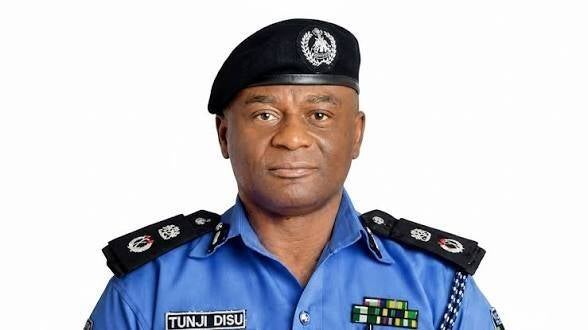
Nigeria’s Inspector General of Police, Tunji Disu, has raised serious concern over the growing number of police officers being killed across the country, warning that the trend represents a dangerous escalation in attacks against state security institutions. He described the killings as a direct assault not only on the Nigeria Police Force but also on the country’s wider security architecture, saying the attacks threaten operational effectiveness and public safety.
Speaking in June 2026 during a strategic security meeting in Abuja, Disu cited multiple recent incidents in which officers were ambushed, shot, or killed while carrying out official duties. He said the deaths involved personnel serving in patrol teams, anti-kidnapping squads, tactical formations, and regular divisional commands across several states. According to the police chief, the incidents have occurred during checkpoint operations, emergency response deployments, anti-crime raids, and direct confrontations with heavily armed criminal groups.
The Inspector General said one of the most troubling aspects of the attacks is the increasing boldness of criminal groups. According to him, officers are no longer only encountering criminals attempting to escape arrest; instead, many armed groups are now deliberately targeting police teams to kill personnel and seize weapons. He said this change in criminal behavior has significantly raised the danger faced by officers in the field.
Disu emphasized that every fallen officer represents more than a statistic. He said each death means the loss of trained manpower, experience, and intelligence capacity built over years of service. He also noted the emotional toll on surviving officers, families, and communities, stressing that the force cannot ignore the psychological consequences of repeated violent losses.
Among the incidents believed to have informed the IGP’s warning was the deadly wave of attacks on officers in the Federal Capital Territory. During a recent briefing, police leadership disclosed that more than 100 officers had been lost in violent incidents linked to kidnappings, armed confrontations, and organized attacks on security personnel in and around Abuja.
Police sources say many of these attacks occurred during anti-kidnapping operations on the outskirts of the capital, especially in rural and forested areas where criminal gangs have increasingly established hideouts. Officers responding to distress calls were often met with superior firepower from well-armed kidnappers.
The IGP also referenced broader national security trends, particularly the rise in attacks by terrorists, bandits, and heavily armed gangs in the north-west and north-central regions. These areas have seen repeated assaults on both civilians and security personnel, with officers often serving as first responders to mass casualty events.
In states such as Plateau State and Benue State, police officers responding to deadly community attacks have repeatedly faced gunfire from armed assailants. In one recent attack in Plateau State, armed men killed at least 20 people before exchanging gunfire with police responders, forcing officers into an active combat situation.
Such incidents, according to security experts, show that violent groups increasingly possess military-style weapons and tactical coordination. This reduces the operational advantage traditionally held by law enforcement and increases casualty risk for responding officers.
Disu warned that criminals frequently attack officers to capture firearms. He said this has become a major operational concern because stolen police weapons are often recycled into future criminal activity.
According to police intelligence assessments, rifles seized from slain officers have later resurfaced during kidnappings, robberies, communal attacks, and terrorist operations. This creates a cycle where each attack strengthens criminal arsenals.
The police chief stressed that the force must adapt to evolving threats. He said modern policing requires intelligence-led deployment, improved protective equipment, better communication systems, and stronger inter-agency collaboration.
He noted that officers working in remote or rural locations are particularly vulnerable. In many communities, police units operate with limited backup, difficult terrain, poor road networks, and delayed reinforcement.
This vulnerability is especially visible in parts of north-western Nigeria, where armed groups often exploit forests and isolated routes to launch ambushes. Officers entering such areas may face attackers who understand the terrain better and possess greater mobility.
Recent military and police operations in states affected by terrorism have revealed the scale of the threat. Security forces have recovered assault rifles, ammunition, explosives, and communication equipment from criminal camps during raids. These recoveries suggest sophisticated logistical networks supporting armed groups.
Disu also pointed to terrorism-related incidents as evidence of the pressure facing law enforcement. Earlier this month, police reported arrests of terrorism suspects, kidnappers, armed robbers, and murder suspects across various commands, reflecting the wide range of threats confronting officers daily.
The IGP said the police must improve tactical discipline and operational readiness. He directed senior commanders to reassess deployment strategies, patrol procedures, and field protocols to reduce exposure to unnecessary risks.
One concern repeatedly raised by officers is the vulnerability of road checkpoints. Checkpoints remain important for intercepting criminals, but they also expose officers to sudden attacks.
In several reported incidents, attackers approached checkpoints disguised as civilians or commercial travelers before opening fire. Such tactics leave officers with little reaction time.
The police leadership is therefore reviewing checkpoint procedures to make deployments less predictable. Randomized positioning and improved surveillance are being considered as defensive measures.
Disu also highlighted the importance of intelligence gathering before operations. He said officers must avoid entering dangerous zones without sufficient situational awareness.
Security analysts agree that weak intelligence often contributes to casualties. Poor threat assessment can result in teams walking into ambushes without adequate preparation.
The Inspector General further called for stronger cooperation with the military, intelligence agencies, and local vigilante networks. He said security threats now overlap across multiple jurisdictions and require coordinated response.
Community cooperation, he added, remains essential. Local residents often possess critical information about suspicious movements, hidden camps, and planned attacks before law enforcement becomes aware.
However, strained relations between some communities and the police remain a challenge. In certain areas, distrust has weakened intelligence flow, making early intervention harder.
The issue of officer safety has also reopened debate about police welfare. Many observers argue that better welfare directly affects operational effectiveness.
Families of officers killed in service frequently face financial uncertainty. Advocacy groups have called for improved compensation, insurance coverage, and educational support for dependents.
Mental health experts have also warned about trauma among officers repeatedly exposed to violent incidents. Surviving attacks or losing colleagues can affect morale and decision-making.
Disu assured personnel that leadership remains committed to improving welfare and officer protection. He said the force would continue investing in training and safety reforms.
He also issued a strong warning to attackers, saying anyone involved in killing police personnel would face aggressive pursuit and prosecution.
The IGP’s warning comes at a time when Nigeria faces overlapping security challenges including terrorism, kidnapping, banditry, communal violence, and organized crime. These threats continue to place extraordinary pressure on frontline law enforcement.
For many security observers, the rising killings of police officers underline a broader national challenge: protecting those tasked with protecting everyone else. Without stronger safeguards, better equipment, and sustained reform, the danger to officers may continue to grow, with serious implications for law enforcement across Nigeria.
📩 Stone Reporters News | 🌍 stonereportersnews.com
✉️ info@stonereportersnews.com | 📘 Facebook: Stone Reporters News | 🐦 X (Twitter): @StoneReportNew | 📸 Instagram: @stonereportersnews
Add comment
Comments