

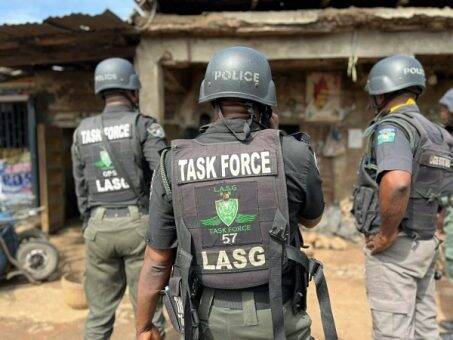
The Lagos State Taskforce has issued a 72-hour ultimatum to street traders, illegal occupants, and operators of makeshift structures along the Alaba Rago axis of the Mile 2–Badagry Expressway, ordering them to vacate the area or face enforcement action as part of renewed efforts to restore order and enforce environmental regulations in Lagos.
On June, 2026, in Lagos State, south-west Nigeria, Mr Gbadeyan Abdulraheem, Director of Press and Public Affairs of the Lagos State Taskforce, announced the directive in an official statement. He said the order formed part of the Lagos State Government’s ongoing enforcement of environmental laws and the prohibition of street trading along major transport corridors.
According to Abdulraheem, the Alaba Rago section of the expressway has become heavily congested due to the increasing activities of roadside traders, squatters, and operators of temporary stalls erected without government approval.
He said the continued occupation of the corridor has significantly obstructed vehicular movement and pedestrian access, worsening traffic congestion in one of Lagos’ busiest commercial transit routes.
Abdulraheem stated that enforcement officers had observed persistent violations despite repeated warnings issued to traders and occupants operating illegally along the corridor.
He said many of the structures identified during monitoring exercises included wooden kiosks, makeshift shops, metal shanties, and temporary shelters erected on road setbacks and drainage channels.
According to the Taskforce, the illegal structures have narrowed sections of the expressway corridor and contributed to disorderly commercial activities around the Alaba Rago axis.
Abdulraheem said the government remains concerned about the environmental implications of such encroachment, particularly obstruction of drainage systems and accumulation of waste around trading spots.
He noted that blocked drainage channels remain a major concern in Lagos, especially during periods of heavy rainfall when water flow becomes restricted and flooding risks increase.
The Mile 2–Badagry Expressway remains one of Lagos’ most strategic transport corridors, linking the mainland to densely populated residential and commercial districts, as well as routes leading toward border communities.
Authorities said traffic management along the corridor has remained a priority because of its importance to commuters, transport operators, and commercial movement.
The Taskforce reiterated that street trading on major highways and road shoulders remains prohibited under Lagos State environmental and traffic regulations.
Abdulraheem said roadside trading exposes traders, motorists, and pedestrians to safety risks, especially in areas with heavy and fast-moving traffic.
He added that the 72-hour notice was intended to provide sufficient time for affected persons to remove their goods, dismantle temporary structures, and leave voluntarily.
According to him, compliance within the stipulated period would reduce the need for forceful enforcement operations.
He warned that anyone who fails to comply with the directive would face sanctions under existing Lagos State laws governing environmental nuisance and obstruction of public spaces.
The Taskforce said enforcement operations after the expiration of the ultimatum would include demolition and removal of all illegal structures still standing along the corridor.
Abdulraheem emphasized that the operation is part of a wider statewide exercise to reclaim public infrastructure and prevent unauthorized occupation of government land.
He said public roads, pedestrian walkways, setbacks, and drainage alignments are not designated for commercial activity or residential occupation.
The Taskforce also expressed concern over the growing presence of informal settlements around transport hubs, saying such developments complicate sanitation and urban management.
Officials noted that illegal occupation of transport corridors can also hinder emergency response and reduce accessibility during critical incidents.
Residents and commuters using the Alaba Rago corridor have for years complained about severe traffic bottlenecks linked to roadside trading and indiscriminate parking.
Transport operators have also raised concerns over delays caused by human and commercial encroachment on road shoulders.
The Lagos State Government has in recent years intensified enforcement against street trading in high-density areas including Oshodi, Mile 2, and other major commercial hubs.
Authorities maintain that strict enforcement is necessary to improve traffic flow, public safety, and environmental sanitation across the state.
Abdulraheem said the Taskforce would continue monitoring key locations across Lagos to identify and remove structures obstructing public spaces.
He urged residents and traders to comply with environmental regulations and avoid activities capable of undermining public order.
At the expiration of the 72-hour notice, enforcement teams are expected to return to the Alaba Rago axis to assess compliance and clear any remaining illegal structures.
The ultimatum now places affected traders and occupants under pressure to either vacate voluntarily or face enforcement action by the Lagos State Taskforce.
📩 Stone Reporters News | 🌍 stonereportersnews.com
✉️ info@stonereportersnews.com | 📘 Facebook: Stone Reporters News | 🐦 X (Twitter): @StoneReportNew | 📸 Instagram: @stonereportersnews
Add comment
Comments