

Reported by: Oahimire Omone Precious | Edited by: Oravbiere Osayomore Promise.
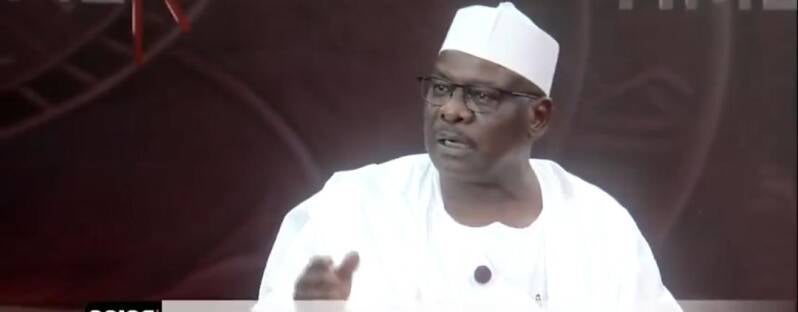
Senator Ali Ndume, representing Borno South, has declared his support for the creation of state police in Nigeria but warned that the practical and legal framework must be carefully addressed before the new structure can function effectively. Speaking on Wednesday, June 24, 2026, shortly after the Senate passed the landmark constitutional amendment bill establishing state police services across the country, Ndume emphasised that while he voted for the bill, significant concerns remain over funding, jurisdiction, coordination, and accountability mechanisms. "State police can work, but we must first address the legal and funding issues," Ndume said in an interview with Arise Television. "All the governors came together and unanimously approved the creation of state police. My major concern, however, is the practical and legal framework. We need to carefully consider the legal implications, how state police will be funded, how they will operate, and the mechanisms for accountability."
The senator, who previously served as Senate Chief Whip, expressed unease with the speed at which the legislation was advanced, describing the Senate as a "House of Deliberation" that should critically examine major legislative proposals rather than rush to align with the executive. "I support the state creation wholeheartedly. But the Senate is supposed to be very matured enough and looking at things critically. I'm not comfortable with just the President bringing up anything and we are checking and rushing to pass it," he stated. Ndume acknowledged that some lawmakers may be overly eager to align with the President's position, responding "which is true" when asked whether such pressure could affect legislative scrutiny.
Despite his reservations, Ndume argued that state police should not be dismissed before it is established. "I disagree. We have not even done it, and how can you say it's not working or it's not going to work? That is a pessimistic view. We're talking about establishing a state police under unified command, improving on what we have on the ground." He also addressed fears that governors could weaponise state police against political opponents, acknowledging the concern but arguing that similar powers already exist under the current centralised security structure. "Like the Nigerian Police Force we have, and the Nigerian Army, DSS, and everybody is under the CNC, and that's the President. Can you say he's abusing it?" he queried, while insisting that adequate safeguards could prevent abuse.
The Senate's passage of the bill on Wednesday marked one of the most significant security reforms in Nigeria's democratic history. The legislation, titled the Constitution of the Federal Republic of Nigeria (Alteration) (State Police) Bill, 2026, was transmitted to the National Assembly by President Bola Tinubu and fast-tracked through first, second and third readings in a single day. The bill creates a dual policing structure consisting of the Federal Police Service and State Police Services, moving policing from the Exclusive Legislative List to the Concurrent Legislative List. Under the new framework, governors will have the authority to appoint Commissioners of Police for their states, subject to confirmation by the State House of Assembly, while the Federal Police Service retains responsibility for terrorism, cybercrime, organised crime, arms trafficking, border security, and other national security matters.
To address concerns over potential abuse, lawmakers inserted extensive safeguards into the bill. Section 17(7) explicitly states that "a state Commissioner of Police shall not arrest, detain, investigate or deploy force against any person, political party or group merely for criticising the government except in accordance with the law." Governors are prohibited from directing state police authorities to target specific individuals, political parties, or groups outside the provisions of the law. The bill also preserves federal oversight and emergency intervention powers, allowing the Federal Police Service to intervene in state policing operations under clearly defined circumstances, including breakdown of public order, threats to national security, or evidence of human rights abuses. Such intervention must be authorised in writing by the President, is limited in scope and duration, and is subject to Senate oversight and judicial review.
Funding remains a contentious issue, with stakeholders divided over proposals to allocate a percentage of Federation Account Allocation Committee revenues to support state police operations. Some governors have argued that the proposed allocation would be insufficient to cover salaries and operational costs. Senator Enyinnaya Abaribe, who had previously opposed state police, warned that without sustainable funding mechanisms, state police formations could become vulnerable to abuse and operational inefficiency. The bill provides that no state police service shall commence operations until it has been established by a law enacted by the relevant State House of Assembly and certified as meeting national minimum standards prescribed by the National Assembly.
Ndume further argued that state police should be seen as one component of broader security reforms rather than a standalone solution, insisting that improving security and citizens' welfare remains the government's primary constitutional responsibility. "The major problem we have in this country now is security and welfare of citizens. So if government is going to put everything, its energy, I am in support of that," he said. With Senate approval secured, the state police proposal now moves to the House of Representatives for concurrence, after which it will require presidential assent and ratification by at least 24 of the 36 state Houses of Assembly before becoming law. For now, Ndume's message is clear: the principle of state police is welcome, but the devil lies in the details of implementation, funding, and accountability.
📩 Stone Reporters News | 🌍 stonereportersnews.com
✉️ info@stonereportersnews.com | 📘 Facebook: Stone Reporters News | 🐦 X (Twitter): @StoneReportNew | 📸 Instagram: @stonereportersnews
Add comment
Comments