

Reported by: Oahimire Omone Precious | Edited by: Oravbiere Osayomore Promise.
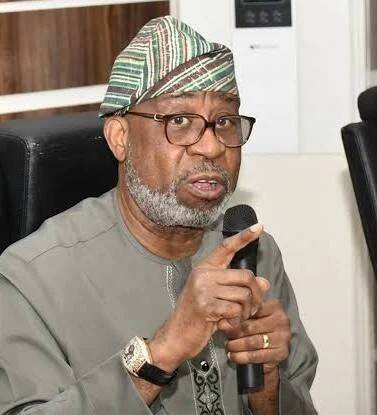
The Federal Government has announced a landmark discovery of a "world-class" polymetallic mineral province in Kaduna State, containing significant deposits of platinum group metals, gold, nickel, copper, lithium, and rare earth elements, in what officials are describing as one of the most significant developments in Nigeria's mining industry in decades. Minister of Solid Minerals Development, Dele Alake, made the disclosure on Wednesday at the opening ceremony of the 5th African Natural Resources and Energy Investment Summit (AFNIS 2026) in Abuja, themed "One Africa, One Resource Vision". According to Alake, the discovery, which he noted was being announced publicly for the first time, was verified by the Nigerian Geological Survey Agency (NGSA) and made by a private company working in collaboration with the agency.
Alake described the find as a pivotal moment for Nigeria's solid minerals sector, emphasising that the newly identified mineral province contains exceptionally high-grade deposits of strategic minerals that are increasingly sought after globally for clean energy technologies and advanced manufacturing. "Recent exploration breakthroughs verified by our Nigerian Geological Survey Agency have unveiled a world-class polymetallic mineral province in Kaduna State, consisting of world-class platinum group metals, precious, and critical mineral deposits," Alake stated. He added that the province is notable for significant deposits of gold, nickel, copper, lithium, and rare earth elements of exceptionally high grades, positioning Nigeria among the emerging destinations for strategic mineral resources and sustainable mining investment.
The announcement coincided with the unveiling of an estimated 3.3 million metric tonnes of lithium reserves by Steron Mining and Company Limited at its Abuja mining site during a facility tour organised for delegates attending the summit. Abu Omar, Managing Director and Chief Executive Officer of Steron Mining, explained that the company initially operated as a granite quarry before discovering lithium deposits and later identifying occurrences of tantalite. Omar disclosed that total mineral resources at the site were estimated at 94.8 million metric tonnes, including lithium and granite deposits. He emphasised that Steron Mining is processing lithium locally to improve purity levels before export, in line with government policies encouraging value addition.
Alake used the platform to reaffirm the government's commitment to moving away from the traditional model of exporting raw minerals in favour of domestic beneficiation and value addition. He acknowledged the paradox that had long plagued the sector: "vast mineral potential but limited beneficiation, rising global demand but inadequate geological confidence, legal authority but weak enforcement, and abundant activity but too much informality". To address these challenges, he highlighted sweeping reforms implemented under President Bola Tinubu's administration, including the revocation of over 3,000 dormant and non-performing mineral titles to discourage speculation and free idle assets. He also noted that applicants for mining leases are now required to submit detailed value-addition plans, signalling a clear shift from extraction toward industrial development.
The minister provided a compelling picture of the sector's progress, revealing that annual government revenue from mining had risen from about ₦6 billion before the current administration took office to over ₦38 billion in 2024 and exceeding ₦70 billion by the end of 2025. He cited billions of dollars in ongoing investments, including an $800 million lithium processing project, a $600 million lithium processing facility in Nasarawa State, and a $1 billion iron ore-to-steel project in Kogi State. Alake called for stronger collaboration among African countries in developing natural resources, arguing that the continent's future prosperity depends on regional integration, value addition, and industrialisation rather than continued reliance on raw material exports. "The question is no longer what Africa has, but what it does with it," he declared.
Alake extended an open invitation to local and foreign investors to take advantage of incentives available in Nigeria's solid minerals sector, stressing that the government welcomes partnerships that support local processing, job creation, technology transfer, and sustainable development. "To investors and financiers, Nigeria's message is clear: we are open for serious business. We welcome capital that builds, investors who process locally, employ locally, train locally, transfer technology and operate transparently while creating long-term value," he said. The AFNIS 2026 summit, which attracted participants from more than 15 African countries, continues to serve as a platform for advancing the vision that Africa should move beyond raw material exports to embrace value creation, industrialisation, and shared prosperity.
📩 Stone Reporters News | 🌍 stonereportersnews.com
✉️ info@stonereportersnews.com | 📘 Facebook: Stone Reporters News | 🐦 X (Twitter): @StoneReportNew | 📸 Instagram: @stonereportersnews
Add comment
Comments