

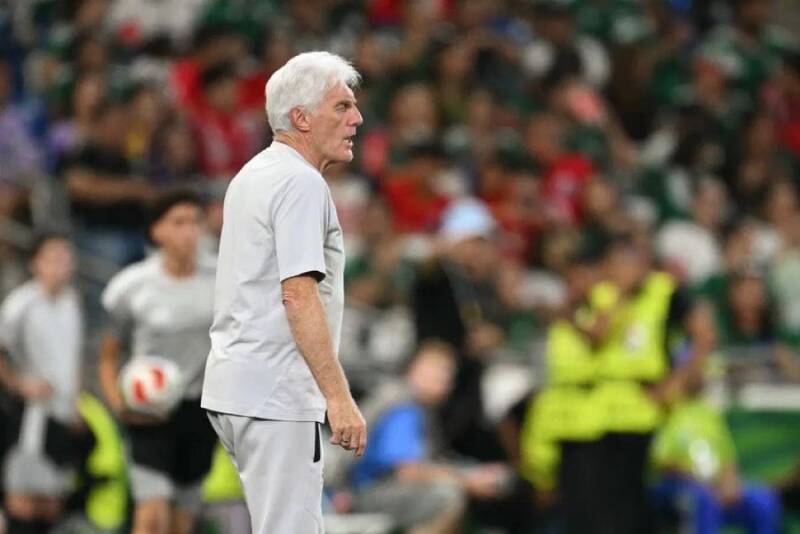
Hugo Broos Fires Back at Critics as South Africa Make Historic World Cup Breakthrough
South Africa head coach Hugo Broos delivered a fiery response to critics after guiding South Africa national soccer team to a historic first-ever FIFA World Cup knockout-stage qualification, declaring that his team had “shut up big mouths” following their dramatic 1–0 victory over South Korea national football team.
Bafana Bafana secured their place in the Round of 32 after defeating South Korea in their final Group A fixture in Monterrey, with winger Thapelo Maseko scoring the decisive second-half goal. The result marked one of the biggest moments in modern South African football, as the nation advanced beyond the World Cup group stage for the first time in four tournament appearances.
An emotional Broos did not hold back during his post-match press conference, using the occasion to hit out at pundits and critics who had heavily questioned his tactics, team selection, and leadership after South Africa’s difficult start to the tournament.
“I’m very proud of my team,” Broos said. “We gave an answer to all those big mouths from the last weeks who wanted us to change everything and told us what we needed to do. We did what I wanted to do, and this is the result.”
The 74-year-old Belgian manager had come under intense scrutiny after South Africa opened their campaign with a 2–0 defeat to co-hosts Mexico. Many observers believed Bafana lacked the quality and tactical discipline to compete at the highest level, with some even predicting they would finish bottom of Group A.
However, South Africa responded with resilience. They battled to a hard-fought draw against Czech Republic national football team before producing a disciplined and tactically mature performance against South Korea in what was effectively a winner-takes-all encounter.
Broos praised his players’ discipline and execution, saying the victory was built on tactical intelligence rather than individual brilliance alone.
“We played a very good tactical game and everyone did their job,” he said, emphasizing how his side remained organized under sustained pressure from the Koreans.
Despite South Korea dominating possession for long periods, South Africa remained compact and dangerous on transitions. Their defensive structure frustrated the Asian side, while key interventions from captain and goalkeeper Ronwen Williams and defender Aubrey Modiba helped preserve the clean sheet.
The defining moment came in the 63rd minute when Maseko capitalized on a swift attacking move to fire home the winner, sparking celebrations among South African fans both inside the stadium and back home.
Williams later described the achievement as the result of belief and mental strength.
“We knew what people were saying. We used it as motivation,” the captain said, praising the squad’s unity and determination to prove doubters wrong.
For Broos, the qualification carries personal significance. The veteran coach, who took charge of South Africa in 2021, has spent five years rebuilding the national side, focusing on discipline, team cohesion, and youth integration. His work has often faced criticism, particularly during difficult phases of qualification and tournament preparation.
Yet this World Cup run may now stand as one of the crowning achievements of his long managerial career.
Broos admitted the moment felt deeply emotional, especially as he nears the end of his coaching journey.
“I said before this could be one of the last tournaments of my career,” he said. “To experience something like this is something every coach dreams about.”
South Africa’s progression is especially significant given their World Cup history. Bafana previously appeared at the tournament in 1998, 2002, and 2010, but failed to advance beyond the group phase each time. Even when they hosted the tournament in 2010, they became the first host nation in World Cup history to exit in the first round.
That painful memory has long lingered in South African football.
This latest achievement therefore represents not only sporting progress but symbolic redemption for a footballing nation eager to re-establish itself on the global stage.
South Africa finished second in Group A behind Mexico national football team, who ended the group with a perfect record of three wins from three matches. South Korea, meanwhile, were left facing an anxious wait to see whether they could still progress as one of the best third-placed teams.
Attention now turns to the knockout round, where South Africa will face co-hosts Canada men's national soccer team in Los Angeles.
The match presents another huge challenge, but Broos believes his players are ready.
“I know the players will be ready again,” he said. “They want more. They want to show everyone that they are a good team.”
The coach’s comments underline the mentality shift within the squad. Once viewed as outsiders merely happy to participate, Bafana now believe they can compete with stronger nations.
South Africa’s run has also become one of the stories of the tournament—a reminder that rankings and predictions do not always determine outcomes on football’s biggest stage.
From heavy criticism after their opening defeat to historic qualification two matches later, Broos and his team have engineered a dramatic turnaround.
And if their coach’s words are any indication, the message from South Africa is clear: they are no longer here just to make up the numbers. They are here to compete—and perhaps to keep silencing more doubters.
📩 Stone Reporters News | 🌍 stonereportersnews.com
✉️ info@stonereportersnews.com | 📘 Facebook: Stone Reporters News | 🐦 X (Twitter): @StoneReportNew | 📸 Instagram: @stonereportersnews
Add comment
Comments