

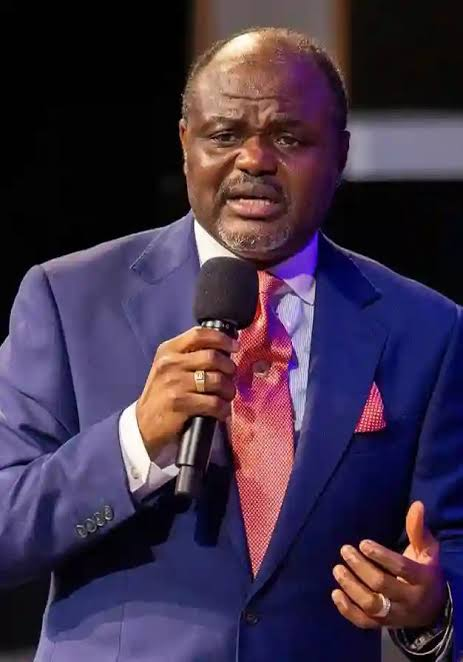
A statement by Nigerian cleric Pastor Abel Damina on marriage and gender roles has attracted significant public attention after a video of his remarks circulated widely on social media platforms.
On 24 May 2025, a video from a teaching session delivered by Pastor Abel Damina, founder of Power City International, at the ministry's headquarters in Uyo, Akwa Ibom State, Nigeria, gained widespread attention online. During the session, Damina addressed issues relating to marriage and family life, stating that women who cannot submit to a husband should not get married. The comments subsequently generated extensive discussion among religious followers, social media users and public commentators.
In the video, the preacher presented marriage as a voluntary institution that should only be entered into by individuals who understand and accept the responsibilities associated with it.
According to Damina, disagreements often arise when people enter marriage without fully accepting the expectations and commitments that accompany the union.
He argued that individuals who fundamentally disagree with the principles they believe govern marriage should reconsider entering into such relationships rather than doing so reluctantly.
The comments were delivered as part of a broader teaching on relationships, family structure and Christian marriage.
Shortly after the video emerged online, excerpts from the sermon were shared across several social media platforms, drawing thousands of reactions from users.
The circulation of the clip brought the discussion beyond the church congregation and into wider public debate.
Many social media users focused on the pastor's use of the word "submission", a term that has long featured in discussions about Christian marriage and family life.
Supporters of the cleric said his comments reflected what they believe to be traditional biblical teachings regarding the responsibilities of husbands and wives.
Some individuals who agreed with the message argued that prospective couples should clearly understand each other's expectations before entering marriage.
Others stated that honesty regarding personal beliefs and values is essential to the stability of any long-term relationship.
The pastor's remarks also attracted criticism from those who disagreed with his interpretation of marital roles.
Several commentators argued that modern marriages should be based on partnership, cooperation and shared responsibilities between spouses.
Others questioned whether concepts of submission remain relevant in societies where both partners often contribute equally to family responsibilities.
The debate quickly expanded beyond the specific comments made during the sermon and developed into a broader discussion about gender roles within marriage.
Marriage remains one of the most discussed social institutions in Nigeria, where religious teachings continue to influence public attitudes toward family life.
Across many Christian denominations, marriage is viewed as a covenant that carries specific obligations and responsibilities for both spouses.
Religious leaders often provide guidance on these responsibilities through sermons, conferences and counselling programmes.
As a result, statements relating to marriage frequently attract public attention, particularly when they address controversial or sensitive issues.
Pastor Damina is one of Nigeria's most recognised Pentecostal preachers and has built a substantial audience through both traditional and digital media platforms.
He is known for expressing strong views on theological matters and frequently participates in discussions concerning Christian doctrine and church practices.
Over the years, several of his teachings have generated national conversations among church leaders, theologians and members of the public.
His messages are regularly shared online, where they often reach audiences far beyond those physically present during church services.
The latest discussion followed a similar pattern, with video clips circulating independently of the full sermon.
As interest in the comments grew, social media users shared differing interpretations of what the pastor intended to communicate.
Some users viewed the remarks as a defence of traditional Christian marriage principles.
Others regarded the comments as incompatible with contemporary views on gender equality.
The reactions demonstrated the range of perspectives that exist within Nigerian society on questions relating to marriage and family structure.
Religious teachings continue to play a significant role in shaping these perspectives for many individuals.
At the same time, social and economic changes have influenced how younger generations approach relationships and marital expectations.
Many younger couples increasingly emphasise communication, shared decision-making and mutual understanding as key elements of successful marriages.
These evolving attitudes have contributed to ongoing discussions about the meaning of roles and responsibilities within family life.
The widespread reaction to Damina's comments highlighted the growing influence of social media in shaping public conversations about religion.
Messages delivered during church services can now reach national and international audiences within hours through digital platforms.
This has increased public engagement with religious teachings while also exposing them to broader scrutiny and debate.
In the case of Pastor Damina's remarks, the discussion remained focused on the role of submission, commitment and expectations within marriage.
Supporters and critics alike continued to engage with the issues raised by the sermon, often drawing on personal experiences, religious beliefs and cultural perspectives.
The conversation also reflected the continuing importance of marriage as a social institution within Nigerian society.
While opinions differed sharply on the pastor's message, the widespread response underscored the level of public interest in discussions concerning family life and gender roles.
The remarks have remained a subject of discussion across religious and social circles, illustrating how questions surrounding marriage continue to generate strong public engagement in Nigeria.
📩 Stone Reporters News | 🌍 stonereportersnews.com
✉️ [info@stonereportersnews.com](mailto:info@stonereportersnews.com) | 📘 Facebook: Stone Reporters News | 🐦 X (Twitter): @StoneReportNew | 📸 Instagram: @stonereportersnews
Add comment
Comments