

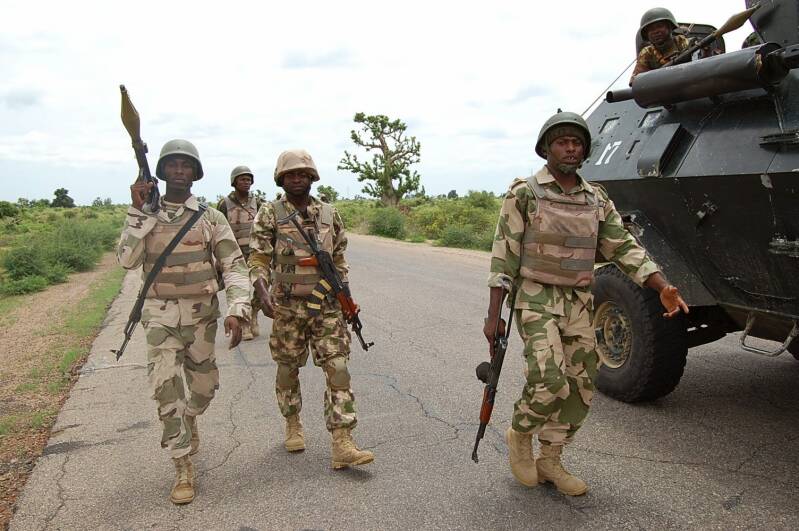
Nigerian soldiers deployed in counter-insurgency operations in the North-East have reportedly rejected an alleged directive involving the deployment of former insurgents described as “repentant” Boko Haram fighters into active military operations, amid concerns over security risks and operational trust.
On Wednesday, June 25, 2026, reports emerged from military circles and local media outlets suggesting that troops engaged in operations against Boko Haram in Borno State expressed strong reservations about working alongside rehabilitated ex-fighters attached to security support structures in ongoing counter-insurgency efforts.
The report was widely circulated following a publication by The Guardian Nigeria, which indicated that serving soldiers in the North-East had raised concerns over an alleged arrangement linked to the Borno State Government’s reintegration programme for former insurgents under its deradicalisation and rehabilitation framework.
According to accounts attributed to unnamed military personnel, the concerns centre on fears that integrating former fighters too closely with operational units could expose troops to intelligence leaks, sabotage risks, and compromised battlefield operations.
The Nigerian military has for years operated alongside civilian joint task forces and local auxiliaries in the fight against Boko Haram and its splinter faction, the Islamic State West Africa Province (ISWAP), which continues to carry out attacks in parts of the Lake Chad region.
The counter-insurgency campaign in the North-East, which began in the early 2010s following the escalation of the Boko Haram insurgency, has involved both military offensives and non-military strategies, including rehabilitation programmes for surrendered fighters.
One of the key initiatives referenced in previous government policy is Operation Safe Corridor, a deradicalisation programme designed to process, rehabilitate, and reintegrate individuals who voluntarily renounce armed militancy.
Over the years, hundreds of former fighters have reportedly passed through such rehabilitation structures before being released back into society under supervision by state and federal authorities.
However, the integration of former insurgents into community-based security support systems has remained controversial, particularly among frontline troops and victims of insurgency in the North-East.
The latest concerns reportedly reflect longstanding tensions within Nigeria’s counter-insurgency strategy over how to balance reconciliation efforts with battlefield security requirements.
Military personnel cited in reports argue that while rehabilitation programmes may be necessary for long-term peacebuilding, their involvement should be strictly separated from active combat or intelligence-sensitive operations.
The North-East region remains the epicentre of Nigeria’s insurgency crisis, which has lasted for more than a decade and has resulted in tens of thousands of deaths and the displacement of millions of civilians across Borno, Yobe, and Adamawa states.
According to security analysts, the insurgency has evolved into a fragmented conflict involving multiple armed groups, with Boko Haram and ISWAP continuing to operate in rural strongholds despite repeated military offensives.
Reports of soldier dissatisfaction come amid renewed attacks on military positions in Borno State in early 2026, where insurgents have targeted bases and supply routes in coordinated assaults, according to security briefings and international monitoring data.
The Nigerian Defence Headquarters has not issued a formal statement confirming or denying any new directive involving the operational deployment of rehabilitated insurgents alongside active troops.
Similarly, there has been no official clarification from the Nigerian Armed Forces regarding the specific claims raised in the reports.
In previous public statements, military authorities have defended deradicalisation efforts as part of a broader strategy to weaken insurgent recruitment networks and encourage defections from armed groups.
However, critics of the policy have repeatedly raised concerns about vetting processes, monitoring mechanisms, and the potential security implications of reintegrating former combatants.
Human rights observers and conflict analysts have also pointed to the complexity of post-conflict reintegration in north-eastern Nigeria, where trust between communities, security forces, and former insurgents remains fragile.
The reported rejection by soldiers highlights the continuing operational challenges facing Nigeria’s military as it attempts to combine combat operations with reconciliation and reintegration strategies.
As of the time of reporting, the claims remain based on accounts from unnamed military sources and media reports, with no independently verified official directive publicly released.
📩 Stone Reporters News | 🌍 stonereportersnews.com
✉️ info@stonereportersnews.com | 📘 Facebook: Stone Reporters News | 🐦 X (Twitter): @StoneReportNew | 📸 Instagram: @stonereportersnews
Add comment
Comments