

Reported by: Ijeoma G | Edited by: Oravbiere Osayomore Promise.
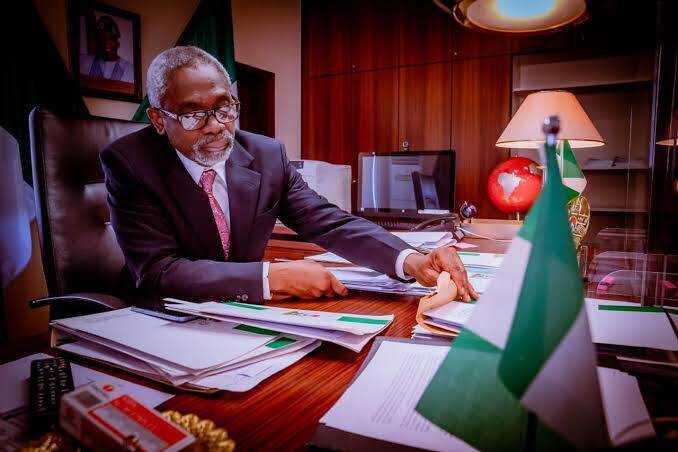
President Bola Tinubu inherited an economy that was "precariously close to collapsing" upon his assumption of office in May 2023, Chief of Staff Femi Gbajabiamila has declared, insisting that the administration's tough reforms—including the removal of the petrol subsidy and foreign exchange unification—were unavoidable to prevent national economic catastrophe. Gbajabiamila made the remarks on Thursday, June 25, 2026, during the Working People United (WOPU) Good Governance Summit in Abuja, where he also signalled the government's readiness to review the N70,000 national minimum wage, acknowledging that economic realities have outpaced the wage structure signed into law just two years ago.
Gbajabiamila, a former Speaker of the House of Representatives who now serves as the President's Chief of Staff, told the gathering that when the administration took office, it inherited "an economy living on borrowed time." He argued that the President had a clear choice between two paths: governing as a politician focused on the next election, or governing as a statesman focused on the next generation. "The President had a choice of approaching governance, the actual one of two ways, either coming and governed as a politician or coming and governed as a statesman," Gbajabiamila said. "Now the difference between the two is that whilst the politician thinks about the next election, a leader and statesman thinks about the next generation. Mr President decided to take the path of the latter."
He acknowledged that the reforms have exacted a "real and painful cost" on Nigerians, with prices rising and families already stretched finding themselves stretched further. "It will be an insult to the collective intelligence of the Nigerian people to dismiss that hardship. And this administration will never do that," he stated. However, he insisted that the economy would have been in a far worse state without the decisive actions taken. "We have never claimed that the medicine was painless. What we have insisted upon is that our country would not have survived without it," he said.
Gbajabiamila specifically defended the removal of the fuel subsidy, describing it as unsustainable and noting that it had disproportionately benefited a privileged few rather than protecting ordinary workers. He also pointed to the foreign exchange regime, which he said had been "artificially sustained," depleting reserves and distorting markets. The Chief of Staff also used the platform to confirm that the government would review the N70,000 national minimum wage, which President Tinubu signed into law in July 2024. He acknowledged that the wage, which was considered a milestone at the time, must now be "honestly reassessed against today's realities."
"This administration has delivered a new national minimum wage. In July 2024 President Bola Tinubu signed into law a minimum wage of N70,000 naira, with more than double the N30,000 naira that workers had endured for years," Gbajabiamila said. He noted that the President had already reduced the strategic review cycle from five years to three years to ensure wages could keep closer pace with economic reality. "When the time comes to begin the process of reviewing the national minimum wage, this administration will approach that endeavour not as an adversary of labour, but as a partner," he assured. The Chief of Staff also highlighted other worker-centric interventions implemented since January 2026, including the reintroduction of gratuities for retiring federal civil servants and lifting workers earning up to N800,000 annually entirely out of the personal income tax net.
Speaking at the same event, the Minister of Labour and Employment, Muhammad Dingyadi, stressed that the true measure of governance lies in the extent to which policies translate into improved livelihoods for working people. "Governance is not merely about policies written in documents or programmes announced from government offices," Dingyadi said. "The true measure of governance is the extent to which policies translate into improved livelihoods, decent work, increased productivity, social protection, economic opportunities, and dignity for the working people." William Akporeha, National Coordinator of WOPU, described the summit as "an unprecedented convergence of Nigeria's productive engine" and warned that the platform would serve as a major sensitisation force heading into the 2027 general elections.
Gbajabiamila's defence of the administration's economic record comes amid persistent public criticism over the rising cost of living and the impact of the subsidy removal on ordinary Nigerians. The President's decision to end the fuel subsidy immediately upon taking office triggered a sharp increase in petrol prices, which in turn drove up transportation costs and the prices of goods and services across the economy. Critics, including opposition figures and labour unions, have argued that the administration has failed to provide adequate palliatives to cushion the impact of the reforms. However, Gbajabiamila insisted that the government's duty is not merely to administer the medicine but to "sit on the bedside, ease the pain, and nurse the nation back to health."
📩 Stone Reporters News | 🌍 stonereportersnews.com
✉️ info@stonereportersnews.com | 📘 Facebook: Stone Reporters News | 🐦 X (Twitter): @StoneReportNew | 📸 Instagram: @stonereportersnews
Add comment
Comments