

Reported by: Oahimire Omone Precious | Edited by: Oravbiere Osayomore Promise.
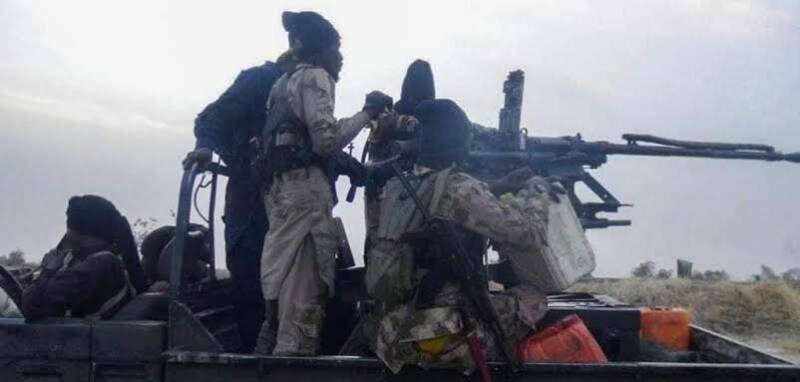
A fierce and deadly confrontation between rival jihadist factions has erupted in the northeastern theatre of Borno State, with fighters of the Islamic State West Africa Province (ISWAP) launching a coordinated ambush on a faction of the Jama'atu Ahlis Sunna Lidda'awati wal-Jihad (JAS), commonly known as Boko Haram. The attack, which occurred on Thursday, August 6, 2026, around the Gargash area near Bula Murge in Bama Local Government Area, has reportedly left several senior JAS commanders dead and their camps in ruins. The incident marks a significant escalation in the long-running and brutal rivalry between the two extremist groups, whose competition for territorial control, recruits, and resources continues to reshape the insurgency landscape in Nigeria's North-East.
According to intelligence sources who spoke to counter-insurgency expert Zagazola Makama, the clash unfolded approximately 11 kilometres north of Miyanti and 26 kilometres northeast of Bama, where ISWAP fighters launched a surprise assault on the rival faction, inflicting heavy casualties during a fierce and sustained engagement. Among those reportedly killed were seven prominent JAS commanders identified as Abu Ubaida, Modu Kori, Alhaji Modu, Mure, Zarkawi, Sheriff and Modu Maye, all described as key operational figures within the faction operating in the Bula Murge and surrounding areas. The attack not only decimated the group's leadership but also threw the surviving JAS fighters into disarray, with intercepted communications indicating that the faction had begun plans to evacuate its women and families to Bula Daloye following the destruction of their camps. The intelligence further revealed that two locations previously occupied by the JAS faction—Bula Murge and Nguro Bafuye—were set ablaze during the assault, depriving the group of key shelters and logistics hubs.
The latest confrontation is one of the most violent episodes in the long-running feud between ISWAP and the JAS faction, whose rivalry has its roots in a bitter split that occurred in 2016 when ISWAP broke away from the Abubakar Shekau-led Boko Haram movement over ideological and leadership disagreements. Since then, both factions have repeatedly fought for control of territories, taxation routes, recruits, and strategic hideouts across the Lake Chad Basin and the Sambisa Forest. The rivalry reached a turning point in May 2021 when ISWAP launched a major offensive into the Sambisa Forest, cornering Shekau, who died during the confrontation after reportedly detonating an explosive device rather than surrendering. Although ISWAP subsequently absorbed many of Shekau's fighters, a number of die-hard JAS commanders rejected allegiance to ISWAP and continued to operate independently from isolated enclaves around the Sambisa Forest and the Mandara Mountains.
In recent months, intelligence reports have indicated renewed tensions between the two factions over control of food supplies, taxation of local communities, movement corridors, and the allegiance of surviving fighters. The competition has triggered several deadly internal battles, with both groups suffering losses while attempting to dominate shrinking areas of influence under sustained military pressure. The renewed infighting reflects increasing stress within the insurgent ranks as sustained ground offensives and precision air strikes by Operation HADIN KAI continue to degrade terrorist logistics, restrict movement, and disrupt command structures. Military sources have assessed that the latest infighting has significantly weakened the JAS faction in the area and presents a strategic opportunity for security forces to intensify ongoing counter-terrorism operations.
Security sources disclosed that troops operating around Miyanti, Bama, Kumshe, and adjoining communities have been urged to exploit the situation by sustaining offensive operations to prevent either faction from regrouping or re-establishing operational bases. According to the sources, commanders have been advised to maintain pressure on both factions to further degrade their fighting capability and deny them freedom of action across the southern fringes of the Sambisa Forest. As of the time of this report, the Nigerian military had not issued an official statement confirming the reported casualties or details of the clash, and the casualty claims had not been independently verified. However, the attack has once again demonstrated the deepening fractures within Nigeria's terrorist networks, as the two factions continue to turn their weapons against each other in a desperate struggle for supremacy, even as they remain a persistent threat to civilian populations and security forces across the North-East.
📩 Stone Reporters News | 🌍 stonereportersnews.com
✉️ info@stonereportersnews.com | 📘 Facebook: Stone Reporters News | 🐦 X (Twitter): @StoneReportNew | 📸 Instagram: @stonereportersnews
Add comment
Comments