

Reported by: Ijeoma G | Edited by: Oravbiere Osayomore Promise.
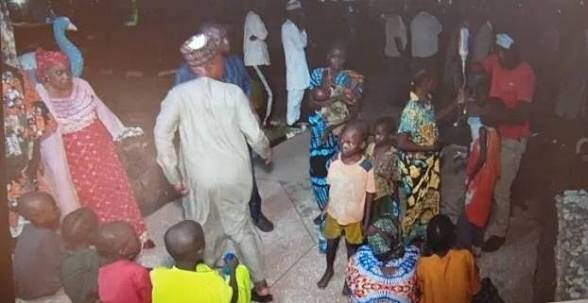
Fresh and troubling accounts from survivors of the mass abduction in Kwara State have directly contradicted the Federal Government's official narrative, with freed hostages telling their families that a helicopter delivered a large sum of money to their kidnappers just days before they were released, raising serious questions about President Bola Tinubu's insistence that no ransom was paid to secure their freedom. The allegations, which emerged in an exclusive report by SaharaReporters on August 10, 2026, have cast a shadow over what the government had celebrated as the country's largest single-day hostage rescue operation and a major victory for Nigeria's security forces.
According to a relative who recently visited some of the freed victims, two members of his family were particularly shocked when they heard government officials describing their release as a successful intelligence-led rescue in which no ransom was paid. The relative told SaharaReporters that the abductees personally witnessed a helicopter arrive while they were held captive and deliver money to the kidnappers. "When they heard that the government was claiming they were rescued and that no money was paid, two of my family members were shocked," the relative said. "They said a helicopter came while they were in captivity and money was brought to the kidnappers. They saw it, but they were not allowed to touch the money. The kidnappers prevented them from going near it. This was a few days, like four to five days before they were released".
The fresh account raises urgent questions about the circumstances surrounding the release of the Woro victims and whether any form of payment or negotiation took place before they were freed. The allegations come days after Nigerian security forces announced the release of more than 300 abducted Nigerians in what President Tinubu described as the country's largest single-day hostage rescue operation. Among those freed were 163 people abducted from Woro during the February 3 attack on the community, alongside 145 other victims abducted largely from neighbouring Niger State. During the mass abduction from the Woro and Nuku communities in Kaiama Local Government Area of Kwara State, 176 people, mostly women and children, were initially taken by terrorists. When security operations led to their freedom, 163 victims were officially handed over and announced as rescued. Survivors recounted that 13 victims died during their nearly six months in captivity.
The captives endured unimaginable suffering during their months in the forest. They faced severe hunger, often receiving only one meal a day, lacked medical care, and were exposed to extreme weather conditions before makeshift rain shelters were eventually erected. A freed victim, Amira Saliu, described the ordeal to the media in Ilorin: "They kept us by the river, and aircraft would often fly over the area. Whenever they spotted an aircraft overhead, they ordered us to put out any fires we had lit and remain completely silent so we would not be seen". She also recounted the immense suffering of the group: "Sometimes they gave us food, but other times they didn't, and we went to bed with our children hungry. There were sick people among us, and several pregnant women gave birth while we were in captivity. I was the only nurse there, so I assisted the pregnant women during delivery. I helped about 10 women deliver their babies without gloves. I used my hands to help them".
The victims were reportedly recovered from the Kainji Lake National Park area following a joint operation involving the military, police and counter-terrorism personnel. The Presidency described the operation as an intelligence-led security success, with President Tinubu commending the security agencies involved. The rescued victims were subsequently taken for medical evaluation before being reunited with their families. Reports indicated that many of the former captives were in poor physical condition after spending months in the forest. However, the government's account has provided limited details about precisely how the captives were released, including whether negotiations took place with their captors or whether any money changed hands.
The families of the abductees had previously raised alarm over the kidnappers' rejection of ransom payments. In late July 2026, relatives lamented that the kidnappers had rejected over N155 million raised by the affected communities to secure the release of their loved ones. The families also alleged that despite raising more than N155 million, the kidnappers rejected the ransom. On July 31, 2026, Daily Trust reported that the kidnappers had rejected N155 million in ransom. This timeline suggests that the helicopter delivery may have been a separate, larger payment orchestrated by the government after community efforts failed.
The confirmation of the hostages' release came on August 5, 2026, when the Kwara State Government confirmed the release of 176 abducted victims, mainly women and children, six months after their kidnapping. The Senior Special Assistant to Governor AbdulRahman AbdulRazaq on Communications, Ibraheem Abdullateef, commended the efforts of the security agencies and other stakeholders involved in the operation. The Chairman of Kaiama Local Council, Alhaji Abubakar Danladi, confirmed the release but told newsmen: "Yes, it's true that they have been released, and I can't tell for now whether ransom was paid or not". The attack on the Woro Community in Kaiama Council of Kwara State occurred on the evening of Tuesday, February 3, 2026, and resulted in the deaths of over 160 people, with local and Red Cross estimates indicating that the total toll may be as high as 170 to 200 killed.
The contradiction between the government's account and the victims' testimony has ignited a firestorm of criticism, with opposition parties and civil society groups demanding a full investigation into the circumstances surrounding the release. The allegation that a helicopter delivered ransom to kidnappers in the Kainji Lake National Park area, a known terrorist enclave, raises profound questions about the government's counter-terrorism strategy and its commitment to the no-ransom policy it has publicly espoused. For the freed victims, the sight of a helicopter bringing money to their captors is an image they will never forget. For the Nigerian public, it is a stark reminder that the line between rescue and ransom in the fight against kidnapping may be far blurrier than the government is willing to admit.
📩 Stone Reporters News | 🌍 stonereportersnews.com
✉️ info@stonereportersnews.com | 📘 Facebook: Stone Reporters News | 🐦 X (Twitter): @StoneReportNew | 📸 Instagram: @stonereportersnews
Add comment
Comments