

Reported by: Ijeoma G | Edited by: Oravbiere Osayomore Promise.
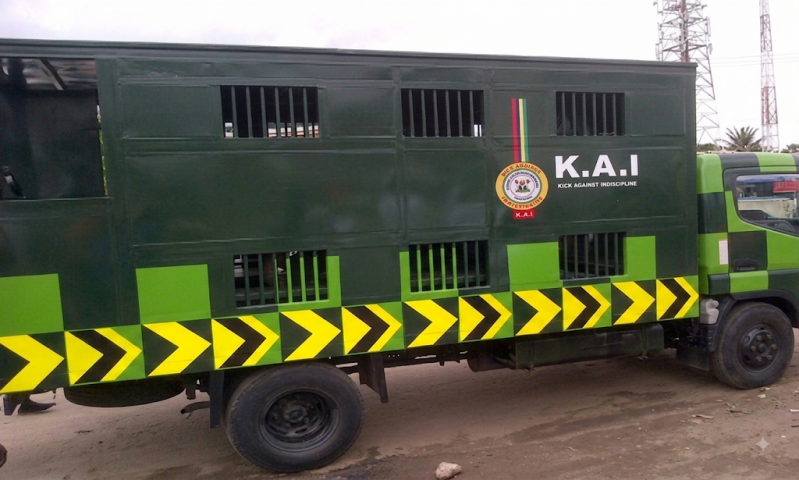
In what began as a routine environmental cleanup along the Lagos-Badagry Expressway, operatives of the Lagos Environmental Sanitation Corps (LAGESC), popularly known as KAI, stumbled upon a scene that laid bare the depths of human desperation in Africa's largest city. On Monday, August 10, 2026, while clearing illegal structures and waste along the busy corridor, the officers discovered four young nursing mothers and their babies living amid piles of rotting refuse, breathing air thick with toxic fumes and surviving on scraps. The rescue of these women, who had been reduced to living on a dumpsite in the Agboju area, has shone a harsh spotlight on the hidden lives of the destitute who have slipped through the cracks of Nigeria's social safety net.
The discovery was made during an inter-agency cleanup operation that had been ongoing for weeks along the Lagos-Badagry Expressway corridor, a major artery connecting the commercial capital to the border with Benin Republic. The Corps Marshal of LAGESC, Major Olaniyi Cole (retd.), disclosed the rescue in a statement posted on the agency's X handle on Tuesday, August 11. According to Cole, the cleanup was primarily aimed at removing environmental infractions and hindrances, but the operatives were taken aback when they found young mothers living in what he described as "inhumane conditions" at illegal dumpsites and shanties.
"But, to our utter amazement, we discovered that there are young nursing mothers living in inhumane conditions in these illegal dumpsites and shanties, hence the need to rescue them, offer medical assistance before reuniting them with their families or the welfare authorities," Cole said. The Corps Marshal described the rescue as necessary to prevent loss of life, particularly citing the condition of a newborn found in the area. The women were living amid filth, poor air quality and hunger.
The rescued women have been identified as Fareedat Muyideen, 23, from Kwara State, with her two-year-old baby; Ayomide Ayomoke, 25, from Ondo State, with her 10-month-old baby; Amanda Oziema Abalihi, 20, from Anambra State, with her nine-day-old baby; and Chisom Ugo, 24, from Imo State, with her 11-month-old baby. The case of Amanda Oziema Abalihi is particularly heartbreaking—a 20-year-old mother who had given birth just nine days before the rescue, recovering from childbirth in the midst of a garbage dump.
The rescue operation underscores a troubling reality about Lagos, a megacity of over 20 million people where the gap between wealth and poverty is stark. The women were not just homeless; they were invisible, living in shanties constructed amidst the refuse, their cries for help drowned out by the roar of traffic on the expressway above. The discovery has also raised questions about how long these women had been living there and what circumstances had driven them to such extremes. Cole appealed to the families of the women who might be searching for them to come forward, saying they were receiving medical attention and would be discharged when they were medically fit.
The Corps Marshal also revealed that LAGESC was working with relevant agencies to ensure the women's rehabilitation and reintegration into society. He urged parents to monitor their children, noting that some young people had been found to have left home for the streets due to alleged maltreatment. Cole reaffirmed the Lagos State Government's position against child abuse and warned that parents and guardians found culpable of neglect and abuse could face prosecution.
The rescue of the four nursing mothers and their babies is a powerful reminder that the fight against environmental degradation must also address the human cost of poverty. As Lagos continues its rapid urbanisation, the city's authorities are increasingly confronted with the challenge of balancing development with the protection of its most vulnerable residents. The KAI operatives, whose primary mandate is to enforce environmental sanitation laws, have now found themselves playing a role in humanitarian rescue—a testament to the complex realities of governance in a city where the line between law enforcement and social welfare is often blurred.
For the four women rescued from the Agboju dumpsite, the future remains uncertain. But for one brief moment, they were seen, they were heard, and they were saved from a life that had reduced them to living among the refuse of a city that had forgotten them.
📩 Stone Reporters News | 🌍 stonereportersnews.com
✉️ info@stonereportersnews.com | 📘 Facebook: Stone Reporters News | 🐦 X (Twitter): @StoneReportNew | 📸 Instagram: @stonereportersnews
Add comment
Comments