

Reported by: Ijeoma G | Edited by: Oravbiere Osayomore Promise.
The dusty road between Yamtake and Bitta in Borno State, a stretch of highway that has become synonymous with death and desperation, was the scene of yet another brutal ambush on August 6, 2026, when suspected fighters of the Islamic State West Africa Province (ISWAP) attacked a Nigerian military convoy, killing at least four soldiers and leaving several others wounded. The attack, which unfolded with chilling precision, has once again exposed the fragility of Nigeria's counter-insurgency efforts and the heavy price paid by the men and women in uniform who are tasked with holding the line against an insurgency that has raged for more than a decade.
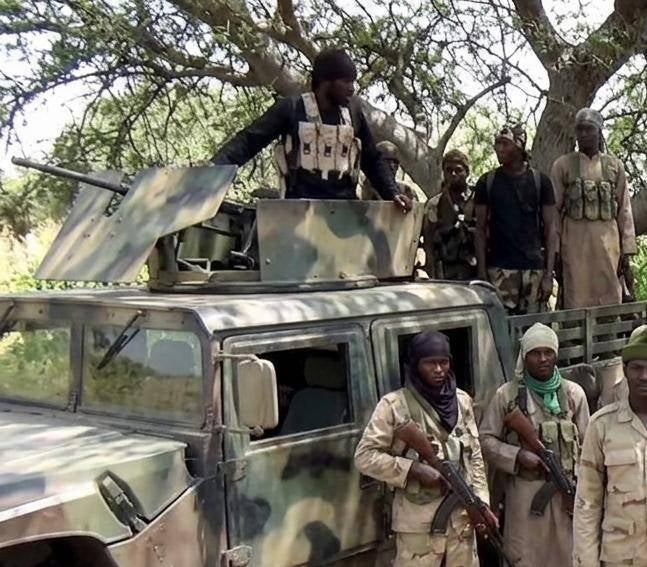
According to a report shared by African jihadism expert Brant Philip on his official X handle on Thursday, August 13, 2026, the terrorists targeted the troops using a combination of small arms and an improvised explosive device (IED). The ambush was devastating in its execution: four soldiers were killed on the spot, several others sustained injuries, and at least three operational vehicles were destroyed. The assailants also managed to capture a fourth vehicle along with weapons and ammunition, a significant loss that will likely bolster the group's capacity to carry out future attacks. The graphic images released by the terrorists, showing the corpses of the dead soldiers, have since circulated on social media, serving as a grim reminder of the brutality of the conflict.
The attack occurred just days after the military announced that troops of Operation Hadin Kai had successfully repelled a separate ISWAP assault on a Forward Operating Base in Gajiram, Nganzai Local Government Area, on August 10. In that engagement, several terrorists were reportedly killed, and some soldiers sustained injuries. But the Yamtake-Bitta ambush underscores a troubling reality: even as the military claims to be making progress, the insurgents are still capable of inflicting significant casualties and demonstrating their operational reach. The authorities have yet to officially confirm the details of the August 6 attack, but the silence from official channels has done little to assuage the fears of a public that has grown weary of the endless cycle of violence.
The Yamtake-Bitta axis is no stranger to bloodshed. It lies in the heart of Borno State, the epicentre of Nigeria's long-running war against Boko Haram and its splinter faction, ISWAP. The region has witnessed countless ambushes, bombings, and massacres over the years, with both the military and civilians bearing the brunt of the violence. The August 6 attack is a stark reminder that despite years of military operations and billions of dollars in foreign aid, the insurgents remain a formidable force, capable of striking at will and exploiting the vast, unforgiving terrain of the Sahel.
The use of IEDs in the ambush is particularly concerning. The terrorists have increasingly relied on these crude but effective weapons to target military convoys and civilian vehicles, causing mass casualties and sowing fear among the population. The destruction of three military vehicles and the capture of a fourth represents a significant loss of equipment, which is often difficult to replace given the logistical challenges facing the Nigerian military. The capture of weapons and ammunition further compounds the problem, as these resources will be used to arm the terrorists for future operations.
The ambush also raises uncomfortable questions about the intelligence and operational capabilities of the Nigerian military. How was the convoy caught off guard? Why were the troops unable to repel the attack? These are questions that demand answers, not just from the military high command, but from the political leadership that has overseen a conflict that has defied resolution for over a decade. The attack comes just weeks after the military launched Operation CLEAN SWEEP IV, a coordinated offensive aimed at putting sustained pressure on terrorist networks across the North-West. But the Yamtake-Bitta ambush suggests that the terrorists are still able to operate with impunity in the North-East, and that the military's strategy may need to be reassessed.
For the families of the four soldiers who lost their lives, the attack is a personal tragedy that will reverberate for generations. These were men who had taken an oath to defend their country, who had left their families and loved ones behind to fight an enemy that shows no mercy. Their deaths are a testament to their bravery, but also to the failure of the state to protect its own. The soldiers who were injured in the attack now face a long and difficult recovery, both physically and psychologically. Many will be left with permanent disabilities, and the trauma of the attack will stay with them for the rest of their lives.
The Yamtake-Bitta ambush is not an isolated incident. In the first week of August alone, ISWAP and Boko Haram launched a series of coordinated attacks across Borno State, killing at least 14 soldiers. On August 3, ISWAP fighters raided a base in Buni Gari, killing 11 soldiers. These attacks are part of a broader pattern of violence that has intensified in recent months, as the terrorists seek to prove their relevance and undermine the military's claims of progress. The military, for its part, has responded with air strikes and ground operations, but the insurgents have shown a remarkable ability to adapt and regroup.
The international community has also been watching closely. The United States and its allies have provided training, intelligence, and equipment to the Nigerian military, but the conflict has proven to be intractable. The Yamtake-Bitta ambush will likely renew calls for a more comprehensive approach to the crisis, one that addresses the root causes of the insurgency, including poverty, inequality, and weak governance. The African Union and the United Nations have also been involved in mediation efforts, but a lasting solution remains elusive.
As Nigeria continues to grapple with the insurgency, the Yamtake-Bitta ambush serves as a stark reminder of the human cost of the conflict. The four soldiers who lost their lives are not just statistics; they are fathers, sons, and brothers who will be deeply missed. Their sacrifice must not be in vain. The government and the military must redouble their efforts to end the insurgency and bring peace to the North-East. Until then, the road between Yamtake and Bitta will remain a killing field, and more soldiers will pay the ultimate price for a war that seems to have no end.
📩 Stone Reporters News | 🌍 stonereportersnews.com
✉️ info@stonereportersnews.com | 📘 Facebook: Stone Reporters News | 🐦 X (Twitter): @StoneReportNew | 📸 Instagram: @stonereportersnews
Add comment
Comments