

Reported by: Ijeoma G | Edited by: Oravbiere Osayomore Promise.
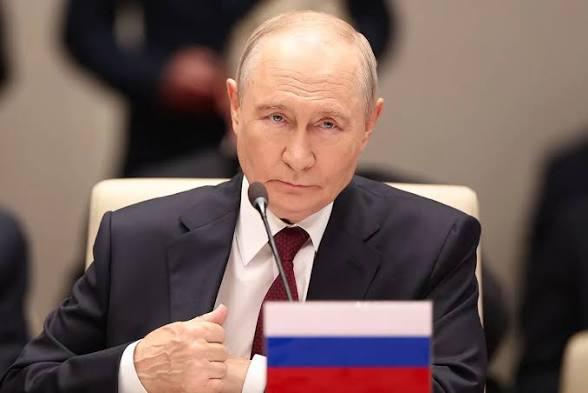
Russian President Vladimir Putin has categorically denied that Russia is preparing a new wave of military mobilisation, dismissing reports of an impending call-up as "absolute nonsense" and a Ukrainian disinformation campaign designed to destabilise the Kremlin ahead of parliamentary elections. Speaking on Thursday, September 3, 2026, at the Eastern Economic Forum in Vladivostok, Putin insisted that "there is no scenario today that would require mobilisation". He framed the speculation as a deliberate attempt by Kyiv to influence the outcome of the Russian State Duma elections later this month, stating, "This is a disinformation campaign by the enemy in the run-up to the State Duma elections, aimed at influencing the outcome".
The Russian leader's remarks come amid persistent warnings from Ukrainian officials and Western intelligence agencies that Moscow is preparing for a significant manpower drive. Ukrainian President Volodymyr Zelensky had earlier claimed in July that Russia was planning a "new wave of mobilisation in the autumn" after suffering heavy battlefield losses. The Institute for the Study of War, a US-based think tank, also noted in July that Moscow appeared to be setting the "conditions" for another round of mobilisation, citing recently-passed legislation allowing the army to recruit more types of convicts in wartime.
Despite these warnings, Putin has repeatedly denied any such plans. He framed the current military recruitment as entirely voluntary, asserting that "our people enlist voluntarily and sign a contract". This contrasts sharply with the political fallout from his previous mobilisation order. In September 2022, following a string of military setbacks in Ukraine, Putin ordered a "partial mobilisation" of reservists. The Kremlin claimed the order applied to only 300,000 people, but it proved deeply unpopular, prompting a mass exodus of draft-age men fleeing Russia. The Kremlin has since been cautious about revisiting such a politically sensitive measure.
However, the reality on the ground tells a different story. Western officials have estimated that Russia is losing about 6,000 soldiers a month—either killed or wounded—more than it can currently recruit. While there is no indication yet that Putin will resort to mass mobilisation, the manpower deficit is becoming increasingly difficult to ignore. Russia's battlefield advances have also slowed considerably this year, as widespread drone use on the front has made swift, large-scale troop movements more difficult.
Putin's denial on Thursday followed similar remarks made two days earlier at a press conference in Bishkek, Kyrgyzstan, where he also dismissed reports of mobilisation as an "information warfare" campaign. On that occasion, he was even more combative, cutting off a journalist mid-question to declare: "This is absolute nonsense. This is an information attack on Russia".
The timing of Putin's denials is significant. The State Duma elections are scheduled for later this month, and the Kremlin is keen to avoid any political disruption that could undermine the ruling party's grip on power. Mobilisation remains an extremely personal decision for Putin, contingent on his own perception of the battlefield situation and the stability of his regime. For now, he has drawn a firm line: no mobilisation, no new call-up. But with the war now in its fifth year and casualties mounting on both sides, the question is not whether Russia needs more troops, but whether Putin can afford to admit it.
Add comment
Comments