

Published by Osasere Edomwonyi Ikpoba
The United Nations Children's Fund (UNICEF), in collaboration with key development partners, has launched a major initiative to address critical leadership, governance, and management gaps threatening to undermine Nigeria's hard-won health gains, particularly in maternal and child health across three pilot states. The intervention comes as stakeholders warn that technical expertise alone is insufficient to sustain progress without competent leaders capable of translating policies into tangible improvements for communities.
Stakeholders in Nigeria's healthcare sector have identified poor leadership, governance, and management as the most critical barriers to improved health outcomes in the country. This recognition prompted UNICEF, in partnership with Development Governance International (DGI) Consult and with funding from the European Union, to launch the Enhancing Leadership, Governance and Management Capacities (ELGMC) Project. The four-year initiative, part of the broader Strengthening Access to Reproductive and Adolescent Health (SARAH) Project jointly implemented by UNICEF and the United Nations Population Fund (UNFPA), is being piloted in Adamawa, Kwara, and Sokoto states.
The urgency of the intervention was underscored by comprehensive baseline assessments conducted across the three states, which uncovered significant gaps in leadership, governance, and management affecting the delivery of Reproductive, Maternal, Newborn, Child, and Adolescent Health plus Nutrition (RMNCAH+N) services. Key challenges identified include limited technical knowledge of planning and implementation processes, poorly defined roles for Technical Working Groups, non-domestication of the RMNCAH strategic plan, fragmented supportive supervision, low use of data for decision-making at facility levels, and critical workforce shortages with inequitable distribution of health personnel.
Kwara State Commissioner for Health, Dr. Amina Ahmed El-Imam, described the findings as a "wake-up call," acknowledging that while the state had been paying adequate attention to improving RMNCAH+N services, the identified gaps demanded greater attention to leadership, governance, and management. Speaking during one of the workshops, she noted that while technical skills are abundant, soft skills remain lacking, adding that "we need to translate programmes and policies into meaningful benefits for our people through effective leadership and governance and efficient management".
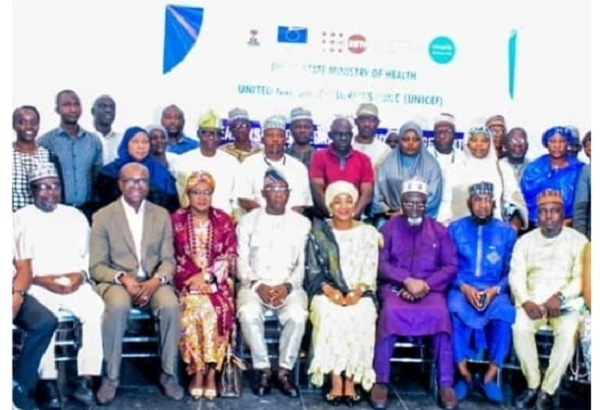
In Adamawa State, where the initiative has already begun implementation with a three-day capacity-building workshop in Yola, the Deputy Governor and Chairman of the State Primary Health Care Task Force, Prof. Kaletapwa George Farauta, underscored the importance of strengthening leadership and governance to improve planning, implementation, monitoring, and accountability in the health sector. The workshop brought together senior government officials, programme managers, local government representatives, heads of health institutions, development partners, and other stakeholders to address the gaps identified during the baseline assessment.
UNICEF Health Systems Specialist, Dr. Emmanuel Emedo, emphasised that effective leadership is a critical driver of stronger health systems and better service delivery. "It is important that health professionals understand how to lead because when we lead better, we deliver better results. Technical expertise alone is not enough," he said. He added that as health professionals assume greater leadership responsibilities, they must also develop the competencies required to strengthen institutions, manage resources effectively, and improve health outcomes. The initiative comes at a time when governments are expected to assume greater ownership of health programmes amid changing global development financing.
In Sokoto State, Dr. Danjuma Nehemiah of the UNICEF Sokoto Field Office expressed optimism that the intervention would significantly improve health outcomes. "After this validation, we are going to be working with DGI to come up with plans and key activities that will enhance and change the landscape in terms of leadership and governance in the health sector," he said. "If the head is not showing direction, no matter what we do in terms of service delivery, we are not going to make progress".
The ELGMC Project is designed to develop competent leaders capable of addressing persistent challenges affecting RMNCAH+N programmes, including weak coordination, financing, and management systems. Chief Executive Officer of DGI Consult, Dr. Gafar Alawode, explained that the project is not just about conducting training but about developing leaders and managers who can solve critical problems in the health sector, strengthen systems, optimise available resources, and ultimately improve access to quality healthcare. Strategic interventions include the establishment of a Community of Practice across the three states and an RMNCAH+N Fellowship programme to provide ongoing mentoring and technical support.
Participants in the workshops received training in strategic planning, financial management, human resource management, coordination, and the use of data for decision-making. They also developed a shared RMNCAH+N Vision and explored using a draft results framework to translate shared priorities into measurable results, strengthen accountability, and guide programme implementation. The capacity-building workshops provided an opportunity for state leaders to reflect on progress already recorded in RMNCAH+N and to consider what is required to sustain and build on those gains.
The stakes are high. Significant strides have been made in healthcare, with millions of children treated for severe illnesses and malnutrition. However, without sustained investment in leadership and governance, these gains risk being eroded. As the World Health Organisation representative in Adamawa, Kirfi Mansur Habibu, noted, the baseline assessment findings present a timely opportunity to align current efforts, identify key service delivery gaps, and prioritise evidence-based interventions.
Stakeholders expressed optimism that if successfully implemented, the ELGMC project will establish effective leadership, governance, and management systems that could transform health outcomes in Nigeria, starting with the three pilot states. With sustained commitment from government and development partners, Adamawa could become a national model for health systems strengthening and primary healthcare improvement. As Dr. Alawode put it, the goal is to build a platform that will bring the three states together, fostering collaboration and shared learning to protect Nigeria's health gains for generations to come.
📩 Stone Reporters News | 🌍 stonereportersnews.com
✉️ info@stonereportersnews.com | 📘 Facebook: Stone Reporters News | 🐦 X (Twitter): @StoneReportNew | 📸 Instagram: @stonereportersnews
Add comment
Comments