

Reported by: Oahimire Omone Precious | Edited by: Oravbiere Osayomore Promise.
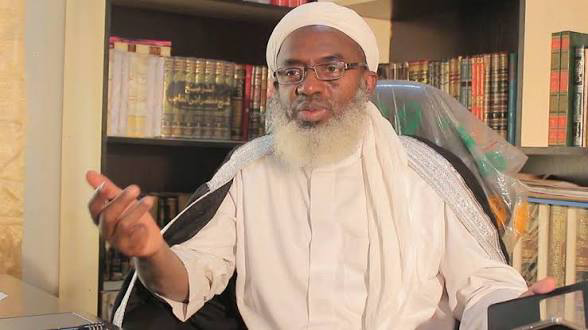
Controversial Islamic scholar, Sheikh Ahmad Gumi, has made a startling claim that former President Olusegun Obasanjo once met with Boko Haram leaders in Maiduguri, Borno State, and secured their agreement to lay down their weapons, but the government reneged on its part of the negotiations, allowing the insurgency to fester for over a decade. Gumi made the revelation in a viral video on Friday, September 4, 2026, while renewing his longstanding call for dialogue with armed groups as part of efforts to end Nigeria's prolonged security crisis.
According to Gumi, Obasanjo personally told him about the encounter during the early stages of the Boko Haram insurgency. "Look at Obasanjo; he told me this himself that, at the early stage of Boko Haram, he went to Maiduguri where he met with the leaders of Boko Haram and they agreed to lay down their arms," Gumi said. He added that the former president returned from Borno State with a promising agreement, but the government was reluctant to take action, leaving Obasanjo "bitter" about the outcome. "And he came back, but the government was reluctant to take action, and he was bitter about that; you can interview him," Gumi stated.
Gumi's claim aligns with Obasanjo's own public statements. In a 2022 interview, Obasanjo confirmed that he traveled to Maiduguri in 2011 to meet with individuals connected to the family of the late Boko Haram founder, Mohammed Yusuf, in an effort to persuade the group to abandon its insurgency. He said Boko Haram members expressed interest in Sharia law and complained about unemployment among their followers. Obasanjo also noted that he took it upon himself to reach out to the group after consulting with President Goodluck Jonathan at the time. Tragically, Babakura Fugu, the representative of Mohammed Yusuf's family who hosted Obasanjo during the meeting, was killed shortly after the visit.
The cleric's remarks have reignited the national debate on whether Nigeria should negotiate with terrorists and bandits. Gumi questioned why dialogue with Boko Haram is considered taboo when other countries have negotiated with groups such as the Taliban and Hamas. "You negotiate with the Taliban, Hamas; you negotiate with everybody you have problems with; why can't we negotiate with them? So it's now like a taboo to negotiate with them?" he asked. He argued that Nigeria should develop a homegrown security strategy rather than relying on international standards and ethics. "Nigeria has to show the international community that this is our baby, this is how we want, and not depending on your ethics and standards," he said.
Gumi also called on the Federal Government to consider a six-month amnesty window for terrorists and bandits willing to surrender their weapons and renounce violence. "If I were to be president, I would just come around and give a six-month amnesty window for them to put down their weapons," he declared. He suggested that rehabilitation programmes, education, and economic opportunities—including livestock farming—should be provided to former fighters and their families to prevent them from returning to criminality.
Gumi's proposal has sparked mixed reactions, with some social media users questioning the logic of granting amnesty to bandits while others supported dialogue as a possible solution. His advocacy for negotiation has faced strong opposition from political leaders, including former Kaduna State Governor Nasir El-Rufai, who insisted that his administration would not engage in such arrangements.
The cleric's latest comments come amid a worsening security crisis across Nigeria's North-West and North-Central regions, where bandits and terrorists have continued to kill, kidnap, and displace thousands of residents. Just this week, bandits killed five people in Girkau community, Sokoto State, abducted several others, and rustled cattle. The federal government has consistently maintained a military-first approach, arguing that negotiation would reward criminals and encourage further violence. However, Gumi's revelation about Obasanjo's failed peace initiative has added a new layer to the debate, raising the question: could Nigeria have ended the Boko Haram insurgency years ago if the government had followed through on the agreement secured by the former president? For now, Gumi has drawn a line in the sand, urging the government to seize the opportunity for dialogue before it is too late.
📩 Stone Reporters News | 🌍 stonereportersnews.com
✉️ info@stonereportersnews.com | 📘 Facebook: Stone Reporters News | 🐦 X (Twitter): @StoneReportNew | 📸 Instagram: @stonereportersnews
Add comment
Comments