

Reported by Ariajegbe Sylvia Esezobor
The Aheri Development Council in Ilaje Local Government Area of Ondo State has drawn a sharp line in the sand over a proposed Dangote Industrial City, rejecting the project outright while formally accepting the Olokola Free Trade Zone. The decision was communicated in a statement issued after a meeting convened by the Maporure of Aheriland, Oba Ilesanmi Raphael Ikuemonisan-Mafo, at Zion-Pepe, Ilaje. The meeting was attended by representatives of the Ondo State Government and Dangote Industries Limited, who had come to discuss the proposed investment in OKFTZ and the alleged Dangote Industrial City within the area. The Secretary of the Council, Ayeoba Ige Asemudara, said the Aheri kingdom welcomes Dangote’s return and associates with the industrial development agenda of Governor Lucky Aiyedatiwa within OKFTZ along the Atlantic coast. However, the council rejected what it described as a land-grabbing project that threatens to displace communities from their ancestral homes and deprive them of the benefits of the Lagos-Calabar Coastal Highway, which now links them to Lagos in under thirty minutes.
The council’s concerns are specific and documented. It expressed deep worry over what it called the exclusion of host communities from the Technical Committee set up by the Ondo State Government to collate records and liaise with Dangote and other companies in OKFTZ. According to the council, this omission will only widen the current abysmal communication gap between stakeholders. The statement was blunt about the consequences of proceeding without community input. It declared that as government acts only through verifiable documentation, it is unacceptable that lands and forests are currently being invaded by strangers on the basis of a proposed government acquisition of land with no clear location, dimension, and on the pretext of crops enumeration, data collection and environmental impact assessment of undisclosed projects. The council further alleged that while Dangote left the 10,000 hectares allocated to it in OKFTZ for Lekki, only 2,635 hectares of low-lying, swampy, reclaimed land was acquired by Lagos State for the Dangote Refinery. It noted that the 10,000 hectares of OKFTZ is far larger than other free trade zones in the Niger Delta and Lagos, citing Lekki FTZ at 3,000 hectares, Eko Atlantic at 1,107 hectares, and Alaro City at 1,000 hectares.
Traditional rulers and prominent indigenes of Aheri Kingdom have thrown their weight behind the council’s position. Among those who voiced their opposition were Oba Ilesanmi Raphael, the Maporure of Aheriland, and Oba Williams Kalejaiye, the Monehin of Obinehin. Prominent indigenes such as Mr Ajose Kudehinbu, a former Head of Service, and ex-commissioners Prince John Ola Mafo and Chief Sola Ebiseni also participated in the meeting. The traditional rulers alleged plans by the Ondo State Government and Dangote to develop a 29,250-hectare “Dangote Industrial City” targeting communities along Alape Lagoon and the Lagos-Calabar Coastal Highway, with surveys and crop enumeration already underway. Asemudara emphasised that Ilaje, a riverine Yoruba community, has limited land available north of the Atlantic shoreline for development, which is currently being accessed via the coastal highway. He condemned the “Dangote Industrial City” project as land-grabbing intended to displace local communities and deprive them of benefits from the coastal highway.
The council’s statement traced the history of the Olokola Free Trade Zone to 2007, when it was initiated to cover 10,000 hectares of land spanning the coastal boundary corridor of Ondo and Ogun States, which were each expected to acquire and release 5,000 hectares for the project. It noted that the project was yet to take off when Dr. Olusegun Agagu, in whose administration it was initiated, was succeeded by Dr. Olusegun Mimiko as Governor of Ondo State. Towards the end of Mimiko’s government, Aliko Dangote briefly came into the project. However, no land was acquired for the OKFTZ by either the Agagu or Mimiko administration, as Ondo and Ogun States could not agree before Dangote left OKFTZ to build his refinery in Lekki, Lagos. The council said Aheri kingdom welcomes the return of Dangote and associates with the industrial development agenda of the administration of Governor Lucky Orimisan Aiyedatiwa within the OKFTZ along the Atlantic coast. It insisted that Dangote, as a private entity, must comply with constitutional procedures for land acquisition based on public interest. The statement concluded that the communities refused to be part of land seizures for private projects that undermine indigenous ownership. Asemudara warned against divide-and-rule tactics and unauthorised land claims, clarifying that Aheri supports only genuine investments within OKFTZ along the Atlantic coast, not inland zones near Alape Lagoon and the Lagos-Calabar Highway.
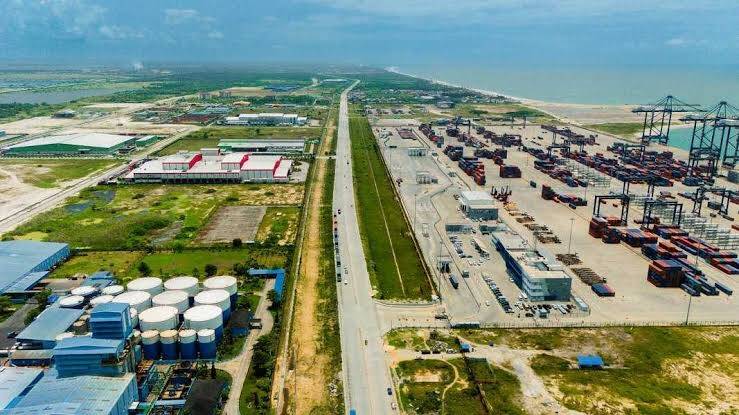
The rejection of the Dangote Industrial City does not signal opposition to industrial development in Ilaje. On the contrary, the council’s acceptance of the Olokola Free Trade Zone reflects a clear preference for a project that is properly documented, legally constituted, and inclusive of host communities. The OKFTZ, which comprises a deep seaport, oil refinery, and other projects, was conceived as a major industrial hub expected to host large-scale investments. The council’s position is that development must be anchored in transparency and respect for indigenous land rights, not in opaque acquisitions that leave communities as tenants on their own land. The statement’s declaration that “we won’t be tenants on our land” captures the essence of the dispute: the Ilaje people are not against investment, but they insist on being partners in development rather than passive spectators or victims of displacement.
Reactions to the council’s decision have been mixed. Former Chairman of Ilaje Local Government Area, Hon. Banji Okunomo, has described the planned reactivation of the Olokola Free Trade Zone by the Dangote Group as a defining economic milestone and one of the most enduring legacies of Governor Aiyedatiwa’s administration. In a statement, Okunomo said the renewed commitment by Aliko Dangote to return to the Olokola axis marks a historic turning point in the economic development of Ondo State, particularly for the people of Ilaje. He noted that the eventual relocation of the refinery project outside Ondo State years ago represented a significant economic setback for the state and its people, and he said the narrative is now changing. Okunomo called on traditional rulers, community leaders, youths, and other stakeholders across Ilaje and Ondo State to support the project, describing it as a non-partisan initiative focused on the future of the state and its people.
The Ondo State Government has not issued a formal response to the council’s statement. However, the government has previously established a technical committee to handle legal, land, community, and operational frameworks for the OKFTZ. The committee is chaired by Chief Bode Sunmonu, with ONDIPA CEO Emmanuel Omomowo as Secretary. Its members include Barr. Yinka Orokoto, Sola Adebisi, Permanent Secretary Ministry of Finance Idowu Ojo, and Engr. Femi Akarakiri. The committee’s mandate includes reviewing legal, administrative, and community issues under defined terms of reference. The exclusion of host community representatives from this committee is one of the Aheri Development Council’s central grievances, and it remains to be seen whether the government will address this concern in response to the council’s statement.
For now, the Ilaje community has made its position clear. It welcomes Dangote’s return to the Olokola Free Trade Zone, but it will not accept a parallel project that bypasses legal processes and excludes the people whose land is at stake. The coming weeks will determine whether the Ondo State Government and Dangote Industries Limited will engage with the host communities to address their concerns, or whether the dispute will escalate into a confrontation that could delay or derail one of the most significant industrial projects in Nigeria’s coastal region. The people of Aheri have said they will not be tenants on their own land. The ball is now in the government’s court.
📩 Stone Reporters News | 🌍 stonereportersnews.com
✉️ info@stonereportersnews.com | 📘 Facebook: Stone Reporters News | 🐦 X (Twitter): @StoneReportNew | 📸 Instagram: @stonereportersnews
Add comment
Comments