

Reported by Ariajegbe Sylvia Esezobor
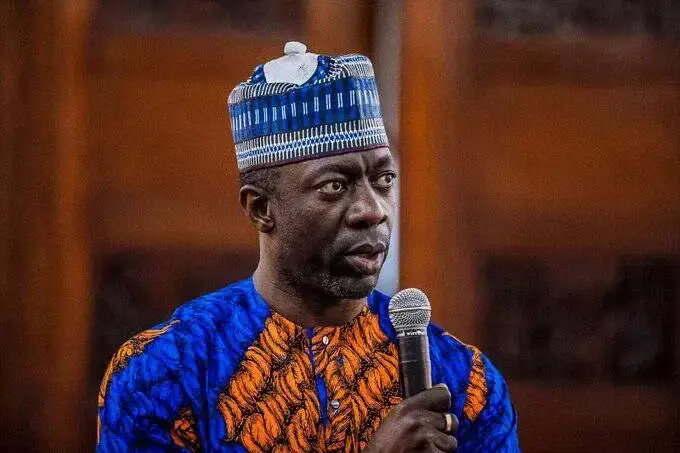
The 2027 governorship candidate of the Allied Peoples Movement in Oyo State, Bimbo Adekanmbi, has mounted a vigorous public defence against allegations linking him to a N30 billion financial discrepancy, insisting the controversy belongs to the state’s local government system and not the Ministry of Finance, Budget and Planning he once headed. Adekanmbi, who served as Commissioner for Finance under the late Governor Abiola Ajimobi, addressed the issue on Tuesday, September 15, 2026, during an appearance on Arise News’ The Morning Show. His remarks came amid renewed scrutiny of his record in government as he campaigns to succeed Governor Seyi Makinde. “The N30bn, I didn’t say it got missing,” Adekanmbi said. “You must separate the Oyo State Government from the local government. The money went missing in local government. I never attended one JAC meeting. The money is there, the records are there. The investigations should focus on local government, of which I have absolutely no impact, none at all.”
The former commissioner’s defence rests on a jurisdictional argument. He maintains that he was never a member of the Joint Accounts Committee, the body through which financial matters involving the state and its 33 local government areas were handled during the Ajimobi administration. According to Adekanmbi, the alleged transactions being referenced occurred entirely within the local government system, beyond his ministerial purview. He told viewers that his name has been unfairly dragged into a controversy that predates and postdates his tenure. In earlier statements, he claimed he was invited to Abuja during the investigation and that when he saw the petition detailing the allegations, he laughed because he knew nothing about the transactions. He said he was vindicated by the fact that his work was at the ministry, not at the local government level.
The N30 billion figure itself has a tangled history in Oyo State’s political discourse. Adekanmbi first raised the allegation of missing funds during the Ajimobi administration in a video interview in 2022, when he revealed that an individual in the government had looted the sum. That revelation was widely circulated and contributed to the political climate that preceded the 2023 elections. More recently, the N30 billion figure has resurfaced in an entirely different context: the Bodija explosion relief fund. The Federal Government approved a N50 billion package for victims of the January 2024 Bodija explosion, of which N30 billion was released to the Oyo State Government in November 2024. The fund reportedly remained untouched in an infrastructure account with First Bank for over a year, prompting accusations from civil society organisations and political opponents that Governor Makinde was hoarding relief money. HEDA Resource Centre petitioned the Economic and Financial Crimes Commission over the matter, alleging misapplication and criminal breach of trust. The Oyo State Government countered that the money was domiciled and awaiting disbursement, and accused critics of playing politics with a tragedy.
Adekanmbi’s latest intervention seeks to disentangle the two N30 billion narratives. He wants the public to understand that the money he allegedly referenced years ago was local government funds, not the Bodija relief fund, and that the local government system operated independently of his ministry. His argument has a structural logic: in Nigeria’s federal system, local governments receive allocations through the Federation Account and manage their own finances, though state governments often exercise oversight through the Joint Accounts Committee. If Adekanmbi was never a member of that committee, his direct involvement in local government spending would be limited, even if he served as the state’s chief financial officer.
The political timing of the allegation is not lost on observers. Adekanmbi emerged as the APM governorship candidate after the party’s primary in Ibadan in May 2026. His candidacy is widely viewed as part of Governor Makinde’s succession plan, with Adekanmbi campaigning on the “Omituntun 3.0” agenda, a continuation of the incumbent’s developmental programme. He has rejected suggestions that he is Makinde’s surrogate, saying the governor publicly encouraged him to chart his own path and not inherit his enemies or liabilities. “The governor did not just sit down in his office and drop a list,” Adekanmbi said. “There was a process leading to the emergence of all the candidates. There were public consultations and public engagements, with input from every sector and region of Oyo State.” He insisted the anticipated rancour within the party had not materialised, describing the doomsday predictions as unfounded.
Yet the N30 billion controversy refuses to fade. Adekanmbi’s political opponents have seized on it as evidence of a tainted record. A political commentary published in April 2026 asked whether “Bimbo Adekanmbi who still has a case to answer with the EFCC can be trusted with good governance,” noting that about N30 billion was mismanaged under his leadership as Commissioner for Finance. The former commissioner has consistently denied any wrongdoing, saying he was invited by investigators, wrote his statement, and was released without charge. He has argued that the petition against him was politically motivated and that he knew nothing about the specific transactions listed, including allegations about tractor purchases, contract awards, and cash withdrawals.
For the people of Oyo State, the dispute raises a broader question about accountability. The local government system is the tier of government closest to the people, yet it is also the least transparent. If N30 billion went missing at that level, the implications for service delivery, infrastructure, and basic amenities are severe. Adekanmbi’s call for investigations to focus on the local government system is technically reasonable, but it may also be politically convenient. Whether the funds were state or local, they were public money, and the public deserves a clear accounting. The former commissioner has said the records are there for anyone to verify. That is an invitation that the EFCC, the Oyo State House of Assembly, or any credible investigative body should take seriously.
The 2027 election will ultimately be decided on many issues: the economy, security, infrastructure, education, and healthcare. But the integrity of candidates matters, and allegations of financial impropriety go to the heart of electability. Adekanmbi has made his defence. He has drawn a line between his ministry and the local government system. He has invited scrutiny of the records. Whether voters accept his explanation or conclude that a commissioner for finance bears ultimate responsibility for the financial health of the entire state, including its local governments, will be tested at the ballot box. For now, Adekanmbi has said his piece. The burden of proof, as he himself acknowledges, lies in the documents and the records, not in the rhetoric of campaigns.
📩 Stone Reporters News | 🌍 stonereportersnews.com
✉️ info@stonereportersnews.com | 📘 Facebook: Stone Reporters News | 🐦 X (Twitter): @StoneReportNew | 📸 Instagram: @stonereportersnews
Add comment
Comments