

Reported By Ariajegbe Esezobor Sylvia
President Bola Tinubu has declared the elimination of child labour a national development priority, directing Ministries, Departments and Agencies, state governments, employers and civil society organisations to fully implement the National Policy and National Action Plan for the Elimination of Child Labour 2026–2030, a framework designed to rescue millions of Nigerian children from exploitative work and return them to classrooms where they belong.
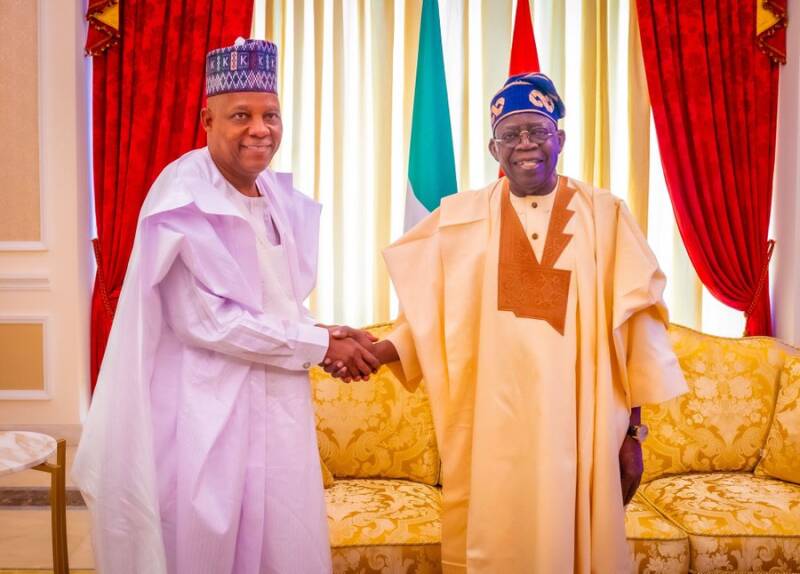
Speaking on Wednesday in Abuja at the National Dialogue on Advancing the Implementation of Nigeria's National Child Labour Policy and National Action Plan, the President left no room for ambiguity about the scale of the crisis or the moral weight of the response required. "Every nation is judged by how well it protects its children," Tinubu said through the Secretary to the Government of the Federation, Senator George Akume, who represented him at the event. "A child who is forced into labour instead of attending school loses more than an education. That child loses opportunities, confidence, health and the chance to fully contribute to national development." The President subsequently launched the 2024 National Child Labour Survey Report alongside the National Policy and National Action Plan for the Elimination of Child Labour 2026–2030, directing all relevant stakeholders to ensure their full implementation.
The numbers behind the crisis are staggering. According to the Nigeria Child Labour Survey conducted by the National Bureau of Statistics in collaboration with the International Labour Organisation, approximately 24.6 million Nigerian children aged between five and 17 are engaged in child labour. That figure represents nearly four out of every ten children in the country, with more than 14 million trapped in hazardous work that threatens their health, safety and futures. The survey reveals an almost equal distribution between boys and girls, though the north-west geopolitical zone bears the heaviest burden of the crisis. Globally, the picture is equally grim: the ILO estimates that 138 million children remain in child labour worldwide, with sub-Saharan Africa recording the highest concentration of the problem and accounting for nearly two-thirds of all children in labour.
The National Policy and National Action Plan for the Elimination of Child Labour 2026–2030, which Tinubu launched at the dialogue, represents Nigeria's third attempt at a comprehensive framework to address the crisis. It was developed with technical support from the ILO and the ECOWAS Commission, and validated in June by the National Steering Committee on the Elimination of Child Labour. The plan goes beyond previous efforts by introducing digital tools designed to strengthen accountability and enforcement. A Digital Labour Inspection Checklist will help inspectors identify violations more systematically. A Red Card System Registry will track violations and responses in real time. And a State Scorecard Reporting Template will measure progress across Nigeria's 36 states, creating pressure for consistent implementation at subnational level. The framework aims to achieve a significant reduction in hazardous child labour by 2030, improve school attendance, strengthen labour inspection systems, expand social protection coverage, and enhance child protection services across the country.
Tinubu was direct in his directives to those who must now implement the plan. He instructed federal Ministries, Departments and Agencies, as well as all 36 state governments, to ensure full implementation. He called on the Nigeria Governors' Forum and the Nigeria Governors' Spouses Forum to champion child protection initiatives across their states. He charged employers to guarantee that their supply chains remain free of child labour, a demand that carries particular weight in sectors such as agriculture, mining and domestic work where child labour remains deeply entrenched. He also urged workers' organisations, development partners, traditional and religious leaders, communities, parents and guardians to support the national effort, framing the fight not as a government programme but as a shared national responsibility. The President also outlined a broader strategy to address the root causes that force children into labour in the first place, identifying poverty, unemployment, inadequate access to quality education and social exclusion as the underlying drivers of the crisis.
The plan has drawn measured support from key stakeholders. The ILO, which provided technical support for the policy's development, has welcomed the framework but stressed that its success will depend on implementation. Dr Vanessa Phala, ILO Country Director for Nigeria, Ghana, Liberia, Sierra Leone and the ECOWAS Liaison Office, emphasised that the policy is ultimately about translating commitments into tangible change for children. The Nigerian Labour Congress described the validation of the plan as an important milestone for protecting the rights and dignity of Nigerian children. The Trade Union Congress noted that every child removed from hazardous work and returned to school represents an investment in Nigeria's future workforce. The Nigeria Employers' Consultative Association has called for collective action, demanding decent work for adults as the foundation for ending child labour. Civil society organisations have consistently argued that weak enforcement mechanisms, underfunded agencies and poor coordination among responsible institutions remain the primary obstacles, not the absence of legal frameworks.
What distinguishes this moment is not the rhetoric, which has accompanied previous plans that failed to deliver, but the presence of a concrete framework with measurable targets and digital tools designed to hold implementers accountable. Whether Nigeria can convert that framework into meaningful change for the 24.6 million children currently trapped in labour will depend on political will at federal and state levels, sustained funding for enforcement agencies, and the willingness of employers and communities to confront practices that have become normalised over generations. Tinubu has said the right words and signed the right document. The children of Nigeria, and the world watching, will judge the rest.
📩 Stone Reporters News | 🌍 stonereportersnews.com
✉️ info@stonereportersnews.com | 📘 Facebook: Stone Reporters News | 🐦 X (Twitter): @StoneReportNew | 📸 Instagram: @stonereportersnews
Add comment
Comments