

Reported by Ariajegbe Sylvia Esezobor
The Federal Government has ruled out any immediate increase in electricity tariffs, saying it has instead raised an estimated N1.23 trillion through a bond programme to settle the backlog of debts in the power sector, in a move designed to stabilise the electricity market and improve liquidity across the value chain.
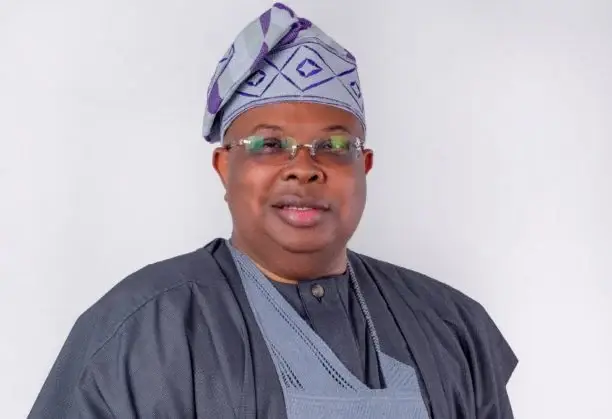
The Minister of Power, Joseph Tegbe, disclosed this on Monday in Abuja during a media parley to mark his first 100 days in office, dismissing rumours of an impending hike in electricity rates across the country. “We have no plan to increase electricity tariffs. There is no immediate plan by this government to increase tariff. It is not on our table; it is not on our agenda,” Tegbe said. He reiterated that the government’s focus was on improving service delivery, accelerating universal metering and strengthening the financial viability of the power sector rather than raising tariffs. The clarification followed earlier reports that the government planned to phase out electricity subsidies from 2027, which had triggered concerns of a tariff increase.
The N1.23 trillion raised through the bond programme forms part of a wider effort to address an estimated N3.3 trillion in power-sector debt that has constrained investment, weakened utility balance sheets and hindered reliable power delivery. The bond issuance was executed under the Presidential Power Sector Debt Reduction Programme, which authorises the issuance of up to N4 trillion in government-backed bonds to clear legacy arrears owed to generation companies and gas suppliers. The programme began with the issuance of a N590 billion Series 1 Power Sector Bond in December 2025, followed by an additional N729 billion bond in July 2026, bringing the total to approximately N1.23 trillion. The initiative has been described as the largest coordinated financial intervention in the history of Nigeria’s power sector, aimed at clearing verified arrears and restoring liquidity to generation companies.
Tegbe said the government’s approach was to address the structural and financial problems responsible for the persistent challenges in the electricity market instead of simply injecting funds without first establishing where the problems lie. He disclosed that the ministry had conducted a diagnosis of the electricity value chain since he assumed office, revealing constraints in gas supply, generation, transmission and distribution. According to him, gas supply to power stations had been constrained by damaged pipelines and commercial terms that discouraged investment, while the generation fleet remained heavily dependent on ageing thermal plants affected by deferred maintenance and stalled projects. The diagnosis also revealed that only 27 per cent of generation companies’ bills were being paid, undermining their ability to maintain plants and pay gas suppliers. The transmission network was affected by vandalised towers and lines, overstretched equipment and frequent tripping, while the distribution segment suffered aggregate technical, commercial and collection losses of between 30 and 40 per cent.
The minister said electricity generation and transmission had remained above 5,000 megawatts over the past couple of weeks, compared with the 3,700MW to 4,700MW range before June 2026. A generation peak of 5,330MW was recorded between August and September. He disclosed that the 375MW Alaoji open-cycle power plant had been restored to the national grid after three years offline. New transformers commissioned at Apapa, Ijora, Alausa and Lekki in Lagos had unlocked 672MW of transmission capacity, while a new 300MVA transformer energised at Katampe, Abuja, had unlocked another 240MW. Tegbe also said the Transmission Company of Nigeria had secured the release of more than 300 containers of critical power equipment held up at the ports, which would be deployed to support ongoing transmission infrastructure upgrades.
On access to electricity, the minister said 62 solar and mini-grid installations had been completed across 30 states, providing about 43.6MW of installed solar capacity and 41,735 new connections, with an estimated beneficiary reach of more than 208,000 people. He listed initiatives under the Rural Electrification Agency, including the 3MW solar hybrid system recently commissioned at Yakubu Gowon University in Abuja, a 20MW off-grid initiative in Kogi State, a 3.5MW solar project in Kebbi State, a 5.5MW mini-grid in Epe, Lagos, and 39 mini-grids in Adamawa State designed to provide nearly 27MW of electricity. The Renewable Asset Management Company would manage publicly financed renewable energy infrastructure and mobilise N3 trillion over the coming years, he added.
Tegbe acknowledged that the improvements had not translated into reliable electricity for all communities. “Our next task is to sustain these gains and translate them into more dependable supply at customer level. We are aware that a national peak alone cannot describe the experience of every community,” he said. He also disclosed that the government was intensifying efforts to address estimated billing and improve revenue collection through metering, which would ensure consumers are charged based on measured electricity consumption.
The minister’s assurance comes amid heightened public sensitivity to electricity tariffs, following the removal of petrol subsidy in 2023 and the resulting surge in the cost of living. Any tariff increase would have compounded the financial burden on households and businesses already grappling with high inflation and economic hardship. The government’s decision to prioritise debt settlement over tariff adjustment signals a recognition that the power sector’s problems cannot be solved by simply passing costs to consumers.
For the power sector, the bond programme represents a critical lifeline. The N1.23 trillion raised so far has begun to clear verified arrears owed to generation companies and gas suppliers, improving liquidity and enabling operators to maintain infrastructure and meet their obligations. The government has said the programme will continue, with the remaining portion of the N4 trillion facility expected to be deployed in subsequent phases. Whether the intervention will translate into tangible improvements in electricity supply for ordinary Nigerians remains the central test. The minister’s first 100 days have seen modest gains in generation and transmission, but the distribution segment, where consumers experience the system’s failures most directly, remains the weakest link. As Tegbe put it, the next task is to sustain the gains and extend them to more communities. For now, the government has made its position clear: there will be no tariff hike, and the priority is to fix the system rather than charge consumers more for a service that remains unreliable.
📩 Stone Reporters News | 🌍 stonereportersnews.com
✉️ info@stonereportersnews.com | 📘 Facebook: Stone Reporters News | 🐦 X (Twitter): @StoneReportNew | 📸 Instagram: @stonereportersnews
Add comment
Comments