

Reported by Ariajegbe Sylvia Esezobor
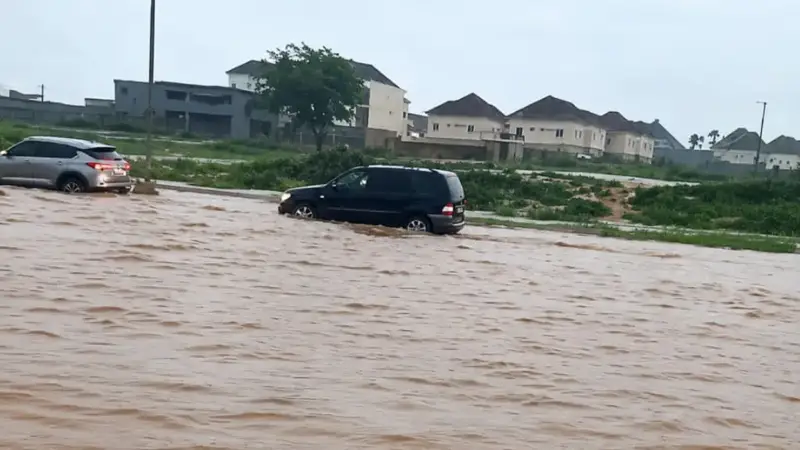
The Nigeria Hydrological Services Agency has issued a fresh high flood-risk alert across 15 states, warning of rising river levels and possible riverine flooding between September 19 and 25, with Cross River State facing the widest exposure, where 2,471 communities, 703 schools, 344 healthcare facilities, 145 markets and 453 religious buildings, as well as 854 hectares of farmland, have been identified within the flood-path.
The warning, contained in NiHSA’s NFA-2026-262 alert, identified nine river stations requiring close monitoring, including Obubra, Itigidi and Epento along the Cross River. NiHSA Director-General and Chief Executive Officer, Umar Ibrahim Mohammed, said early action was critical to preventing avoidable loss of lives, property and livelihoods. He urged state and local governments, emergency management authorities, traditional institutions and residents of vulnerable communities to take precautionary measures before flooding occurs. The agency advised residents in flood-prone communities to relocate people, livestock and valuables to safer, higher ground where necessary and activate community-based early-warning and response systems.
The scale of potential exposure extends far beyond Cross River. In Ebonyi State, 2,574 communities, 1,064 schools, 422 healthcare facilities, 480 markets, 629 religious buildings and 1,882 hectares of farmland are exposed across Abakaliki, Afikpo, Afikpo South, Ebonyi, Ezza North and Ezza South local government areas. In Anambra State, Aguata, Anambra East, Anambra West, Anaocha, Awka North, Awka South and Ayamelum local government areas are at risk, with 1,314 communities, 1,308 schools, 1,089 healthcare facilities, 280 markets, 610 religious buildings and 1,529 hectares of farmland exposed. Imo State faces exposure affecting 958 communities, 1,022 schools, 553 healthcare facilities, 161 markets and 198 religious buildings, while Benue State has 303 communities, 100 schools, 48 healthcare facilities, 32 markets, 151 religious buildings and 55 hectares of farmland at risk. In Akwa Ibom, 249 communities, 323 schools, 211 healthcare facilities, 74 markets and 289 religious buildings are exposed.
The affected states are Imo, Cross River, Ebonyi, Benue, Anambra, Akwa Ibom, Lagos, Rivers, Edo, Kogi, Taraba, Delta, Bayelsa, Enugu and Abia. The latest alert comes as NiHSA’s 2026 Annual Flood Outlook identified 14,118 communities in 266 Local Government Areas across 33 states and the Federal Capital Territory as being at high risk of flooding this year, with a further 15,597 communities in 405 LGAs falling within the moderate-risk category. The Nigerian Meteorological Agency’s 2026 Seasonal Climate Prediction projected an early-to-normal onset of rainfall and normal-to-above-normal rainfall amounts across many parts of the country.
The human and economic stakes are enormous. Flooding remains the most recurring disaster in Nigeria, accounting for displacement of population and monumental loss to agriculture, livelihoods and critical infrastructure. The 2022 floods killed more than 600 people and displaced over 1.3 million across 33 states. In 2024, the collapse of the Alau Dam inundated 40 per cent of Maiduguri, displacing hundreds of thousands and destroying critical infrastructure. As of mid-2026, more than one million people had been affected by flooding, with over 250 deaths and more than 640,000 displaced, including many who had already been uprooted by conflict and climate change. Vast areas of farmland have been destroyed ahead of the harvest season, threatening to increase food insecurity at a time when 32 million Nigerians are already facing acute hunger. Access to hospitals, schools and markets has been hampered, and concerns are rising over potential disease outbreaks.
The National Emergency Management Agency has activated its National Emergency Operations Centre to enhance coordination, collation and processing of reliable data on the 2026 flood situation, with Director General Zubaida Umar charging the team to be diligent, professional and proactive. NEMA said the activation was part of its proactive measures to strengthen national preparedness and ensure effective coordination of stakeholders during the rainy season, noting that timely access to credible information is critical to early action, deployment of resources and protection of lives and livelihoods. In June, Vice President Kashim Shettima directed the immediate activation of the Fusion and Trigger Room concept within NEMA to strengthen coordination and trigger early action when flood risks reach critical thresholds. NEMA has also conducted full-scale flood simulations in Ogbaru, Anambra State, and Wudil, Kano State, bringing emergency agencies, security institutions, state authorities and communities into practical scenarios to test evacuation, rescue, communication and inter-agency coordination.
The Lagos State Government has issued a direct warning to residents in flood-prone areas, urging them to relocate temporarily to higher ground. Commissioner for Environment and Water Resources Tokunbo Wahab said, “When the signs show that danger is near, the safest decision is to move early. No property is worth risking your life”. The areas identified as most at risk in Lagos include Eti-Osa, Lagos Island, Oke-Ira Nla in Ajah, Kirikiri, and the Ilaje Waterfront Jetty.
NiHSA has advised residents to avoid crossing flooded roads, bridges and fast-moving water, and to prepare safe locations for possible temporary evacuation. Authorities and communities were further advised to pre-position relief materials, safe drinking water, water-treatment supplies and first-aid materials, while clearing blocked drainage channels and river outlets where it is safe to do so. The agency warned against construction and habitation in vulnerable floodplain areas and said it would continue monitoring hydrological conditions and river levels across the affected areas.
For the millions of Nigerians living in the path of the projected flooding, the warning represents a critical window for action. The difference between a manageable flood event and a catastrophe often lies in whether early warnings are converted into timely action. As NiHSA’s Director-General put it, early action and adherence to official flood warnings are critical to reducing the risk of loss of lives, property and livelihoods.
📩 Stone Reporters News | 🌍 stonereportersnews.com
✉️ info@stonereportersnews.com | 📘 Facebook: Stone Reporters News | 🐦 X (Twitter): @StoneReportNew | 📸 Instagram: @stonereportersnews
Add comment
Comments