

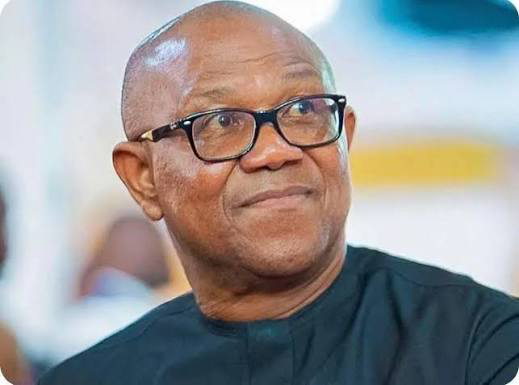
Reported by: Oahimire Omone Precious | Edited by: Oravbiere Osayomore Promise.
A political firestorm has erupted over the financial legacy of former Anambra State Governor Peter Obi, with the All Progressives Congress Presidential Campaign Council demanding that he withdraw from the 2027 presidential race over disclosures by the Anambra State Government that his administration left outstanding external loans and unpaid obligations. The demand, made on Monday, September 21, 2026, by the APC PCC spokesman, Dele Alake, followed the release of records by the Anambra State Government showing that eight external loans contracted during Obi's tenure between 2006 and 2014 remained outstanding, with a balance of approximately $92.35 million, or about N127.37 billion, as of June 30, 2026. The loans, originally valued at $123.77 million, were obtained for projects covering malaria control, education, healthcare, erosion management and community development.
The controversy escalated after Obi publicly challenged the Anambra State Government to produce evidence that he left behind unpaid liabilities. The former governor had insisted that his administration cleared more than N35 billion in historical gratuities and arrears and handed over the state without outstanding salary, pension or gratuity obligations. He further vowed to quit the 2027 presidential race if the state government could prove that he left debts or owed any contractor. The Anambra State Government, led by Governor Chukwuma Soludo, responded by releasing detailed records from the Debt Management Office, listing the eight external borrowings and stating that the state was still servicing the loans through monthly deductions from its federal allocation. Commissioner for Information and Value Reformation, Dr Law Mefor, said the loans included the Malaria Control Booster Project, the Third National Fadama Development Project, the Health System Development Project II, the State Education Programme Investment Project, the Community and Social Development Project, the Nigeria Erosion and Watershed Management Project, and the Value Chain Development Project.
The APC PCC seized on the disclosures to challenge Obi's longstanding narrative of fiscal prudence. "In the past four years, Mr Peter Obi and his supporters packaged Obi's tenure as Anambra governor as one defined by exceptional fiscal prudence, including the claim that he left Anambra without a debt burden," Alake said. "But it has all emerged as a well-packaged lie." The campaign council also alleged that Obi's administration left unpaid salaries owed to workers of the Anambra State Water Corporation, citing a memo dated April 25, 2006, from Obi's then Chief of Staff, Chuks Ileogbunam, which appealed to the governor to release N15 million monthly to settle the workers' salaries and avert a protest at the Government House. "Since it is your excellency's unchanging desire to achieve a better future for our children and children's children, please, Sir, bear in mind that officials of the Water Corporation also have children who are looking to your compassionate leadership," the memo read. Alake argued that the document raised questions about Obi's claim that he ensured workers were paid as and when due, and he challenged the former governor to honour his reported pledge to withdraw from the presidential race if it was established that he left a debt burden for Anambra State.
The APC's demands have not gone unanswered. Obi has maintained that his administration left the state with zero debts, salaries, pensions, gratuities or contractor liabilities. He specifically disputed the claim concerning a N2 billion ecological fund, explaining that the money was released shortly before he left office for the Oko/Umuchiana erosion crisis and was left untouched in a First Bank account at the UNIZIK branch in Awka. The Anambra State Government rejected Obi's account, with Mefor insisting that the account in question was an Internally Generated Revenue Consolidated Revenue Account, not an ecological fund account, and that there had never been any such amount in it from 2011 to date. The exchange has become a bitter war of words, with both sides accusing the other of misrepresenting the state's financial position.
The political dimensions of the controversy are impossible to ignore. Obi, who governed Anambra State for eight years, has built his political brand on a reputation for frugality, transparency and prudent financial management. His supporters often point to his record in Anambra as evidence that he would bring the same discipline to the presidency. The APC's challenge strikes at the heart of that narrative. By questioning Obi's claims about the financial position he left behind, the ruling party is attempting to undermine the very foundation of his presidential campaign. The timing is also significant. With the 2027 general elections approaching, the APC is seeking to define Obi as a hypocrite who failed to live up to the standards he now sets for others. Obi's vow to withdraw from the race if evidence of unpaid debts was produced has given the controversy an added layer of drama, turning a dispute over state finances into a high-stakes political gamble.
But the dispute is not as straightforward as either side would like it to be. Borrowing is not inherently wrong. Governments borrow to fund development projects, and the loans contracted during Obi's tenure were directed toward malaria control, education, healthcare, erosion management and community development—all critical areas that require investment. The question is not whether Obi's administration borrowed, but whether it left those obligations in a responsible manner and whether the narrative of fiscal prudence that has been built around his tenure is consistent with the financial records. The Anambra State Government's disclosure that the loans were still being serviced through deductions from the state's federal allocation is a material fact that cannot be dismissed. At the same time, the state government has acknowledged that borrowing is not inherently wrong when used to finance productive projects, and it has not accused Obi of corruption or misuse of funds. The controversy is therefore less about whether the borrowing was illegitimate and more about whether Obi has been honest about the financial position he left behind.
For Obi, the challenge is to provide a clear and convincing account of the financial obligations his administration left behind. His supporters argue that the loans were inherited obligations tied to projects that were approved and executed, and that successive administrations, including Soludo's, have continued to service them as part of their constitutional responsibilities. They also point to the fact that Obi left more than N75 billion in savings and over N2.13 billion in an ecological fund, which they say is sufficient to cover the outstanding obligations. But the APC's allegations about unpaid salaries at the Water Corporation and the memo from Obi's own Chief of Staff in 2006 complicate that narrative. If workers were not paid as and when due, then Obi's claim of leaving no outstanding liabilities is at least partially undermined.
The coming weeks will determine whether the controversy dies down or escalates into a defining issue of the 2027 campaign. The APC has made it clear that it intends to keep the pressure on Obi, using the debt dispute to question his credibility and his fitness for the presidency. Obi, for his part, has promised to address the issues personally, and his supporters are eagerly awaiting his detailed response. The court of public opinion will ultimately decide whether the former governor's reputation for fiscal discipline survives this latest challenge. What is certain is that the debate over Anambra's financial legacy has become a proxy for a larger argument about leadership, accountability and the claims that politicians make about their own records. For Obi, the stakes could not be higher. For the APC, the opportunity to damage a leading opposition candidate is too valuable to pass up. And for Nigerians, the controversy is a reminder that the promises politicians make about their past are not always what they seem.
📩 Stone Reporters News | 🌍 stonereportersnews.com
✉️ info@stonereportersnews.com | 📘 Facebook: Stone Reporters News | 🐦 X (Twitter): @StoneReportNew | 📸 Instagram: @stonereportersnews
Add comment
Comments