

Reported by: Oahimire Omone Precious | Edited by: Oravbiere Osayomore Promise.
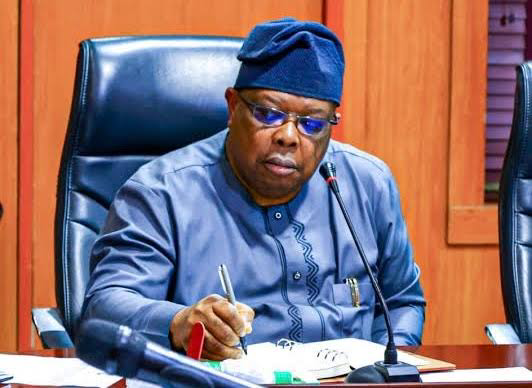
The Federal Government has dismissed reports that it plans to increase electricity tariffs or withdraw electricity subsidies, saying there is currently no policy to impose additional financial pressure on consumers. The clarification was made by the Minister of Power, Joseph Tegbe, on Monday, September 21, 2026, in Abuja during a briefing marking his first 100 days in office. Tegbe told journalists that the government’s immediate priority is to improve electricity supply and ensure Nigerians receive better service, not to burden them with higher costs.
“There is currently no policy to increase electricity tariffs or withdraw subsidies,” Tegbe said. “Our focus is on strengthening generation, transmission and distribution to provide more reliable power across the country.” The minister’s statement was a direct response to growing anxiety among Nigerians over reports that the government planned to phase out electricity subsidies from 2027. Those reports had sparked fears of another round of cost-of-living increases, coming on the heels of the fuel subsidy removal that has already pushed transport and food prices beyond the reach of many households. Tegbe had previously said subsidy reforms would be pursued, but he had also ruled out an immediate tariff increase and promised that measures would be put in place to protect vulnerable consumers. His latest clarification reinforces that position and seeks to reassure a public that has grown wary of government promises on pricing.
The power sector has long been a source of frustration for Nigerians. Despite repeated tariff increases in previous years, electricity supply has remained erratic, with many homes and businesses relying on generators for most of their daily needs. The minister acknowledged that the sector faces significant challenges, but he insisted that the government is working to address them. He said ongoing efforts are focused on improving generation capacity, upgrading transmission infrastructure, and strengthening distribution networks to deliver more reliable power. He also noted that the government is working on measures to protect vulnerable consumers in the event that future reforms become necessary.
The briefing marked Tegbe’s first 100 days in office, a period during which he has been under pressure to demonstrate progress in a sector that is critical to Nigeria’s economic development. The minister used the occasion to outline what he described as early achievements and ongoing initiatives. He said the government is committed to ensuring that Nigerians receive better service, and he urged consumers to be patient as reforms take root. “We are not here to impose pain on Nigerians,” he said. “We are here to solve problems. The priority is to improve supply, and that is what we are focused on.”
The clarification comes amid a broader debate over the sustainability of subsidies in Nigeria’s power sector. The government has argued that subsidies are a drain on public finances and that they primarily benefit wealthier consumers who can afford to pay cost-reflective tariffs. Critics, however, contend that removing subsidies without first improving supply would be unfair to ordinary Nigerians who already pay for a service they barely receive. The minister’s statement appears to acknowledge this tension. By ruling out an immediate tariff increase and promising to protect vulnerable consumers, the government is attempting to strike a balance between fiscal responsibility and social protection.
The political context is also significant. The 2027 general elections are approaching, and the government is keen to avoid policies that could provoke public backlash. The fuel subsidy removal in 2023 triggered widespread hardship and contributed to a cost-of-living crisis that has eroded the purchasing power of millions of Nigerians. A similar move on electricity tariffs could have even more severe political consequences, particularly in urban areas where access to the grid is more widespread and where consumers are already struggling with high fuel prices. The minister’s denial of plans to increase tariffs is therefore as much a political calculation as it is an economic one.
For consumers, the minister’s statement brings a measure of relief. Many had feared that the government was preparing to withdraw electricity subsidies as part of its broader reform agenda, which would have led to higher bills and further strained household budgets. The assurance that no such policy is currently in place is welcome news, even if it does not address the underlying problem of poor supply. The real test, however, will be whether the government can deliver on its promise to improve electricity supply. Without tangible improvements, the denial of tariff increases will ring hollow for Nigerians who continue to spend long hours in darkness while paying for a service that fails to meet their needs.
The minister’s 100-day briefing was an opportunity to reset the narrative on the power sector, but it also highlighted the enormity of the task ahead. Nigeria’s electricity challenges are deep-rooted, spanning generation deficits, transmission bottlenecks, distribution inefficiencies, and a tariff structure that has long been distorted by subsidies and political interference. Fixing these problems will require sustained investment, policy consistency, and a willingness to make difficult decisions. The minister has promised that the government is working to strengthen the entire value chain, from generation to distribution. He has also promised that vulnerable consumers will be protected. Whether those promises translate into reality will depend on the government’s ability to secure funding, implement reforms, and resist the temptation to use the sector for short-term political gain.
As Tegbe marks his first 100 days, the power sector remains a work in progress. The minister’s clarification on tariffs and subsidies is a necessary step to calm public anxiety, but it is not a solution to the sector’s problems. Nigerians want more than assurances; they want reliable electricity. They want to turn on their lights and have them stay on. They want to run their businesses without the constant expense of diesel and petrol generators. They want a power sector that works. The minister has promised to deliver. The coming months will determine whether he can.
📩 Stone Reporters News | 🌍 stonereportersnews.com
✉️ info@stonereportersnews.com | 📘 Facebook: Stone Reporters News | 🐦 X (Twitter): @StoneReportNew | 📸 Instagram: @stonereportersnews
Add comment
Comments