

Reported by Ariajegbe Sylvia Esezobor
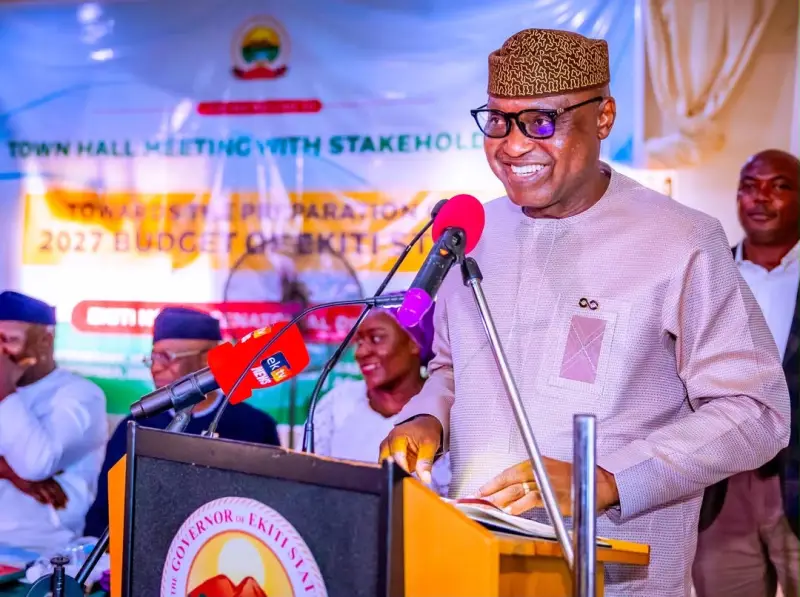
Ekiti State Governor Biodun Oyebanji has pledged that projects to be executed during his second term will be deliberately targeted at boosting commerce, enhancing productivity and stimulating sustainable business growth, with a view to deepening value addition and positioning the state’s economy on a higher trajectory. The governor, who will be inaugurated for a second term on October 16, also said Ekiti would intensify mobilisation for President Bola Tinubu ahead of the 2027 presidential election, with the aim of increasing his votes in the state. Oyebanji spoke on Wednesday in Ifaki Ekiti, Ido/Osi Local Government Area, during a town hall meeting with stakeholders from Ekiti North Senatorial District as part of consultations for the 2027 budget.
The governor reiterated his commitment to inclusive governance, saying the consultative approach adopted by his administration would be strengthened during his second term to deepen public participation and promote unity across the state. He said government investments would be channelled into critical sectors, including healthcare, electricity, road infrastructure and water supply, to improve living standards and drive economic productivity. "In our second term, whatever we are going to do must add value, because resources are limited. There must be value addition. We must catalyse productivity and ensure our people are productive. It is only when there is value that artisans like welders and auto mechanics can thrive and become prosperous," Oyebanji said.
On participatory governance, the governor said, "Governance is about the people. We are what we are today because of you. You gave us your mandate, and we must continue to seek your counsel in delivering good governance". He also commended traditional rulers for their support, particularly in intelligence gathering, which he said had contributed to improved security in the state, and urged residents to remain vigilant.
The governor’s pledge aligns with the economic philosophy he has articulated since his re-election. In August 2026, during a visit to the palace of the Ewi of Ado Ekiti, Oba Adeyemo Adejugbe, Oyebanji said his second-term agenda would prioritise attracting investors to the state and supporting small businesses. He reaffirmed his commitment to creating an enabling environment and ecosystem that would drive investment, support productivity and ensure that Ekiti hosts major businesses. "The second term of this administration will be devoted to supporting businesses, to ensure that we create an atmosphere that drives productivity," he said. The Ewi of Ado Ekiti and a former governor of the state, Dr Kayode Fayemi, both urged the governor to prioritise the establishment of industries during his second term, with Fayemi noting that the project aligns with the state’s 30-year development plan, particularly the next phase of his administration focused on creating an enabling environment for investment, supporting businesses and stimulating productivity.
The town hall meeting in Ifaki Ekiti is part of a broader consultative framework that has become a hallmark of the Oyebanji administration. The governor has consistently taken budget consultations directly to communities across the state’s three senatorial districts rather than limiting them to the capital, Ado Ekiti. Quarterly zonal engagements and local government consultations now precede every budget cycle, a practice that has been described as a shift from politics-as-usual to rules-based, data-driven governance. The Ekiti State Government has also mandated local government chairmen to hold citizens’ engagement sessions before preparing their budgets, ensuring that initiatives and projects that speak to the needs of the people are included and executed. For the 2026 budget, the governor took consultations to Otun Ekiti and Ijero Ekiti, where communities from the five local government areas of Ekiti North and the ten LGAs of Ekiti North and Ekiti Central presented their requests.
On the 2027 presidential election, Oyebanji was unequivocal about the need for greater mobilisation. "We must show appreciation. It will not be enough to repeat previous figures. We must do more in the next election," he said. He commended Tinubu for federal appointments and infrastructure interventions in Ekiti, saying collaboration between the state and the Federal Government had facilitated the award of major road projects, including the Ado-Ijan-Ilumoba-Ikole and Ado-Aramoko-Ita-Ore roads. He assured residents that other critical roads would receive attention subsequently.
Stakeholders at the meeting did not shy away from presenting their priorities for the 2027 budget. Traditional rulers and community representatives from Ekiti North Senatorial District commended Oyebanji for ongoing development projects and highlighted roads, electricity, water, healthcare and security as their priority areas. The Alaaye of Oke Ayedun, Oba Femi Aribisala, who spoke on behalf of Ikole Local Government Area, appealed to the government to accelerate interventions in roads, water and electricity. The Obaleo of Erinmope, Oba Sunday Aniyi; the Olojudo of Ido Ekiti, Oba Ayorinde Ilori-Faboro; and the Onisan of Isan Ekiti, Oba Gabriel Adejuwon, who spoke on behalf of Moba, Ido/Osi and Oye local government areas respectively, called for greater attention to roads, electricity, security and water supply to improve residents’ welfare.
The event was attended by senior government officials, including the Deputy Governor, Monisade Afuye; the Secretary to the State Government, Habibat Adubiaro; the Chief of Staff, Oyeniyi Adebayo; the Head of Service, Folakemi Olomojobi; and members of the State Executive Council, alongside traditional rulers and community leaders from across the senatorial district.
The governor’s emphasis on value addition and productivity reflects a broader economic vision that has been developing over his first term. Ekiti has consistently framed its work around a shared prosperity agenda and a six-pillar development architecture that includes youth development and job creation, human capital development, and agriculture and rural development. The governor has promised aggressive investments in education, health, human capital development and agriculture during his second tenure, saying that once those sectors are covered, the state will see greater economic transformation. He has also vowed to continue implementing the state’s 30-year development plan, a long-term framework that provides continuity beyond individual administrations.
The 2027 budget process has already begun, with the state government directing Ministries, Departments and Agencies to align their budget proposals with the administration’s development priorities. The governor’s insistence that every project must add value is a recognition that resources are limited and that the state cannot afford to spread itself thin across initiatives that do not deliver tangible economic returns. By tying his second-term projects directly to commerce, productivity and sustainable business growth, Oyebanji is signalling that his administration’s legacy will be measured not by the number of projects commissioned, but by their impact on the livelihoods of ordinary Ekiti residents. Whether that message translates into the kind of economic transformation the governor envisions will depend on the discipline of implementation, the quality of the 2027 budget, and the willingness of the state’s bureaucracy to align its spending with the priorities articulated by the people themselves.
📩 Stone Reporters News | 🌍 stonereportersnews.com
✉️ info@stonereportersnews.com | 📘 Facebook: Stone Reporters News | 🐦 X (Twitter): @StoneReportNew | 📸 Instagram: @stonereportersnews
Add comment
Comments