

Reported by Ariajegbe Sylvia Esezobor
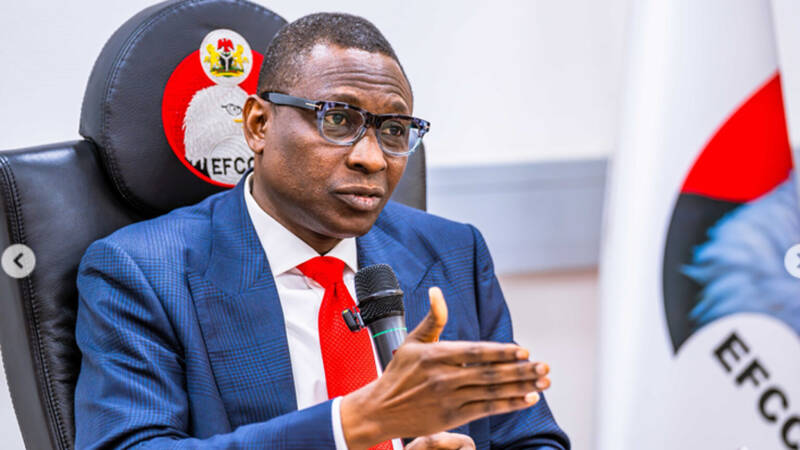
The Chairman of the Economic and Financial Crimes Commission, Ola Olukoyede, has decried what he described as the high level of corruption among religious leaders in Nigeria, revealing that the Commission's case files are filled with suspects identified by religious titles and calling for a fundamental rethink of the honourifics conferred on men of God. Olukoyede made the disclosure on Wednesday in Abuja at the 2026 Second Council Meeting of the Nigeria Inter-Religious Council and the launch of an EFCC interfaith anti-corruption manual, held under the theme "Shared Sacred Flourishing in Nigeria". His remarks, delivered before an audience that included the Sultan of Sokoto, the President of the Christian Association of Nigeria, the Secretary to the Government of the Federation and leaders of both faiths, amounted to one of the most direct public rebukes of Nigeria's religious establishment by a sitting anti-graft chief in recent memory. "I have advocated for a review of the titles we give to men of God. Maybe if it is possible for us to remove those titles, pastor and imam," Olukoyede said. "I have my case files full of these titles." He disclosed that the Commission's files contained numerous cases involving persons described as pastors, imams, bishops and other religious leaders, with some already convicted and serving jail terms. "And some of them have been convicted and they are in jail. And while in jail, they still refer to them as pastor and imam. So it is something for us to really think about," he said. He argued that religious leaders should be judged by their conduct rather than the titles they carry, insisting that genuine men of God are identified by their fruits, not their appearance. The EFCC chairman recounted an encounter with a suspect who introduced himself using a cascade of religious titles when he appeared before him. "I am Reverend Dr Bishop," the suspect reportedly said. "I said, wait there. Don't bring that one here. Did you misappropriate money or not?" Olukoyede said the suspect was subsequently faced with five charges. His message was unambiguous: "If you think you're a Christian or you're a pastor here, and you commit financial crime, I will be your enemy. I won't be your friend." Beyond the question of titles, Olukoyede issued a series of warnings that touched on the financial practices of religious institutions. He cautioned churches and mosques against accepting unexplained wealth without questioning its source, warning that doing so amounted to providing moral cover for corruption. He cited the example of a public servant who allegedly builds a multimillion-naira religious facility far beyond what his known earnings could support. "If a public servant says he has built a mosque that is worth more than his earnings in the next 500 years, and you go there to dedicate it, you are dedicating the proceeds of crime," he said. He extended the warning to donations. "If he says he is giving you N550 million and you don't ask questions, and you say, 'God bless you,' you are blessing the proceeds of crime." The EFCC boss also warned religious leaders against diverting tithes, offerings, zakat and other funds belonging to their organisations into private businesses, describing such conduct as criminal. He urged churches and mosques to establish clear regulatory compliance mechanisms and to maintain a strict separation between institutional funds and personal finances. "When money is paid to your organisation, don't divert it to your business. That is criminal," he said. He disclosed that during his previous service at the Commission as Chief of Staff and Secretary, the EFCC investigated the Christian and Muslim pilgrimage boards, and the discoveries were mind-boggling. "Almost 75 per cent of the money that government released to sponsor pilgrims was stolen by the leaders of those organisations," he alleged. The EFCC chairman's remarks were not delivered in isolation. They formed part of a broader effort to enlist religious leaders as partners in the anti-corruption fight, using the newly launched Inter-Faith Manual to equip pastors and imams with sermon outlines, teaching guides and scriptural commentaries on corruption. He stressed that religious institutions have a unique capacity to influence character and prevent corruption before it occurs. "The EFCC can investigate a person's conduct. Faith communities can influence that person's character. We can prosecute fraud. Religious teaching can cultivate honesty. We can confiscate illicit wealth. Churches and mosques can challenge the values that make society worship wealth without questioning its source," he said. The reactions from religious leaders were notably supportive, even as Olukoyede's words landed with force. The Sultan of Sokoto, Alhaji Muhammad Sa'ad Abubakar, urged religious leaders to stop shielding corrupt persons regardless of their status. "Let the EFCC go after such persons, whoever they are, and deal with them according to the law," the Sultan said. He condemned the practice of stealing public funds and using the proceeds to sponsor pilgrimages. "You cannot steal money and send people to Jerusalem or Mecca with corrupt funds and think God will accept your deeds," he warned. He also called on the EFCC to discharge its duties without political interference. The President of the Christian Association of Nigeria, Archbishop Daniel Okoh, echoed the Sultan's call, urging religious leaders to use their influence to promote justice, reconciliation and the common good. The Executive Secretary of NIREC, Professor Cornelius Omonokhua, called on the EFCC to beam its searchlight on religious leaders to prevent what he described as the merchandise of religion. The Secretary to the Government of the Federation, Senator George Akume, who represented President Bola Tinubu, urged NIREC to deploy its influence to strengthen national security and prevent political and religious tensions ahead of the 2027 general elections. The disclosures come against the backdrop of previous revelations by Olukoyede in April 2026 that several pastors and imams were in EFCC detention over fraud-related cases, and that others had been convicted. He had also disclosed that the Commission investigated Pastor Jerry Eze, founder of Streams of Joy International, for six months over alleged money laundering, tracking transactions from Colombia, the United States, Sri Lanka and Togo, before clearing him of any wrongdoing. For Nigeria's religious establishment, Wednesday's meeting represented both a reckoning and an invitation. The EFCC has made clear that it will not treat religious identity as a shield from prosecution. Religious leaders, in turn, have been handed a manual and a mandate to preach against corruption from their pulpits and mosques. Whether that partnership yields genuine change or remains a ceremonial exercise will depend on whether the words spoken in Abuja on Wednesday translate into accountability in the churches, mosques and pilgrimage boards where the money flows. 📩 Stone Reporters News | 🌍 stonereportersnews.com ✉️ info@stonereportersnews.com | 📘 Facebook: Stone Reporters News | 🐦 X (Twitter): @StoneReportNew | 📸 Instagram: @stonereportersnews
Add comment
Comments