

Reported by Ariajegbe Sylvia Esezobor
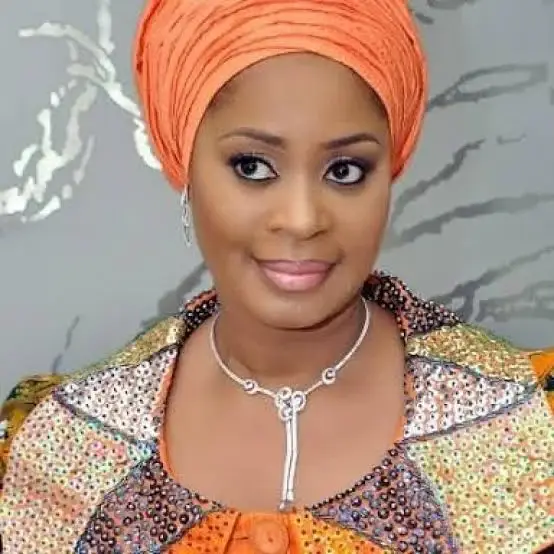
A former First Lady of Ogun State, Mrs Olufunso Amosun, has urged Nigerian women not to regard cancer as a death sentence, insisting that early detection and prompt treatment can save lives, as she flagged off the 2026 edition of her foundation’s free breast and cervical cancer screening programme at the Federal Medical Centre, Abeokuta, on Wednesday.
“Cancer is not a death sentence. It only becomes one when people fail to take action or seek help early enough,” Amosun told a hall filled with women, medical practitioners and community leaders. Her message was not merely rhetorical. It was backed by data, personal conviction and more than a decade of sustained intervention through the Uplift Development Foundation, which she founded in 2012 and which has since provided free cancer screening to over 10,000 women across Ogun State.
Amosun painted a sobering picture of Nigeria’s cancer burden. Citing data from the Global Cancer Observatory 2022, she disclosed that breast cancer incidence in Nigeria had risen by nearly 300 per cent over the past three decades, with 32,278 new breast cancer cases and 16,332 deaths recorded, giving Nigeria the highest breast cancer burden on the African continent. She noted that cervical cancer also remained a major threat, with an average of 22 Nigerian women dying from the disease daily. “These sobering statistics highlight the importance of regular cancer screening and sustained awareness,” she said.
The contrast between early and late diagnosis, she explained, is the difference between life and death. Survival rates for patients diagnosed at an early stage could exceed 90 per cent, compared with less than 30 per cent for those diagnosed at an advanced stage. That gap, she argued, is why her foundation has remained committed to providing free screening, treatment and post-operative care for women who would otherwise be unable to afford them. She encouraged women participating in this year’s exercise not to allow fear to delay them from seeking medical attention, and urged them to become advocates for cancer awareness by sharing the message of early screening with their families, friends and communities.
The Uplift Development Foundation’s track record lends weight to her appeal. Reflecting on the 2025 edition of the programme, Amosun said more than 600 women benefited from screening, while 22 women were found to have breast-related concerns. Of these, 11 women diagnosed with suspicious breast lumps underwent free lumpectomy surgeries and post-operative care funded entirely by the foundation in November 2025. The foundation has also established and equipped cancer care clinics in each of Ogun State’s three senatorial districts, at Olabisi Onabanjo University Teaching Hospital in Sagamu, General Hospital in Ota, and General Hospital in Ijaye, Abeokuta, to facilitate increased screening for women across the state.
The former first lady did not mince words about the obstacles that continue to drive late diagnoses. She decried the high cost of cancer treatment and the poor access to health facilities in low- and middle-income communities, noting that many women in underserved areas never had access to such medical checks. “In previous editions, we have had to sponsor chemotherapy for urgent cases and, sadly, provide hospice care for others,” she said. Her foundation’s intervention is, in effect, a safety net for women who fall through the cracks of Nigeria’s overstretched healthcare system.
Speaking at the same event, a medical consultant and surgeon at the Federal Medical Centre, Abeokuta, Ebenezer Nkom, reinforced Amosun’s message with a direct warning against dangerous myths and home remedies. He de-emphasised the efficacy of native remedial measures, stating that early clinical detection would prevent mortality. He specifically warned against the narrative that a man sucking a woman’s breast could cure breast cancer. “You shouldn’t be afraid of losing your breast; it is when you are alive that you can talk of the beauty of your husband,” he said, adding that medical practitioners can reconstruct an artificial breast for concerned patients. His words captured a hard truth about cancer in Nigeria: stigma and misinformation kill as surely as the disease itself.
The Federal Government has acknowledged the scale of the challenge and moved to strengthen the national response. The National Cancer Control Plan 2026–2030 was unveiled earlier this year as a comprehensive roadmap for improving cancer risk assessment, prevention, diagnosis and treatment, with the government targeting a 30 per cent reduction in the cancer burden by 2030. The plan prioritises prevention, early detection and equitable access to care, including the integration of HPV vaccination into routine immunisation schedules. Yet the gap between policy and practice remains wide. As the Nigerian Cancer Society observed in February, many cancer interventions from governments at all levels are concentrated in state capitals and urban centres, leaving rural communities and internally displaced persons largely forgotten.
Nigeria’s cancer statistics underscore the urgency. According to GLOBOCAN, the country recorded 127,763 new cancer cases and 79,542 cancer-related deaths in 2022. Cancer kills more Africans than AIDS, malaria and tuberculosis combined, and Nigeria accounts for approximately 10.5 per cent of the continent’s cancer burden, placing it among the three most affected countries alongside Egypt and South Africa. For Amosun, those numbers are not abstractions. They represent women she has screened, women she has operated on, and women she has buried because they arrived too late.
Her message on Wednesday was as much a plea as a promise. She encouraged women to make preventive healthcare a priority and to undergo regular self-breast examinations, urging them not to allow fear to delay them. “This programme is not just about free screening; it is about empowerment through knowledge and reawakening of responsibility for our health,” she said. She also called on public-spirited individuals to support women facing health challenges, acknowledging that government alone cannot fill the gap. As the 2026 screening programme gets underway, Amosun’s message remains as clear as it was when the foundation began its work fourteen years ago: cancer is a serious health challenge, but with awareness, early detection and timely treatment, it does not have to be a death sentence.
📩 Stone Reporters News | 🌍 stonereportersnews.com
✉️ info@stonereportersnews.com | 📘 Facebook: Stone Reporters News | 🐦 X (Twitter): @StoneReportNew | 📸 Instagram: @stonereportersnews
Add comment
Comments