

Reported by Ariajegbe Sylvia Esezobor
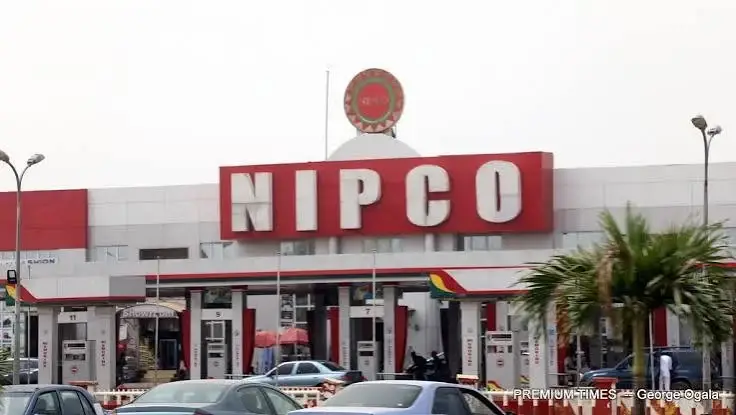
NIPCO Group has announced plans to develop a Floating Liquefied Natural Gas project in Nigeria, with the proposed development estimated to require more than $3 billion in investment, marking the company’s entry into the LNG sector and what would be one of the largest indigenous-led gas projects in the country’s history.
The announcement was made on Thursday at a press conference in Lagos by the Managing Director of NIPCO Group, Nagendra Verma, who said the proposed project would have an envisaged LNG production capacity of approximately three million tonnes per annum, subject to the outcome of feasibility studies, regulatory approvals and a final investment decision. The project is being considered for locations in the Escravos area of Delta State and the Akwa Ibom region, with the final site to be determined following the ongoing feasibility study.
“This proposed development is envisaged to comprise an FLNG facility along with associated marine and export infrastructure with the potential to serve both the international LNG market and growing domestic LNG demand in Nigeria,” Verma said. “We are looking at strategic locations that will facilitate access to upstream gas resources, LNG processing, marine transportation and both international and domestic markets.” He disclosed that NIPCO had been evaluating the proposed FLNG project for the past six to nine months and was currently undertaking preliminary technical, commercial and feasibility assessments. The ongoing assessment covers upstream gas supply and reserves, FLNG technology and configuration, LNG production capacity, marine and export infrastructure, domestic LNG supply opportunities, shipping and logistics requirements, project economics and financing structure.
Verma said NIPCO was evaluating various development concepts, technology solutions, financing structures and commercial options with a view to establishing a technically robust and commercially sustainable project. He emphasised that the capacity figure and investment estimate remained subject to the outcome of the ongoing feasibility and technical studies, project economics, regulatory approvals and final investment decisions.
The move represents a significant strategic expansion for NIPCO, which has built its reputation as one of Nigeria’s largest downstream petroleum marketers and a leading indigenous gas distribution company. The company reported a turnover of N1.979 trillion for the financial year ended December 31, 2025, and has been steadily expanding its gas infrastructure footprint across the country. NIPCO Gas Limited, in partnership with NNPC Gas Marketing Limited, is constructing an 18-inch, 80-kilometre natural gas pipeline from Sagamu to Ibadan, scheduled for completion between June and July 2026, and has secured a 25-year gas franchise covering Ibadan, Benin and the Lekki Free Trade Zone. The company operates 25 auto CNG stations nationwide and has converted more than 8,000 vehicles to compressed natural gas.
The FLNG project would mark NIPCO’s entry into the liquefied natural gas sector, a segment of the gas value chain that has historically been dominated by international oil companies and the Nigeria LNG consortium. Nigeria currently operates six LNG trains at Bonny Island with a combined capacity of 22 million tonnes per annum, and the Nigeria LNG Train 7 expansion project is expected to increase that capacity to 30 million tonnes per annum. Several other FLNG projects are at various stages of development, including UTM Offshore’s $3 billion FLNG project, which secured a 15-year gas supply agreement in July 2026 and is targeting a final investment decision in the fourth quarter of 2026.
The NIPCO announcement comes as Nigeria’s gas sector attracts renewed investment momentum. On Wednesday, President Bola Tinubu welcomed the $800 million Final Investment Decision on the Ima Gas Project by TotalEnergies and AMNI International, describing it as a milestone that unlocks a five-decade-old gas resource. The Ima project, with an estimated development cost of approximately $1.108 billion and independently confirmed gross reserves of about 1.28 trillion cubic feet of non-associated gas, will supply about one-third of the gas required for the Nigeria LNG Train 7 expansion. First gas is targeted for October 2028.
The Federal Government has identified gas as a transition fuel and a critical component of Nigeria’s energy security and economic diversification strategy. The Decade of Gas initiative and the Gas Master Plan 2.0 unveiled by the NNPC in January 2026 are designed to expand domestic gas utilisation, attract investment and position Nigeria as a regional gas hub. The Petroleum Industry Act 2021 provides the legal framework for gas commercialisation, including provisions for gas flare commercialisation and the establishment of a midstream and downstream gas infrastructure fund.
For NIPCO, the FLNG project represents both an opportunity and a substantial risk. Floating LNG facilities are capital-intensive, technically complex and require access to reliable upstream gas supply, which remains one of the most significant challenges in Nigeria’s gas sector. Several planned gas projects have stalled over the years due to financing difficulties, regulatory uncertainty and the absence of bankable gas supply arrangements. Verma acknowledged that the project remained subject to a final investment decision and that multiple studies and approvals were still required before construction could begin.
The emphasis on indigenous construction and local content is likely to be a central theme of NIPCO’s approach. The company has a track record of promoting indigenous participation in the gas sector, particularly in the compressed natural gas value chain, where it has worked with local fabricators and conversion centres. Verma has previously said that using indigenous gas could reduce the Federal Government’s subsidy burden and that NIPCO’s strategy was driven by Nigeria’s over 200 trillion cubic feet of gas reserves. If the FLNG project proceeds, it would represent a further step in the company’s evolution from a downstream marketer and gas distributor into an integrated gas player with upstream and midstream interests.
The project also aligns with the Tinubu administration’s broader economic agenda, which has prioritised gas development as a means of reducing dependence on petrol, lowering energy costs and generating revenue. The government has repeatedly called on indigenous companies to take a greater role in the gas sector, and NIPCO’s announcement is likely to be welcomed as evidence that Nigerian firms are willing to make the kind of long-term, capital-intensive investments that the sector requires.
The coming months will determine whether the feasibility studies confirm the project’s viability and whether NIPCO can secure the financing, gas supply and regulatory approvals necessary to reach a final investment decision. The company has not disclosed a timeline for that decision, but Verma said the assessments were ongoing and that NIPCO was considering various development concepts and commercial options. For now, the announcement places NIPCO among a small group of Nigerian companies seeking to develop FLNG capacity, and it signals the company’s ambition to play a significant role in the next phase of Nigeria’s gas development. As Verma put it, the proposed project has the potential to serve both the international LNG market and Nigeria’s growing domestic gas demand, a dual focus that reflects the dual imperatives of export revenue and domestic energy security that define the country’s gas policy.
📩 Stone Reporters News | 🌍 stonereportersnews.com
✉️ info@stonereportersnews.com | 📘 Facebook: Stone Reporters News | 🐦 X (Twitter): @StoneReportNew | 📸 Instagram: @stonereportersnews
Add comment
Comments