

Reported by Ariajegbe Sylvia Esezobor
The Federal Government has disclosed that improved coordination among Nigeria’s security and intelligence agencies led to the capture of one of the world’s most wanted terrorists, Mamuda, and his chief of staff, without a single shot being fired, describing the development as evidence of the growing effectiveness of the country’s counter-terrorism architecture under President Bola Ahmed Tinubu.
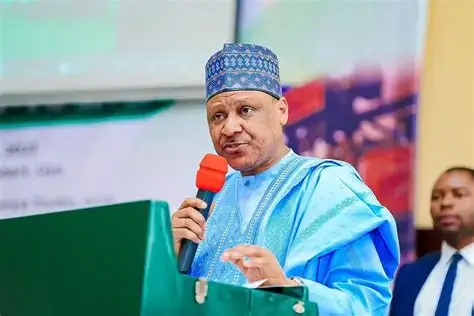
The Minister of Information and National Orientation, Mohammed Idris, made the disclosure on Thursday in Abuja at a world press conference ahead of Nigeria’s 66th Independence Anniversary celebrations. “During the time of President Bola Ahmed Tinubu, we have seen greater coordination between security agencies and intelligence services. This, indeed, has led to the capture of one of the world’s most wanted terrorists, the so-called Mamuda and his chief of staff. Today, Mamuda and his chief of staff are having their day in court,” Idris said. He said the suspects had attracted bounties from the United States and Europe, adding that their capture without violence demonstrated the sophistication of Nigeria’s intelligence-sharing mechanisms. “These are people that even nations like the United States and Europe have placed bounties on their heads to capture them. But today, they have been captured without one shot fired. Now, this is an indication of the kind of coordination and collaboration and intelligence sharing happening between the armed forces and intelligence services that is leading to greater efficiency in terms of confronting these criminal elements”.
The suspect identified as Mamuda is Mahmud al-Nigeri, also known as Malam Mamuda, the deputy and chief of staff to the self-styled Emir of Ansaru, Abu Bara’a. Ansaru, or Jama’atu Ansarul Muslimina fi-Biladis Sudan, was formed in January 2012 in Kano as a splinter faction from Boko Haram, initially presenting itself as a “humane alternative” before swiftly shifting to attacking Nigerian security operatives, civilian communities and government infrastructure. The group adopted the setting sun logo of Al-Qaeda in the Islamic Maghreb to signal its ideological alignment. Over the years, it entrenched itself in both urban sleeper cells and forest enclaves across northern Nigeria, particularly around the Kainji National Park, which straddles Niger and Kwara States and extends toward the Benin Republic. Mamuda led the so-called “Mahmudawa” cell operating in that axis.
According to the National Security Adviser, Nuhu Ribadu, Mamuda trained in Libya between 2013 and 2015 under foreign jihadist instructors from Egypt, Tunisia and Algeria, specialising in weapons handling and improvised explosive device fabrication. He and Abu Bara’a were accused of masterminding some of the most audacious attacks in Nigeria’s recent history, including the July 2022 Kuje prison break that freed more than 600 inmates, the attack on the Niger uranium facility, the 2013 abduction of French engineer Francis Collomp in Katsina, and the May 2019 kidnapping of Alhaji Musa Umar Uba, the Magajin Garin Daura. They were also linked to the abduction of the Emir of Wawa and were said to maintain active links with terrorist groups across the Maghreb, particularly in Mali, Niger and Burkina Faso. Both men had been on Nigeria’s most-wanted list for years and were also flagged internationally by the United States, the United Kingdom and the United Nations.
The two Ansaru commanders were arraigned at the Federal High Court in Abuja in September 2025 on a 32-count charge of terrorism and kidnapping. They subsequently pleaded guilty to the charges. The DSS accused them of masterminding the Kuje prison attack, planning the Niger uranium facility attack and orchestrating multiple kidnappings, including that of Collomp in 2013 and Alhaji Musa Umar Uba in 2019. Their operations included attacks on civilians, security forces and critical infrastructure, and the National Security Adviser described their capture as “one of the most significant achievements to date” in Nigeria’s fight against terrorism, saying it marked “the most decisive blow against Ansaru since its inception” and had “effectively dismantled its central command”.
The United States Mission in Nigeria commended the Nigerian Government and security forces on the successful arrest of the wanted Ansaru leaders, describing it as a significant step forward in the fight against terrorism and extremism. The commendation underscored the international dimension of the case, given that both suspects were subjects of bounties and had been designated as globally wanted terrorists by Washington and its allies.
The Minister of Information used the occasion to acknowledge that Nigeria had not completely overcome its security challenges, noting that terrorism, banditry, kidnapping and other criminal activities remained a concern. He said the Federal Government was strengthening the armed forces through additional military platforms and equipment while bringing troops closer to areas of operation. Idris disclosed that Tinubu had increased the number of Nigerian Army divisions from eight to 12, aimed at ensuring that troops were closer to areas where security operations were required and would not have to travel long distances to confront criminal groups. He also said the government had approved funding for additional military platforms and equipment for the Army, Navy and Air Force, including attack helicopters and other hardware ordered under the previous administration, and had approved improved welfare and salaries for members of the armed forces, describing the measure as a morale booster for personnel. “All this is to ensure that the armed forces are being brought closer to areas of operation so that they don’t have to travel far and wide to confront these criminal elements,” he said.
The minister cited improved movement between Abuja and Kaduna as an example of progress in the security situation, saying travelling along the route had become easier compared with previous years. “It’s difficult to even remember that a few years ago it was very challenging for someone who lives in Kaduna, for example, to come to Abuja or vice versa. It was almost impossible to just pick up your car and say that I’m heading to Kaduna, but that is no longer the case,” he said. He, however, acknowledged that more needed to be done. “Now, this is not to say that we have solved all the security challenges. The government has never said that. It has been completely resolved. But we are on a march towards exterminating this once and for all. Do we need to do more? Yes, indeed, we need to do more. But are we where we were? Not at all”.
The capture of Mamuda and his chief of staff represents a significant milestone in Nigeria’s counter-terrorism efforts, particularly because it was achieved through intelligence coordination rather than kinetic operations. The absence of gunfire in the operation that led to their apprehension underscores the emphasis the administration has placed on intelligence sharing and inter-agency collaboration, which Idris identified as the driving force behind the success. For a country that has spent more than a decade battling insurgency and terrorism, the capture of two of the most wanted figures in the Al-Qaeda-linked network is a tangible achievement that the government has been eager to highlight ahead of the Independence Day celebrations. The suspects are now before the courts, where their guilty pleas have set the stage for sentencing and what the National Security Adviser has described as the complete annihilation of the group they once led.
📩 Stone Reporters News | 🌍 stonereportersnews.com
✉️ info@stonereportersnews.com | 📘 Facebook: Stone Reporters News | 🐦 X (Twitter): @StoneReportNew | 📸 Instagram: @stonereportersnews
Add comment
Comments