

Reported by Ariajegbe Sylvia Esezobor
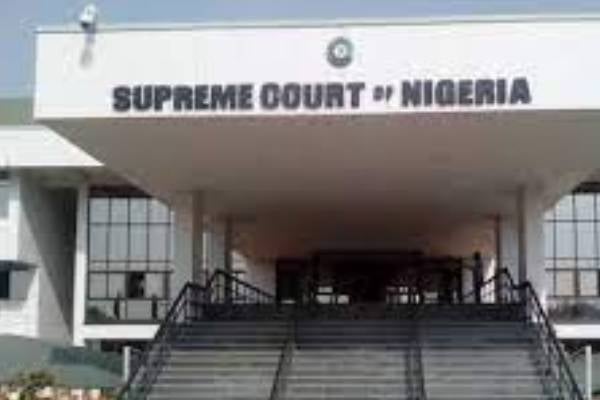
The Supreme Court on Thursday allowed an appeal by the Independent National Electoral Commission against a Court of Appeal judgment that voided key provisions of the Electoral Act 2026, restoring sections of the law that regulate political party membership registers and the procedure for nominating candidates ahead of the 2027 general elections.
A seven-member panel of the apex court, led by Justice Adamu Jauro, set aside the appellate court's decision and upheld the judgment of the Federal High Court, Abuja, which had dismissed the suit filed by the Zenith Labour Party. The court held that Sections 77(5), 77(6), 77(7) and 84(2) of the Electoral Act 2026 do not conflict with the 1999 Constitution, as amended. It also awarded two million naira in costs against the ZLP, which was listed as a respondent in the appeal. "The contested sections of the Electoral Act were not in conflict with the provisions of the 1999 Constitution," Justice Jauro held, according to the lead verdict delivered on Thursday.
The dispute began in April 2026 when the ZLP filed a suit at the Federal High Court in Abuja, marked FHC/ABJ/509/2026, challenging the constitutionality of the disputed provisions. Section 77(5) of the Electoral Act stipulates that only persons whose names are contained in a register submitted to INEC not later than 21 days before the date fixed for primaries, congresses or conventions are eligible to vote. Sub-section (6) provides that a political party shall not use any other register for party primaries except the register submitted to the commission. Sub-section (7) provides that a political party that fails to submit its membership register within the stipulated time shall not be eligible to field a candidate for the election. Section 84(2) prescribes direct primaries or consensus as the methods for nominating candidates by political parties.
The ZLP argued that these provisions conflicted with Sections 221 and 222 of the Constitution, which provide the framework for political parties and give them the right to determine whom to sponsor in an election. The party contended that the provisions amounted to unconstitutional interference in the internal affairs of political parties. Justice Mohammed Umar of the Federal High Court dismissed the suit on May 5, 2026, holding that the ZLP's case lacked merit. Dissatisfied, the ZLP appealed to the Abuja Division of the Court of Appeal. In its judgment delivered on July 16, 2026, a three-member panel of the appellate court, in a unanimous decision led by Justice Eberechi Nyesom-Wike, allowed the appeal in part and voided the provisions relating to party primaries and membership registers. The Court of Appeal held that the sections were at variance with the 1999 Constitution.
INEC, dissatisfied with the appellate court's decision, approached the Supreme Court in an appeal marked SC/CR/495/2026, urging the apex court to allow the appeal and overturn the Court of Appeal's judgment. The commission was represented by Dr Alex Izinyon, a Senior Advocate of Nigeria. The Supreme Court heard arguments from the parties and reserved judgment on September 16, 2026, before delivering its verdict on Thursday.
In two separate judgments delivered on the same day, the Supreme Court also ruled against the Social Democratic Party and the Youth Party, which had each filed appeals against INEC over Court of Appeal decisions in their respective cases. In the SDP's appeal, the court heard the matter on its merits and dismissed it. In the Youth Party's appeal, the court upheld INEC's preliminary objection and struck out the appeal, describing it as invalid and incompetent because it was filed one day out of time. The judgments were delivered by the same seven-member panel.
The decision carries significant implications for the regulation of political parties and the conduct of party primaries in the lead-up to the 2027 general elections, with the presidential and National Assembly elections scheduled for January 16, 2027, and the governorship and state Houses of Assembly elections for February 6, 2027. By validating the disputed provisions, the Supreme Court has affirmed INEC's authority to require political parties to submit their membership registers at least 21 days before their primaries and to restrict participation in those primaries to persons whose names appear on the submitted registers. The court has also upheld the requirement that parties adopt either direct primaries or consensus as the methods for nominating candidates, a provision that has been a source of contention since the Electoral Act was amended in 2022.
The judgment clarifies a legal uncertainty that had clouded the electoral calendar. The Court of Appeal's July 16 ruling had created confusion over whether parties could revert to indirect primaries and whether they could use membership registers other than those submitted to INEC. With the Supreme Court's decision, those questions have been resolved in favour of INEC's regulatory framework. Political parties now have a clear legal basis on which to conduct their primaries and submit their candidate lists to the commission ahead of the deadlines set for the 2027 elections.
The case also underscores the ongoing tension between the judiciary's role in interpreting electoral law and the autonomy of political parties. The ZLP's argument that the Electoral Act infringed on the constitutional right of parties to determine their own candidates was rejected by the Supreme Court, which affirmed that the National Assembly has the power to regulate the conduct of primaries and the submission of membership registers. The decision reinforces the principle that the right of political parties to determine their candidates is not absolute and must be exercised within the framework established by law.
For INEC, the judgment represents a legal victory that restores the tools it needs to regulate the primary process and ensure that only candidates who emerge through recognised and verifiable procedures appear on the ballot. The commission had argued that the voided provisions were essential to preventing irregularities in party primaries and ensuring that candidates are selected through transparent processes. With the Supreme Court's validation, INEC can now enforce those provisions as the 2027 election cycle gathers pace.
For the political parties, the judgment serves as a reminder that the Electoral Act imposes binding obligations on how they conduct their internal affairs. The ZLP and the other parties that challenged the provisions must now comply with the same rules they sought to overturn. The two million naira cost awarded against the ZLP is a further signal that the courts will not entertain litigation that is deemed to lack merit. As the 2027 general elections approach, the Supreme Court's decision has settled a critical legal question and reinforced INEC's regulatory authority over the primary process. The focus now shifts to the political parties, which must navigate the requirements of the Electoral Act as they select their candidates for the most consequential election in Nigeria's recent history.
📩 Stone Reporters News | 🌍 stonereportersnews.com
✉️ info@stonereportersnews.com | 📘 Facebook: Stone Reporters News | 🐦 X (Twitter): @StoneReportNew | 📸 Instagram: @stonereportersnews
Add comment
Comments