

Reported by Ariajegbe Sylvia Esezobor
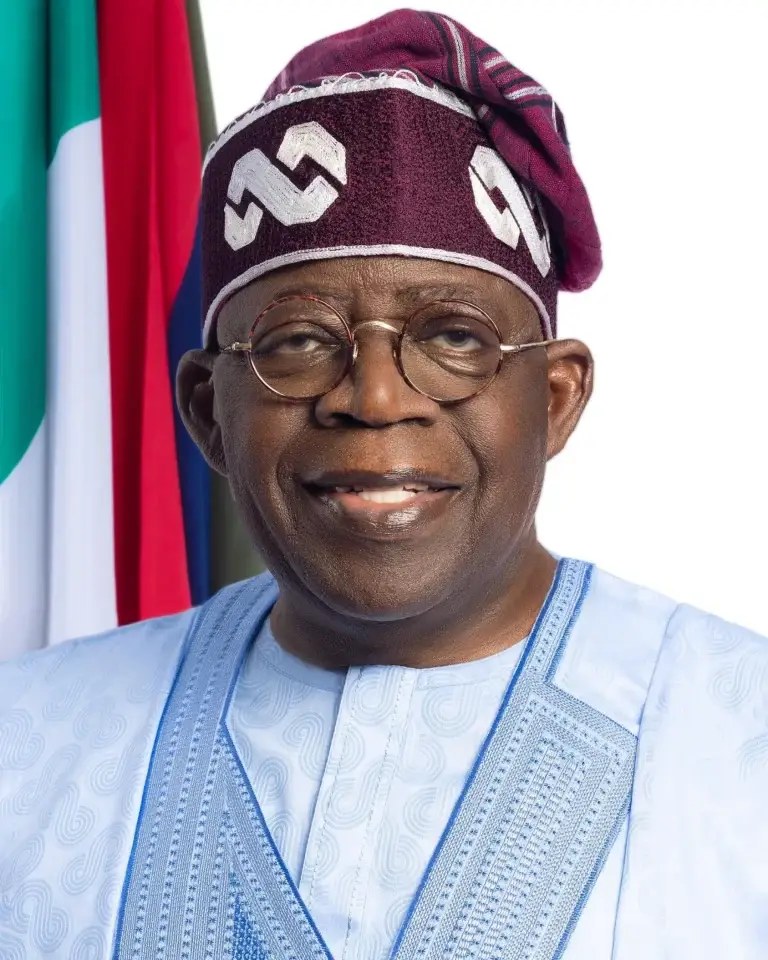
President Bola Ahmed Tinubu has unveiled an investment package of more than $7 billion for the development of the Ogun State Blue Marine Special Economic Zone and the Gateway Deep Seaport, describing the projects as a major step towards strengthening Nigeria’s maritime economy, attracting foreign investment and diversifying the economy away from oil. The President spoke in Paris, France, on Thursday during the signing of Memoranda of Understanding between the Ogun State Government and DP World, a global ports and logistics operator, for the development of the two projects.
The agreements bring together the Federal Government, the Ogun State Government, DP World, financial advisers and other private-sector partners in a major investment framework aimed at easing trade bottlenecks, strengthening logistics and expanding Nigeria’s manufacturing and export capacity. Tinubu assured domestic and foreign investors that the Federal Government would continue to provide regulatory clarity, policy stability and a predictable business environment to support long-term investments in Nigeria. “The agreements before us bring together vision, expertise, capital and execution capacity. I particularly welcome DP World, one of the world’s leading port and logistics operators,” the President said. He added that the Federal Government would provide the necessary regulatory and institutional support to ensure that the projects moved seamlessly from agreements to implementation. “We are doing more than signing agreements; we are laying the foundation for a new chapter in Nigeria’s development”.
According to the President, the agreements are expected to attract an initial investment of more than $7 billion into the Nigerian economy and create over 50,000 direct jobs when fully developed, alongside additional indirect employment opportunities. The projects are also expected to generate non-oil export earnings and contribute to Nigeria’s economic diversification. “This is economic diversification made tangible. This is industrialisation made visible. This is Renewed Hope in action,” Tinubu said. He described the investment as a practical expression of his administration’s economic agenda and a demonstration of what cooperative federalism can achieve when subnational initiative receives federal support.
The proposed Gateway Deep Seaport at Ogun Waterside will have a four-kilometre berth and an 18-metre draft, positioning it to handle larger vessels, decongest the Lagos port corridor and reduce costs and delays for importers and exporters. The facility is expected to ease pressure on the Apapa and Tin Can Island ports, which have long struggled with congestion. The President said the deeper draft would enable the port to accommodate larger vessels while providing a competitive gateway for trade within Nigeria and across the African Continental Free Trade Area.
The proposed Ogun State Blue Marine Special Economic Zone will cover about 10,000 hectares and will be integrated with the deep seaport to support manufacturing, processing, exports and logistics. Tinubu said the zone would enable imported inputs to be converted into finished products and Nigerian raw materials to be processed for export, helping to expand the country’s non-oil export base. “The Gateway Deep Seaport is the critical infrastructure that will support the zone’s viability. A port moves cargo; a port integrated with a special economic zone helps to build an economy. Each reinforces the other,” he said. He said the Federal Government would facilitate road, rail and power connectivity to the projects, while strengthening investment security and the maritime domain and removing unnecessary bureaucratic obstacles.
The President linked the projects to the Lagos-Calabar Coastal Highway, describing the Ogun section of the road as a critical transport connection for the emerging industrial and maritime corridor. The 28-kilometre Ogun section of the 700-kilometre highway is scheduled for completion before the end of the year. Tinubu said the port and industrial zone would also form part of a wider strategic corridor linking the proposed Nigerian Navy Operating Base and Dockyard with the OK LNG Project, strengthening the relationship between maritime infrastructure, industry, energy and trade. He said the emerging corridor would connect the port and industrial zone to Lagos, the Nigerian hinterland and wider African markets, positioning Ogun State as a key node in Nigeria’s trade and industrial architecture.
The President commended Ogun State Governor Dapo Abiodun and his administration for securing the land, structuring the investment framework and reducing project risks for global investors. “I commend Governor Dapo Abiodun and the government and people of Ogun State for securing the land, structuring the investment framework and reducing project risks for global investors,” he said. He said the Federal Government would hold all parties accountable to their commitments, stressing that the agreements must translate into investments, projects, jobs and economic opportunities. “The agreements must translate into investments, projects, jobs and economic opportunities,” he said.
Governor Abiodun described the signing as a defining moment in the economic history of Ogun State and Nigeria’s engagement with the global economy. He credited President Tinubu with providing the political leadership that had revived the long-standing deep seaport vision for the Ogun coastline, saying the project had remained largely unrealised for more than two decades. The Olokola Free Trade Zone, where the deep seaport will be located, was conceived in 2005 as a joint initiative of the Federal Government and the Ogun and Ondo state governments. It was designed to be Nigeria’s answer to Singapore in Asia, a multipurpose deep seaport complex and free trade zone spanning over 10,000 hectares along the Ogun and Ondo coastlines. The project stalled for years due to political and administrative challenges, but the Tinubu administration approved its immediate take-off in January 2026.
The signing in Paris was witnessed by the Minister of Marine and Blue Economy, Adegboyega Oyetola, and the Director-General of the Nigerian Ports Authority, Dr Abubakar Dantsoho. Oyetola has been at the forefront of the administration’s efforts to revitalise Nigeria’s maritime sector, including the establishment of a new National Shipping Line with the backing of DP World and AD Ports Group. The minister has set a target of lifting maritime revenue to N1.83 trillion and has consistently argued that Nigeria’s maritime potential remains largely untapped. The Ogun deep seaport project is central to that vision, providing a modern, deep-draft facility capable of handling the largest vessels and integrating with industrial and logistics infrastructure to create a comprehensive trade ecosystem.
The project also comes amid broader investment momentum in Ogun State’s coastal corridor. Dangote Industries Limited has commenced preliminary processes for a deep-sea port spanning more than 10,000 hectares at the Olokola Free Trade Zone, as part of plans to expand into logistics and maritime infrastructure. The revival of the OK LNG project, a long-abandoned liquefied natural gas initiative, is also part of the broader plan to position Ogun Waterside as Nigeria’s next industrial and maritime hub. Together, these investments signal a coordinated effort to transform the state’s coastline into a major economic zone anchored by port infrastructure, energy projects and special economic zones.
The Gateway Deep Seaport and Blue Marine Special Economic Zone represent the most significant single investment package in Ogun State’s history and one of the largest maritime infrastructure commitments in Nigeria in recent years. The integration of the port with a 10,000-hectare special economic zone is designed to create a self-reinforcing ecosystem in which cargo handling, manufacturing, processing and export activities reinforce one another. The zone is expected to attract manufacturers seeking to take advantage of Nigeria’s large market, the African Continental Free Trade Area and the country’s growing network of trade agreements.
The President’s decision to witness the signing in Paris underscores the importance his administration attaches to the project and its broader economic diplomacy agenda. Tinubu has used his extended working vacation in Europe to engage with French business leaders, including a meeting with Vincent Bolloré focused on investments in Nigeria’s creative and digital economy, and has consistently framed his foreign engagements as opportunities to attract investment and deepen bilateral ties. The Ogun seaport deal is the most concrete outcome of that engagement to date, bringing together a global ports operator, state and federal authorities, and financial partners in a framework designed to deliver long-term economic benefits.
For the people of Ogun State and the wider South-West, the project promises thousands of jobs, improved infrastructure and expanded economic opportunities. For Nigeria, it represents a step towards decongesting the Lagos port corridor, expanding non-oil exports and building the kind of integrated maritime-industrial ecosystem that has driven growth in other developing economies. The coming months will determine whether the agreements signed in Paris translate into construction on the ground, and whether the $7 billion in projected investment materialises at the scale promised. As Tinubu put it, the agreements must translate into investments, projects, jobs and economic opportunities. The signing has been done; the work now begins.
📩 Stone Reporters News | 🌍 stonereportersnews.com
✉️ info@stonereportersnews.com | 📘 Facebook: Stone Reporters News | 🐦 X (Twitter): @StoneReportNew | 📸 Instagram: @stonereportersnews
Add comment
Comments