

Reported by Ariajegbe Sylvia Esezobor
The Federal Government has intensified efforts to attract industrial investment from Germany, hosting 14 leading German companies exploring opportunities in Nigeria's cement, mining, construction and industrial technology sectors, as the country pursues its ambition of building a $1 trillion economy by 2030.
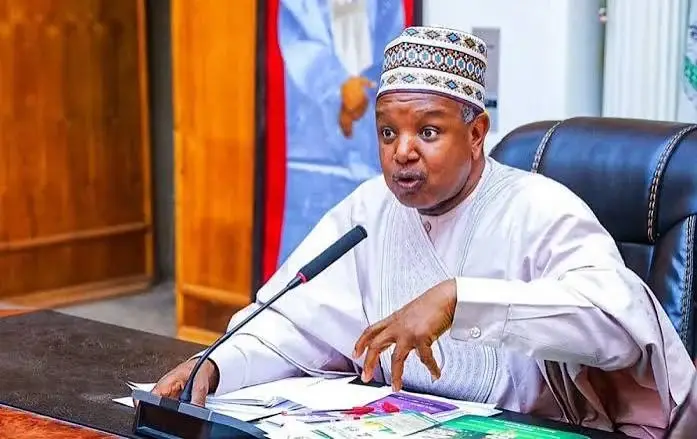
The Minister of Budget and Economic Planning, Senator Abubakar Atiku Bagudu, reaffirmed Nigeria's commitment to deepening economic and industrial cooperation with Germany during the Germany-Nigeria Industrial Technology Conference, tagged "Business Meets Nigeria," held in Abuja on Friday and disclosed in a statement issued on Sunday by the ministry. The conference, organised by the German Engineering Federation, known as VDMA, in collaboration with the Embassy of the Federal Republic of Germany in Nigeria, brought together government representatives, German engineering and technology companies, Nigerian businesses, financial institutions and industry stakeholders.
The gathering formed part of a high-level mission by the 14 German companies, which held engagements with Nigerian businesses and stakeholders in Lagos and Abuja to identify opportunities for investment and industrial development. The German-Nigeria Cement, Building Materials and Mining Technology Conference convened on September 25, 2026, in Abuja, represented the single largest industry-focused German trade delegation ever to visit Nigeria.
Bagudu said Nigeria was seeking to translate its longstanding relationship with Germany into concrete investments, technology transfers and industrial partnerships capable of strengthening the country's productive capacity and competitiveness. He highlighted opportunities for German investors in manufacturing, mining, construction, infrastructure, industrial technology, equipment and processing as Nigeria pursues its ambition of becoming a $1 trillion economy by 2030. The minister said achieving the target would require significant private-sector participation, increased domestic value addition and greater investments in productive sectors.
The $1 trillion economy target, first unveiled by President Bola Tinubu, has become a central plank of the administration's economic agenda. However, economic experts have questioned whether the target is achievable, noting that Nigeria would need to generate an additional $642 billion in economic output within four years to reach the milestone. At current growth rates, analysts estimate the economy would reach approximately $773 billion by 2030 and cross the $1 trillion mark around 2032, requiring a compound annual growth rate of about 28 per cent between 2026 and 2030 to meet the 2030 deadline.
Bagudu highlighted President Tinubu's economic reforms, which he said were aimed at removing structural distortions, improving the investment environment and restoring private-sector confidence. He stated that the government's objective was to build an economy where private enterprises could "invest, expand productive capacity, generate jobs and create value". The minister identified financing as a critical component of efforts to attract and sustain industrial investments, stressing the need for bankable and investment-ready projects alongside financing mechanisms such as export credit, development finance, commercial lending and guarantees. He cited Germany's €300 million export credit guarantee framework as an important component of the expanding economic relationship between both countries.
The Head of the VDMA delegation, Dr Chux Onaa, said German machinery and equipment manufacturers could contribute to Nigeria's industrial development through their expertise in materials handling, cement and minerals processing, digitalisation and environmental technologies. According to him, such technologies could provide solutions that improve productivity, reliability and Nigeria's long-term industrial competitiveness. Onaa reaffirmed VDMA's commitment to converting the engagements into opportunities for technology transfer, investment and industrial collaboration.
Ambassador Johannes Lehne, Deputy Head of Mission at the German Embassy in Nigeria, reiterated the strength of the Nigeria-Germany bilateral relationship, noting that Nigeria's economic reforms have boosted trade and improved the ease of doing business. He highlighted the range of financial instruments now available to German and Nigerian companies to scale up private-sector partnerships, describing them as tools that provide competitive financing for projects and enable companies to jointly develop the Nigerian market and build a long-term, productive relationship.
The engagement comes amid a broader strengthening of economic ties between Nigeria and Germany. Bilateral trade volume reached €3 billion in 2025, a 30 per cent increase, making Nigeria Germany's second-largest trading partner in Sub-Saharan Africa. More than 90 German companies currently operate in Nigeria across sectors including food processing, machinery and chemicals. In May 2026, both countries signed a €365 million development and investment partnership agreement covering energy, agriculture, digital reforms and private-sector development, alongside a proposed €300 million investment framework.
The conference reaffirmed both countries' commitment to deepening economic and industrial cooperation and to translating the longstanding Nigeria-Germany relationship into concrete investment, technology and industrial partnerships that support Nigeria's productive capacity, competitiveness and sustainable economic transformation. For Nigeria, the visit of 14 German firms represents a tangible step in its efforts to attract the foreign investment needed to diversify its economy away from oil and build the industrial base required to create jobs and improve living standards. Whether the engagements translate into actual investments will depend on the bankability of the projects presented, the availability of financing, and the government's ability to sustain the policy environment that attracted the German firms in the first place. As Bagudu put it, the objective is to build an economy where private enterprises can invest, expand productive capacity, generate jobs and create value.
📩 Stone Reporters News | 🌍 stonereportersnews.com
✉️ info@stonereportersnews.com | 📘 Facebook: Stone Reporters News | 🐦 X (Twitter): @StoneReportNew | 📸 Instagram: @stonereportersnews
Add comment
Comments