

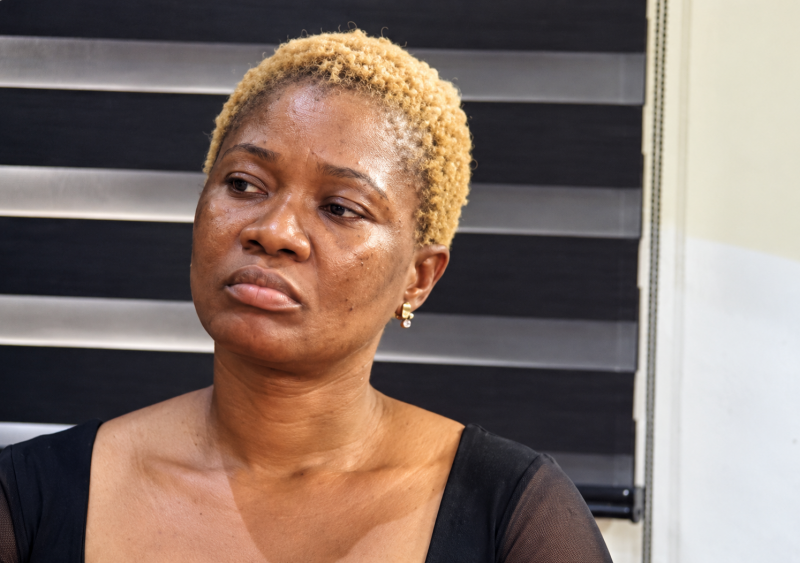
The Women Aid Collective has raised alarm over allegations that a woman in Enugu State was assaulted, abducted and forcibly admitted to a psychiatric hospital after taking legal action to claim what she says is her rightful share of her family's inheritance.
The woman, identified in reports simply as Miss Oge from Obe community in Enugu State, approached WACOL alleging that a family property dispute escalated after she went to court to pursue her inheritance rights. She claims members of the community assaulted her before relatives subsequently portrayed her as mentally unstable.
“I was abducted and assaulted because I took my inheritance matter to court,” she was quoted as saying.
According to her account, members of the Obe Community Task Force allegedly abducted and physically assaulted her after she initiated legal proceedings concerning the disputed family property.
Oge further alleged that some relatives began describing her as mentally ill in what she believes was an attempt to undermine her credibility and prevent her from continuing to pursue the inheritance dispute.
The situation, she alleged, later escalated when she was taken from where she was sleeping and transported against her will to the Enugu Neuropsychiatric Hospital.
She further claimed she was administered medication despite objecting to the treatment and insisting that she was mentally sound.
These are serious allegations and have not been independently established.
Stone Reporters News found no public statement from the Enugu Neuropsychiatric Hospital explaining the circumstances under which Oge was admitted, the medical basis for any treatment she received or whether her admission complied with the procedures governing psychiatric care.
There is similarly no publicly available response from the relatives and community members accused by Oge.
Their absence from current reporting means the allegations should not be treated as established findings against them.
WACOL has nevertheless called for an immediate and transparent investigation into the woman's claims, particularly the alleged assault, abduction, threats and circumstances surrounding her admission to the psychiatric facility.
The organisation also wants the Nigeria Police Force to investigate those allegedly responsible and determine whether criminal offences were committed.
Oge reportedly accused officers at Ozalla Police Station of failing to adequately protect her despite complaints concerning threats to her safety.
That allegation has also not been independently confirmed by the police.
WACOL further called for scrutiny of the alleged involvement of a legal practitioner in the dispute and urged the Nigerian Bar Association to examine any professional-conduct questions arising from the matter.
The organisation described the allegations as a potentially serious human-rights issue, particularly if claims of mental illness were deliberately used to prevent a woman from exercising her legal rights.
The case touches on a longstanding issue concerning women's inheritance rights in Nigeria, particularly where customary practices conflict with constitutional protections against discrimination.
WACOL has spent years campaigning against the denial of inheritance rights to women.
The organisation provides legal assistance in cases involving inheritance denial, assault, intimidation and other forms of violence against women and says thousands of women and girls have received assistance through its legal programmes.
In Enugu, the Violence Against Persons Prohibition Law provides additional protections.
The state's law includes denial of inheritance or succession rights within its definition of economic abuse and also addresses conduct affecting a person's liberty, dignity and security.
That means an inheritance dispute is not automatically a purely private family matter where alleged violence, intimidation or deprivation of legally recognised rights is involved.
The wider legal position on female inheritance has also changed significantly through Nigerian court decisions.
WACOL has previously highlighted the Supreme Court's 2014 decision in Ukeje v Ukeje, which rejected an Igbo customary rule that excluded female children from inheriting their father's estate.
The organisation has continued campaigning against practices that deny women property because of their gender.
However, whether Oge is legally entitled to the particular property at the centre of her dispute will depend on the facts of her family's estate and the proceedings she has reportedly initiated.
Her entitlement cannot be determined simply from the allegations currently available.
A second and equally serious issue is her claim of involuntary psychiatric treatment.
Mental-health facilities have legitimate responsibilities to treat people experiencing mental-health conditions, including circumstances where intervention may be necessary to protect a patient or other people.
But involuntary treatment involves questions of medical assessment, consent, legal safeguards and patients' rights.
It would therefore be inappropriate to conclude either that Oge required psychiatric treatment or that the hospital acted unlawfully without examining the medical and legal circumstances surrounding her admission.
The allegation requiring investigation is whether psychiatric intervention was genuinely based on an independent medical assessment or whether, as Oge alleges, relatives used claims about her mental health as a means of controlling her during an inheritance dispute.
Those are substantially different circumstances.
WACOL's intervention comes amid other recent cases in Enugu involving allegations that women seeking protection or asserting legal rights faced violence or punishment from family or community structures.
In a separate case in Aninri Local Government Area, the organisation intervened after a 34-year-old mother of six alleged severe violence and subsequent banishment.
Following police and legal intervention, six suspects were arraigned and the community later formally withdrew the woman's banishment.
That case is unrelated to Oge's inheritance dispute, but it demonstrates the type of rights-based intervention WACOL has been pursuing in Enugu.
The organisation has called for Oge to receive adequate protection while the allegations are investigated.
It has also urged relevant government agencies, women's rights organisations and human-rights groups to ensure that she can pursue her legal claims without intimidation.
For investigators, several questions require clarification.
Authorities need to establish what happened during the alleged confrontation with the community task force, who authorised Oge's transportation to the psychiatric hospital, what medical assessment preceded her admission, whether she was treated involuntarily and what legal or clinical justification supported any such decision.
Police should also determine whether previous threats were reported and what action, if any, was taken.
The relatives and community representatives accused by Oge should equally have an opportunity to respond to the allegations.
For the hospital, an appropriate investigation would need to respect patient confidentiality while determining whether all required procedures were followed.
The inheritance dispute itself should remain before the appropriate legal process rather than being decided through intimidation, violence or public accusation.
If Oge is entitled to a share of the family property, that entitlement should be determined according to law.
If another party disputes her claim, that party can present evidence before the court.
Neither side should determine the dispute through force.
The case therefore goes beyond a disagreement over property.
If Oge's account is established by investigators, the alleged use of assault, abduction or psychiatric confinement against someone pursuing an inheritance claim would raise serious questions about personal liberty, women's property rights and access to justice.
If the allegations are disputed, those accused are equally entitled to due process and should not be declared guilty through media reports alone.
For now, what is established is that Oge has made serious allegations through WACOL and the organisation has demanded intervention.
What has not yet been established is whether she was unlawfully abducted, whether relatives deliberately misrepresented her mental condition, whether psychiatric treatment was improperly administered, or whether police officers failed in their legal responsibilities.
Those questions require evidence and an independent investigation.
The appropriate next step is therefore not to decide the inheritance dispute or anyone's mental-health status through public accusation, but to establish who did what, whether Oge's rights were violated and whether any individual or institution should face legal or professional consequences.
📩 Stone Reporters News | 🌍 stonereportersnews.com
✉️ info@stonereportersnews.com | 📘 Facebook: Stone Reporters News | 🐦 X (Twitter): @StoneReportNew | 📸 Instagram: @stonereportersnews
Add comment
Comments